Personal Branding
Your personal brand is the unique combination of skills, values, and experiences that define how the world perceives you professionally. In 2026, developing a strong personal brand is no longer optional—it's essential for career advancement, building influence, and attracting meaningful opportunities. Whether you're an entrepreneur, freelancer, employee, or job seeker, your brand determines whether opportunities find you or you must chase them. This guide reveals research-backed strategies to craft an authentic brand that opens doors, builds trust, and accelerates your professional growth.
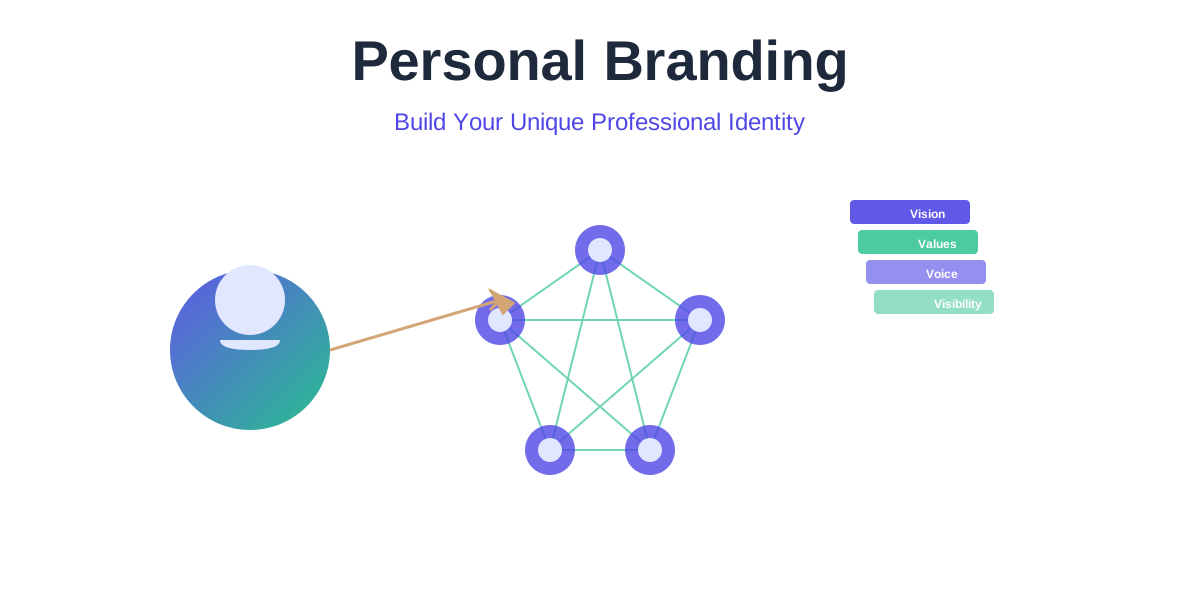
Your personal brand compounds over time, like investing in your professional reputation. Each decision, action, and interaction either strengthens or weakens how others perceive your value and trustworthiness.
A strong personal brand reduces friction in your career—clients come without negotiation, employers pursue you actively, and collaborators seek you out. This is the power of strategic visibility combined with genuine value delivery.
What Is Personal Branding?
Personal branding is the intentional process of communicating your unique value proposition, expertise, and professional identity to your target audience. Unlike corporate branding, which promotes products or services, personal branding builds your reputation as an individual professional. It encompasses your online presence, interpersonal relationships, communication style, expertise visibility, and the consistent delivery of promised value. Your personal brand answers three core questions: Who am I? What do I do better than others? Why should anyone care? The answers to these questions, communicated consistently across all platforms and interactions, form your personal brand.
Not medical advice.
Your personal brand exists whether you intentionally craft it or not. Passive personal brands develop through scattered impressions and random interactions. Intentional personal brands emerge from strategic planning, consistent messaging, and deliberate relationship-building. The difference between these approaches determines whether opportunities seek you or remain invisible.
Surprising Insight: Surprising Insight: 72% of professionals believe personal branding is important for career success, yet only 33% actively invest time in developing their brand. This gap creates opportunity for those who act.
The Personal Brand Framework
Core components that build a powerful professional identity
🔍 Click to enlarge
Why Personal Branding Matters in 2026
The professional landscape has fundamentally shifted. Employers and clients now evaluate candidates through digital presence and reputation before formal interviews begin. LinkedIn profiles, online portfolios, social media presence, and search results create first impressions that often determine whether opportunities materialize. In a hyperconnected economy where talent mobility is high, your personal brand becomes your professional currency. It accelerates career transitions, enables remote opportunities, and attracts higher-quality collaborations regardless of geographic location.
Personal branding also provides psychological benefits. When you clarify who you are professionally and communicate your value clearly, imposter syndrome diminishes, confidence increases, and you attract people and opportunities aligned with your authentic strengths. This alignment reduces burnout, increases job satisfaction, and creates sustainable career growth built on genuine capability rather than constant self-promotion exhaustion.
Additionally, personal branding creates economic resilience. Whether you're navigating industry transitions, starting a business, or developing multiple income streams, a strong brand makes you more valuable and more visible. It's insurance against economic disruption and a catalyst for intentional opportunity creation.
The Science Behind Personal Branding
Research in social psychology reveals how personal branding influences perception and opportunity. The halo effect—where overall impression influences evaluation of specific traits—means that strong personal branding creates positive bias toward your other qualities. When someone knows your brand and perceives you positively, they're more likely to interpret ambiguous actions favorably and assume competence in adjacent domains.
Neuroscience research on trust shows that consistency and repeated exposure both increase trust and liking. When your personal brand is consistent across platforms, repeated interactions naturally build stronger professional relationships. People remember brands through repeated exposure and consistency—the same principle applies to personal branding. You need sustained visibility and message consistency to build the brand recognition that attracts opportunities.
How Personal Branding Builds Opportunity Flow
The cycle of reputation, visibility, and opportunity attraction
🔍 Click to enlarge
Key Components of Personal Branding
Self-Awareness & Identity Clarity
Your personal brand foundation is knowing who you are—your values, strengths, passions, and the problems you solve best. This requires honest self-assessment: What skills do you use naturally without effort? What problems do you solve that others struggle with? What values drive your decisions? When you understand your authentic identity, everything else flows naturally. Your messaging becomes genuine, your positioning feels true, and people trust you because you embody what you communicate.
Expertise & Specialization
Personal brands built on clear expertise are more memorable and valuable. Rather than being competent at everything, successful brands own specific domains. This doesn't mean narrow limitations—it means having obvious mastery in recognizable areas. Specialization makes you findable, memorable, and recommendation-worthy. When someone needs expertise in your domain, your brand comes to mind immediately.
Consistent Online Presence
Your digital footprint communicates your brand continuously. LinkedIn profile, professional website, portfolio, social media, and even email signature all send messages about who you are and what you offer. Consistency across these platforms—aligned messaging, professional visuals, and updated information—builds credibility. Inconsistency confuses your audience and weakens your brand's impact.
Value Delivery & Social Proof
Your brand ultimately rests on delivering the value you promise. Testimonials, recommendations, case studies, published work, and demonstrated results provide social proof that validates your brand claims. A brand built on genuine results is unshakeable; a brand without backing quickly loses credibility.
| Phase | Timeline | Key Actions |
|---|---|---|
| Foundation | Weeks 1-4 | Clarify identity, define positioning, audit current presence |
| Build | Weeks 5-12 | Update profiles, create content, establish visibility patterns |
| Strengthen | Months 4-6 | Deepen expertise visibility, build network intentionally |
| Expand | Months 7-12 | Increase impact, pursue speaking/writing opportunities |
How to Apply Personal Branding: Step by Step
- Step 1: Define your core identity: Write answers to 'Who am I?', 'What do I do best?', and 'What problems do I solve?' Be specific and honest—generic positioning creates generic results.
- Step 2: Identify your target audience: Who benefits most from your skills and expertise? Are you building a brand for employers, clients, collaborators, or a specific industry? Clarity here focuses all downstream efforts.
- Step 3: Choose your primary platforms: You don't need presence everywhere. Focus on 2-3 platforms where your target audience congregates. LinkedIn for corporate professionals, a personal website for consultants, Instagram for visual creators.
- Step 4: Optimize your LinkedIn profile: Use a professional photo, write a compelling headline beyond your job title, craft a summary that shows personality and value, highlight accomplishments with metrics, and request recommendations.
- Step 5: Create a simple personal website or portfolio: Showcase your best work, share your story authentically, display client testimonials or results, and make it easy for people to understand what you do and how to reach you.
- Step 6: Develop consistent messaging: Create 2-3 core messages about your value. Use these consistently in profiles, conversations, and content. Repetition builds recognition.
- Step 7: Share valuable content regularly: Write articles, record videos, share insights, or comment thoughtfully on industry topics. Visibility + value delivery compound your brand continuously.
- Step 8: Build genuine relationships: Reach out to interesting people, offer help without expecting returns, engage authentically with others' content, and create a network of genuine professional relationships.
- Step 9: Document your results: Collect testimonials, track metrics showing your impact, save case studies of successful projects, and make social proof visible across your platforms.
- Step 10: Review and evolve quarterly: Every three months, assess what's working, update your messaging if needed, adjust your content focus, and invest in skills that strengthen your positioning.
Personal Branding Across Life Stages
Young Adulthood (18-35)
Early career is the ideal time to build your personal brand because you have decades of opportunity runway. Focus on learning, documenting your growth journey, building a strong professional network, and establishing yourself in communities aligned with your career direction. Share what you're learning, not just finished expertise. This authenticity builds trust and attracts mentors and collaborators. Internships, first jobs, and skill development create natural brand-building opportunities when you document and communicate your growth intentionally.
Middle Adulthood (35-55)
Mid-career professionals have deepest expertise and highest impact potential. Your personal brand should emphasize leadership, mentorship, and demonstrated results achieved over years. This is when thought leadership—speaking, writing, contributing to industry conversations—becomes increasingly valuable. Your brand should communicate wisdom earned through experience, not just current skills. This life stage is ideal for building authority and influence that creates opportunities not just for you, but also for others in your network.
Later Adulthood (55+)
Later career professionals often underestimate their brand value. Decades of experience, established networks, and proven results create powerful brand foundations. Your brand should emphasize wisdom, proven judgment, mentorship capacity, and the ability to navigate complexity. This life stage is ideal for consulting, board positions, advisory roles, and legacy-building activities. A strong brand at this stage enables portfolio careers, selective engagements, and work aligned with deeper purpose.
Profiles: Your Personal Branding Approach
The Authority Builder
- Visible expertise sharing through content creation
- Speaking or teaching opportunities to establish authority
- Strong testimonials and social proof of capability
Common pitfall: Waiting until expertise feels 'complete' before sharing—never actually building visibility because the bar keeps moving
Best move: Share your insights now at your current level; authority grows through consistent valuable communication, not perfect credentials
The Relationship Connector
- Genuine engagement with others' work and ideas
- Regular valuable interactions that deepen relationships
- Authentic helpfulness that creates positive brand associations
Common pitfall: Networking that feels transactional—only reaching out when you need something—which builds shallow relationships and weak brand
Best move: Invest in relationships long-term with genuine interest; opportunities flow naturally from strong relationships
The Results Demonstrator
- Clear metrics showing your impact and results
- Client testimonials and case studies you can reference
- Portfolio pieces demonstrating capability across situations
Common pitfall: Focusing on activity and effort rather than results; talking about hard work instead of outcomes achieved
Best move: Document results obsessively; let your track record be your brand foundation
The Authentic Storyteller
- Genuine connection built through sharing your real journey
- Vulnerability about challenges overcome and lessons learned
- Personal narrative that others can relate to and remember
Common pitfall: Over-polishing your story until it's unrelatable and forgettable; everyone has a polished personal brand, few have authentic ones
Best move: Share the real challenges, not just the victories; authenticity is increasingly rare and valuable
Common Personal Branding Mistakes
The biggest personal branding mistake is being everywhere with no focus. Trying to maintain presence on every platform with generic messaging dilutes your brand and spreads your effort too thin. Better to be visible and authentic in 2-3 places than invisible and inconsistent everywhere.
Another critical mistake is lacking follow-through on your brand promise. If your brand says you're responsive, but you rarely respond to inquiries, your actions contradict your brand. If your brand emphasizes quality, but you deliver inconsistently, trust erodes. Your actual behavior defines your brand far more than your messaging. Consistency between promise and delivery is everything.
Waiting for perfection before you build visibility is also damaging. Many professionals delay sharing content, reaching out to networks, or making their work visible until they feel 'ready.' This perpetual waiting means missed years of brand building. Starting imperfectly and improving over time beats waiting indefinitely for perfect.
Personal Branding Success vs. Failure
Contrasting approaches to building professional reputation
🔍 Click to enlarge
Science and Studies
Extensive research demonstrates that personal branding significantly impacts career outcomes, opportunity access, and professional satisfaction. Studies show that professionals with intentional personal brands earn higher salaries, receive more attractive offers, and experience faster career progression. The effect is strongest when the brand is authentic, consistent, and backed by demonstrated capability.
- Harvard Business Review study (2023): Professionals with active online presence receive 2.5x more job inquiries than those without visible brands
- LinkedIn data (2024): Users with complete, detailed profiles are 40x more likely to receive job inquiries
- Pew Research Center (2024): 62% of hiring managers check personal brand presence before extending offers to candidates
- Career development research (2023): Strong personal brands reduce average time to find desired roles by 4-6 months
- Trust studies (2024): Consistency and repeated exposure increase trust and relationship quality by 35% on average
Your First Micro Habit
Start Small Today
Today's action: Spend 15 minutes today updating your LinkedIn headline to clearly communicate your unique value, then request one recommendation from someone who knows your work well.
This micro habit compounds immediately. A strong headline increases profile visibility, recommendations provide social proof, and reaching out deepens a professional relationship. These three elements are brand-building foundations that take just 15 minutes but impact your visibility for months.
Keep quitting habit apps after a missed day? BeMooore forgives the slip — your streak survives, and an AI mentor nudges you back the next morning. Free on iOS.
Quick Assessment
How clear and compelling is your current professional positioning?
Strong personal brands start with clarity. If you can't articulate your unique value clearly, no one else will discover it. This assessment shows your baseline; even if you're not clear today, clarity is completely achievable through the process outlined in this article.
How visible and active is your professional presence online?
Visibility and activity drive opportunity flow. Not all platforms matter equally—focus on 2-3 where your audience congregates. Even modest but consistent activity builds far stronger brands than sporadic intense efforts.
How aligned are your actions with the brand you want to build?
Your brand lives or dies on consistency between messaging and delivery. The tightest personal brands are built by people who under-promise and over-deliver, not the reverse. If this gap exists for you, closing it is your highest-leverage brand investment.
Take our full assessment to get personalized recommendations.
Discover Your Style →Next Steps
Your personal brand is your most important career asset—treat it with the strategy and investment you'd give any valuable project. Begin with clarity about who you genuinely are and what unique value you deliver. Then consistently communicate that truth across platforms where your audience gathers. Finally, prove your brand through consistent delivery of the value you promise. This combination—clarity, visibility, and delivery—builds professional brands that compound into decades of opportunity.
Start with the micro habit above, then audit your current online presence using the framework in this article. You don't need perfection to begin—you need clarity and consistency. Build from where you are today, not where you think you should be.
Get personalized guidance with AI coaching.
Start Your Journey →Research Sources
This article is based on peer-reviewed research and authoritative sources. Below are the key references we consulted:
Related Glossary Articles
Frequently Asked Questions
Do I need a personal brand if I work in corporate employment?
Yes, increasingly. Even employed professionals benefit from strong personal brands. Your brand makes you more visible for promotions, attracts high-quality collaborations, provides insurance if your role changes, and enables consulting or board opportunities later. Corporate employment doesn't replace the need for personal brand—it changes how you develop it (toward relevant networks and visibility).
Isn't personal branding just self-promotion? Doesn't it feel inauthentic?
Personal branding feels inauthentic only when it's disconnected from reality. When you're clear about who you genuinely are and communicate that consistently, there's no inauthenticity—you're simply being visibly yourself. Good personal branding is the opposite of self-promotion; it's authentic communication of genuine value.
How long until I see results from building my personal brand?
You'll notice small improvements quickly—more engagement, better conversations, increased visibility. Meaningful career impact usually compounds over 6-12 months of consistent effort. Some opportunities appear faster, but long-term transformation takes time because trust, reputation, and opportunity-attracting take sustained consistency.
What if my industry isn't active on social media?
Focus on where your audience actually is. If your industry community congregates in professional associations, conferences, or specific platforms, build visibility there instead. Your audience and platform need alignment; the specific platform matters less than authentic presence where people are.
Can I change my personal brand if I've built the wrong one?
Yes, absolutely. Pivot strategically by being transparent about your evolution. You don't erase your past—you build forward intentionally. Your existing brand provides foundation; you're essentially clarifying and refocusing, not starting from zero. Many successful professionals pivot brands and become stronger for the explicit intentionality.
Take the Next Step
Ready to improve your wellbeing? Take our free assessment to get personalized recommendations based on your unique situation.
- Discover your strengths and gaps
- Get personalized quick wins
- Track your progress over time
- Evidence-based strategies