Social Relationships
Social relationships are the connections you build with others—including family, friends, romantic partners, colleagues, and community members. Research from Harvard and the World Health Organization reveals that strong social relationships are among the most powerful predictors of health, happiness, and longevity. People with deeper social connections live significantly longer, experience less depression and anxiety, and report higher life satisfaction than those who feel isolated. Yet modern life increasingly isolates us: younger adults report declining wellbeing, technology-mediated interactions replace face-to-face connection, and loneliness has become a public health crisis. The quality of your relationships directly shapes your resilience, mental clarity, and physical health through measurable biological pathways.
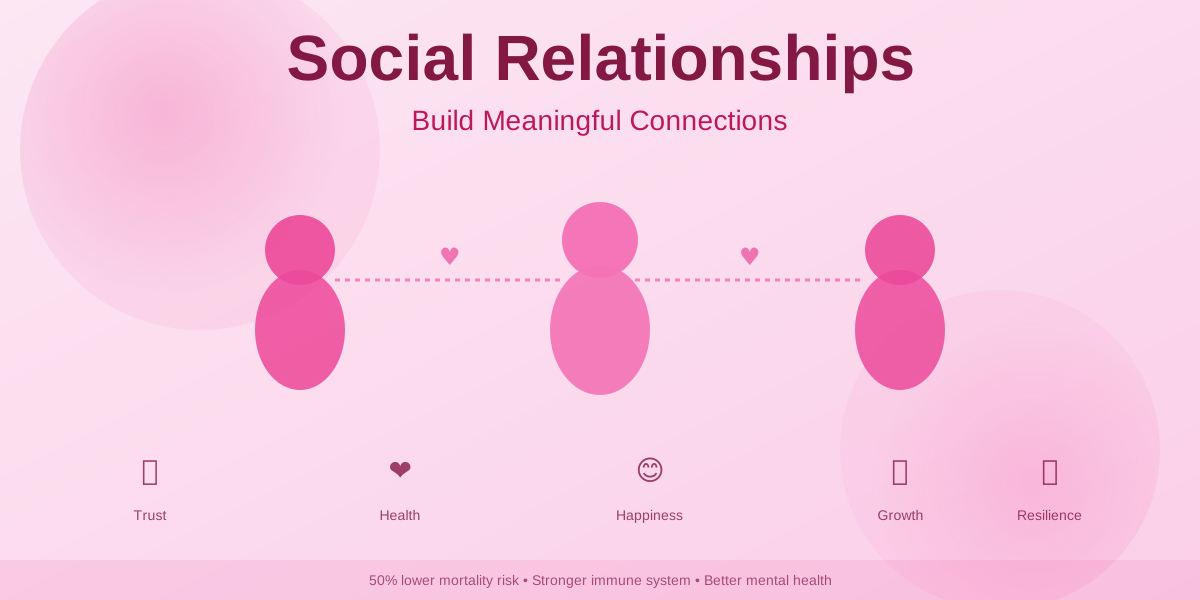
In 2026, understanding social relationships isn't just about feeling good—it's about extending your healthspan and building a life that feels purposeful and grounded.
This guide reveals the science behind social connection, actionable strategies for building deeper relationships, and personalized approaches tailored to your relationship style and life stage.
What Is Social Relationships?
Social relationships refer to the reciprocal bonds you maintain with others based on communication, trust, and mutual understanding. These include close relationships (family, intimate partners, close friends), group relationships (communities, sports teams, professional networks), and casual acquaintances. Modern research distinguishes between relationship quantity (how many people you know) and relationship quality (how emotionally connected you feel). Research shows quality matters far more than quantity for health outcomes.
Not medical advice.
Social relationships exist on a spectrum: intimate and exclusive (romantic partnerships, close family), expressive and warm (close friendships), supportive and practical (mentors, colleagues), and loose networks (acquaintances, communities). Each type serves different psychological and physiological functions. Close relationships provide emotional support and sense of belonging; group relationships offer social identity and collective purpose; weak ties expand opportunity and knowledge. A healthy social ecosystem includes relationships across all levels.
Surprising Insight: Surprising Insight: People with strong social connections are 50% less likely to die prematurely than those with weak connections—an effect larger than the impact of smoking, physical inactivity, obesity, and excessive drinking combined.
The Social Connection Framework
Visual breakdown of relationship types, their characteristics, and health benefits
🔍 Click to enlarge
Why Social Relationships Matter in 2026
Loneliness has been declared a public health crisis by the US Surgeon General, with isolation now linked to conditions traditionally associated with lifestyle risk factors. Young adults—the generation most connected through technology—report the lowest wellbeing levels, suggesting that digital connection doesn't replace meaningful in-person interaction. In a post-pandemic world, many people struggle to rebuild social patterns or navigate hybrid remote-work environments where casual workplace relationships have diminished.
Strong relationships directly reduce physiological stress through measurable changes in cortisol, blood pressure, and inflammatory markers. This means quality social connection isn't a luxury—it's a biological necessity. Adults who experience loneliness face increased risk of dementia (50% higher), cardiovascular disease (29% higher), stroke (32% higher), and earlier mortality from all causes. Conversely, social connection strengthens immune function, accelerates recovery from illness, and improves mental health outcomes across depression, anxiety, and psychological resilience.
Beyond health metrics, relationships provide meaning, identity, and purpose. People with strong social bonds report higher life satisfaction, better coping with adversity, and greater alignment with their values. In 2026, when technology makes isolation easier than ever, intentional relationship-building has become a foundational pillar of wellbeing.
The Science Behind Social Relationships
The biological science of social connection reveals multiple pathways through which relationships influence health. Stress physiology is the primary mechanism: social isolation elevates cortisol, adrenaline, and inflammatory markers, triggering a chronic fight-or-flight state that damages cardiovascular, metabolic, and immune systems over time. Conversely, secure relationships activate the parasympathetic nervous system (rest-and-digest), reducing inflammation and supporting cellular repair. This occurs both through direct physiological synchronization (heartbeat, breathing patterns) during in-person interaction and through the psychological security of knowing you have reliable social support.
Behavioral pathways also matter significantly: people with strong relationships tend to have better sleep quality, exercise more consistently, manage stress more effectively, and avoid harmful coping behaviors like excessive drinking or substance use. Social relationships also provide behavioral accountability and motivation. Additionally, the psychological sense of belonging activates reward pathways in the brain (dopamine, oxytocin), strengthens working memory, improves cognitive flexibility, and enhances emotional regulation. Feeling socially connected literally changes how your brain processes information and manages emotion.
Biological Pathways: How Relationships Affect Health
Three interconnected mechanisms linking social connection to physical and mental health outcomes
🔍 Click to enlarge
Key Components of Social Relationships
Trust and Safety
Trust is the foundation of meaningful relationships. It develops through consistency (following through on commitments), vulnerability (sharing authentic feelings without judgment), and predictability (knowing someone has your best interests). When you trust someone, your nervous system feels safe—cortisol drops, defensiveness decreases, and genuine connection becomes possible. Building trust requires time, mutual vulnerability, and proof through small interactions before sharing deeper concerns.
Active Listening and Understanding
Active listening—fully focusing on understanding another person's perspective without planning your response—is rare and powerfully connecting. It communicates respect, validates the other person's experience, and creates psychological safety. True understanding goes beyond hearing words; it involves reading nonverbal cues, asking clarifying questions, and reflecting back what you've heard. People who feel genuinely understood show measurably lower stress levels and stronger commitment to relationships.
Emotional Authenticity
Relationships deepen when both people show their genuine selves—strengths and vulnerabilities alike. Emotional authenticity means expressing your true feelings, needs, and values rather than performing a curated version. Paradoxically, showing vulnerability (appropriate disclosure of struggles, fears, uncertainties) strengthens relationships more than appearing perfect. People connect with real humans, not personas. Authentic relationships require permission to be imperfect and mutual acceptance.
Consistency and Reliability
Social relationships require regular investment of time and attention. Research on attachment theory shows that secure relationships depend on consistent responsiveness—knowing someone will be available and supportive when needed. Reliability means showing up even when inconvenient, remembering what matters to the other person, and maintaining contact during mundane as well as crisis times. In a world of scattered attention, consistent engagement stands out as rare and deeply appreciated.
| Health Outcome | Effect of Strong Social Connection | Magnitude of Impact |
|---|---|---|
| Premature Mortality (All Causes) | 50% reduction in mortality risk | Larger than smoking, inactivity, or obesity |
| Heart Disease Risk | 29% reduced risk | Comparable to major lifestyle interventions |
| Stroke Risk | 32% reduced risk | Significant protective factor |
| Dementia in Older Adults | 50% reduced risk of cognitive decline | Among strongest modifiable risk factors |
| Depression Symptoms | 83% of studies showed improvement with support | Effect size comparable to medication |
| Anxiety and Stress | Measurable reduction in cortisol levels | Activates parasympathetic nervous system |
How to Apply Social Relationships: Step by Step
- Step 1: Audit your current relationships: List people in your life across categories (family, close friends, work, community). Notice quality vs. quantity—do you have 1-3 relationships where you feel deeply understood?
- Step 2: Identify one relationship to deepen this week: Choose someone you care about but haven't connected deeply with recently. This could be an old friend, family member, or acquaintance you'd like to know better.
- Step 3: Schedule face-to-face or voice time: Text isn't enough for building trust. Commit to 1-2 hours of undistracted interaction per week with people who matter most. Put devices away during this time.
- Step 4: Practice active listening in your next conversation: Focus completely on understanding their perspective. Ask questions. Resist planning your response while they talk. Notice how the conversation shifts when you're fully present.
- Step 5: Share something real about yourself: Vulnerability builds connection. In appropriate moments, share a genuine feeling, challenge, or value you hold. Start small if vulnerability feels risky.
- Step 6: Show up consistently: Follow through on plans. Remember details they've shared. Check in without expecting anything in return. Small consistent actions build trust more than grand gestures.
- Step 7: Expand your social circle: Attend one new community event, join a group around a genuine interest, or reconnect with an old connection. Relationships across multiple domains reduce isolation.
- Step 8: Reduce digital-only relationships: Evaluate your phone and social media time. Set a boundary—perhaps no more than 30% of social energy through screens. Prioritize in-person or at least voice connection.
- Step 9: Create rituals: Establish regular touchpoints with important people—weekly calls with family, monthly friend dinners, or annual retreats. Rituals maintain connection without requiring constant effort.
- Step 10: Seek relationship support if needed: If you struggle with trust, vulnerability, or conflict, consider therapy or coaching. Healing attachment patterns opens capacity for deeper connection.
Social Relationships Across Life Stages
Young Adulthood (18-35)
Young adults face a unique challenge: high mobility, changing life circumstances, and social media creating illusion of connection while actual loneliness increases. This stage is optimal for establishing new relationships, exploring different friendship styles, and building foundational social skills. Young adults benefit from intentionally building multiple relationship types (close friends, mentors, community groups) rather than relying on one primary relationship. The habits you build now—consistency, vulnerability, deep listening—become your relationship blueprint for life. This is also the stage when many first experience romantic relationships and must learn negotiation, compromise, and emotional expression within intimate partnerships.
Middle Adulthood (35-55)
Middle adulthood often brings relationship consolidation: fewer but deeper friendships, established romantic partnerships or long-term commitments, and sometimes caregiving responsibilities for both children and aging parents. Time scarcity increases, making relationship maintenance require intentionality. This stage benefits most from deepening existing relationships rather than constantly seeking new ones. Middle adults often experience burnout from competing demands, making quality leisure time with loved ones essential for stress recovery. This is also when many adults develop mentor relationships with younger colleagues or friends, adding dimension and purpose to midlife.
Later Adulthood (55+)
Research shows that for older adults, maintaining existing relationships becomes even more critical than establishing new ones. This stage emphasizes relationship depth, legacy, and intergenerational connection. Older adults with strong relationships show significantly better physical health outcomes, cognitive function, and longevity. Later adulthood offers opportunity to share accumulated wisdom, repair important relationships that may have become strained, and deepen spiritual or philosophical dimensions of connection. Loss (of partners, peers, independence) increases, making remaining relationships even more precious and requiring deliberate cultivation.
Profiles: Your Social Relationships Approach
The Connector
- Multiple relationships across different domains (friend groups, work, community, online)
- Regular social events and group activities for stimulation and belonging
- Permission to maintain broader networks without depth pressure
Common pitfall: Spreading yourself too thin; quantity of relationships without meaningful depth; fear of alone time leading to constant socializing to avoid introspection
Best move: Identify 2-3 core relationships for deeper investment while maintaining your broader social network. Schedule regular solo time for reflection and energy recovery.
The Intimate Focuser
- One or few deeply close relationships where vulnerability feels safe
- Consistent, reliable interaction with chosen people
- Permission to be selective rather than socially broad
Common pitfall: Social isolation if primary relationships are lost or unavailable; pressure to share responsibilities with too few people; difficulty expanding social circle when needed
Best move: Maintain your deep relationships while gradually building 1-2 secondary friendships or community connections. Practice social courage in low-stakes settings first.
The Independent
- Relationships that respect autonomy and don't demand constant contact
- Clear communication about your needs and boundaries around togetherness
- Genuine appreciation from others without performance pressure
Common pitfall: Appearing unavailable even to people who matter; relationships becoming one-directional; isolation masked as independence; difficulty asking for help
Best move: Proactively reach out even when you don't need anything. Create simple rituals (monthly calls, quarterly dinners) that require minimal planning but maintain connection.
The Rebuilder
- Relationships that offer healing and acceptance for past wounds or disconnection
- Patience as you learn to trust again; gradual vulnerability rather than rapid exposure
- Professional support (therapy, coaching) to heal attachment patterns
Common pitfall: Protecting yourself so thoroughly that genuine connection becomes impossible; reading rejection or danger where it doesn't exist; pushing away people who offer care
Best move: Start with lower-stakes relationships (activity-based friendships, online communities, group settings) before intimacy. Consider professional support for attachment work.
Common Social Relationships Mistakes
Substituting digital connection for in-person interaction is the #1 mistake in 2026. Text, video calls, and social media create the psychological illusion of connection—especially through dopamine hits from likes and messages—while lacking the physiological synchronization and genuine vulnerability of face-to-face interaction. Your nervous system can't register safety through a screen the same way it does in presence. If 80% of your social interaction is digital, your health benefits will be minimal.
Keeping people at arm's length through guarded communication is another common pattern. Authentic connection requires appropriate vulnerability—letting people see your real thoughts, feelings, and struggles, not just your curated public self. People who fear judgment often perform rather than connect, which exhausts them and prevents true intimacy. The other person can sense when you're not being real, and it blocks deeper connection.
Neglecting relationships during busy seasons is a third critical mistake. Relationships require consistent investment; they deteriorate quickly when deprioritized for months. People internalize silence as disinterest or rejection, even when logically they understand you're busy. Small touches (5-minute calls, brief check-ins) maintain connection far better than disappearing and later expecting relationships to pick up where they left off.
Connection Barriers and Breakthrough Strategies
Common obstacles to social relationships and science-backed interventions
🔍 Click to enlarge
Science and Studies
The empirical evidence for social relationships as a health factor is robust and comes from decades of longitudinal research, meta-analyses, and intervention studies. Major health organizations—including WHO, CDC, Harvard School of Public Health, and the US Surgeon General—now recognize social connection as a foundational determinant of health equivalent to exercise, nutrition, and sleep.
- Holt-Lunstad et al. (2024) in World Psychiatry: Meta-analysis showing social connection is an independent predictor of mortality, morbidity, and mental health outcomes, with effects of comparable or greater magnitude than major lifestyle risk factors.
- World Happiness Report (2025): Research on young adults showing that close and group relationships are significantly associated with happiness, with quality of connection mattering more than quantity.
- Harvard Study of Adult Development (ongoing since 1938): Longest longitudinal study showing that relationship quality is the strongest predictor of health and happiness across the lifespan, more than income, fame, or social class.
- NIH/National Institute on Aging studies: Research documenting 50% increased risk of dementia with chronic loneliness in older adults, and mechanisms through stress physiology and reduced cognitive stimulation.
- Nature Communications and Frontiers in Psychology (2024-2025): Recent studies on social support's role in psychological recovery, showing active social engagement as effective as medication for depression in many cases.
Your First Micro Habit
Start Small Today
Today's action: Send one genuine message today to someone who matters—not a meme or group text, but a personal message showing you've been thinking about them specifically. Reference something you remember about their life. Takes 2 minutes.
This micro-action trains your brain toward relational attention. It signals to the other person that they matter to you. Consistency of small actions (daily for a week) creates relational momentum and often prompts reciprocal reaching out. It requires zero logistical planning and immediately satisfies connection need.
Keep quitting habit apps after a missed day? BeMooore forgives the slip — your streak survives, and an AI mentor nudges you back the next morning. Free on iOS.
Quick Assessment
How many people do you have deep conversations with—where you share real thoughts and feelings and feel truly understood?
People with 2-3 deep connections show better health outcomes than those isolated. If you have fewer than 2, consider that your #1 wellbeing opportunity. If you have 4+, you're protecting yourself against relationship vulnerability.
When facing a challenge or feeling anxious, do you reach out to someone, stay silent, or use technology to distract?
Research shows that people who seek social support recover faster from stress and depression. If you isolate, vulnerability coaching and therapy can shift this pattern dramatically. If you already lean on others, you're accessing one of health's strongest medicines.
In a typical week, how much of your social time is in-person versus through screens (text, calls, social media)?
Neuroscience shows that faces, voices, physical synchronization, and touch trigger deeper stress-reduction than digital interaction. If you're mostly digital, your nervous system isn't getting full social health benefits. Shifting toward 60% in-person would change your health measurably.
Take our full assessment to get personalized recommendations.
Discover Your Style →Next Steps
Your relationship with yourself is the foundation for healthy relationships with others. Before focusing on external connections, consider your self-compassion and self-worth. People who can't access kindness toward themselves often sabotage relationships through perfectionism, people-pleasing, or pushing away care. If you struggle with self-acceptance or have a critical inner voice, that internal work will multiply the benefits of any external relationship changes.
Next, implement one change from this guide this week: reach out to one person, schedule face-to-face time, or practice vulnerability in a safe conversation. Track how you feel afterward. Notice what shifts when you prioritize relational connection. Most people underestimate how much their mood, energy, and health improve with relational investment. Give yourself permission to make connection a priority equal to exercise or sleep.
Get personalized guidance with AI coaching.
Start Your Journey →Research Sources
This article is based on peer-reviewed research and authoritative sources. Below are the key references we consulted:
Related Glossary Articles
Frequently Asked Questions
Can online friendships provide the same health benefits as in-person relationships?
Partially, but not fully. Online relationships can provide emotional support, shared interests, and reduce isolation. However, the physiological benefits of in-person connection—nervous system synchronization, hormonal changes, physical presence—don't occur through screens. Optimal is blended: online connections supplemented with occasional in-person meetups when possible.
I'm introverted and social situations drain me. Does this mean I need fewer relationships?
Introversion is about how you recharge, not how much connection you need. Introverts often prefer fewer but deeper relationships and may recharge solo. You still need 1-3 close relationships and community connections for health. The key is matching your relationship style (deep + selective) to your personality while still maintaining consistent contact.
What if my past relationships were unhealthy? Can I learn to trust again?
Yes. This is what trauma-informed therapy addresses. Attachment patterns from early relationships often repeat, but they can be healed. Therapy, support groups, and gradually building new relationships with healthier people rewire your nervous system's safety response. It takes time and patience, but many people successfully transform their capacity for connection.
How often should I contact my close relationships to maintain them?
Research suggests weekly contact (at minimum) with people who matter most. This can be a phone call, dinner, or extended text conversation. For secondary friendships, monthly or quarterly works. The key is consistency and genuine interest, not frequency alone. Quality of interaction matters more than quantity.
Is it normal to feel disconnected even when I have many relationships?
Yes. This often indicates relationships lack depth—you're connected on surface level but not sharing vulnerably. It can also reflect your own guardedness or past wounds making genuine connection difficult. It's not about number of relationships but quality of emotional safety and authenticity within them. Consider deepening 1-2 key relationships.
Take the Next Step
Ready to improve your wellbeing? Take our free assessment to get personalized recommendations based on your unique situation.
- Discover your strengths and gaps
- Get personalized quick wins
- Track your progress over time
- Evidence-based strategies