Family
Family is the foundation of human connection—a network of individuals bound by biological ties, legal commitments, or chosen affection who shape our values, behaviors, and emotional well-being. Whether your family is nuclear, extended, blended, or chosen, the relationships within it profoundly influence your mental health, resilience, and capacity for happiness. Strong family bonds provide protection against depression and anxiety while fostering a sense of belonging that sustains us through life's challenges. Understanding how to nurture these relationships through authentic communication, emotional support, and conflict resolution transforms family from a simple arrangement into a source of deep meaning and lifelong security.
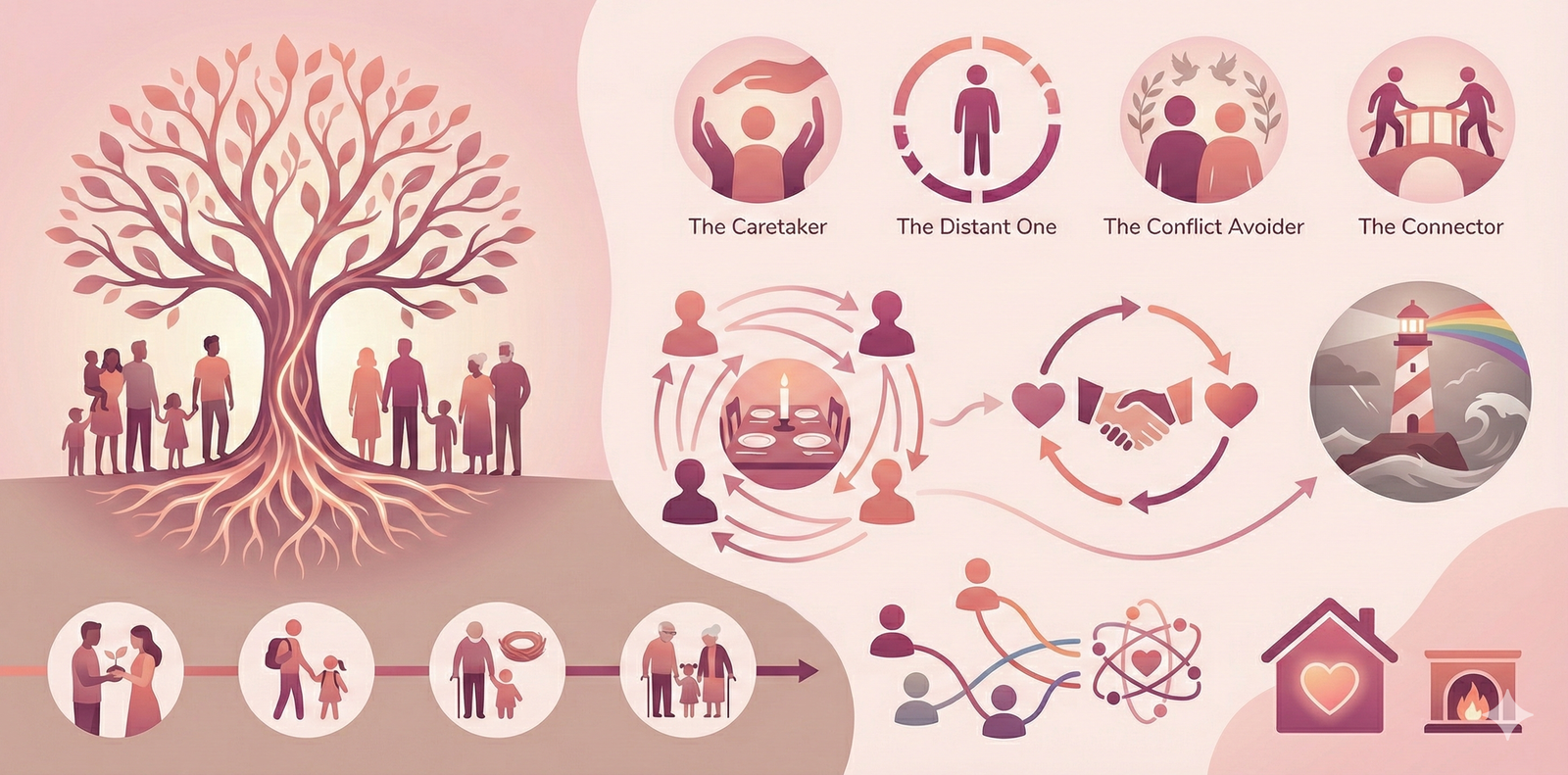
Discover how family dynamics shape your wellbeing and learn practical strategies to strengthen bonds across all life stages.
Family relationships require intentional effort, but the rewards—unconditional support, shared joy, and lasting connection—make every investment worthwhile.
What Is Family?
Family encompasses the people who share your life, whether connected by blood, marriage, adoption, or deep emotional bonds. Sociologists define family as a social group characterized by common residence, economic cooperation, and reproduction—though modern families increasingly expand beyond these traditional markers. A family is less about who lives under one roof and more about who shows up for you, maintains commitment through difficulty, and creates space for authentic belonging. Family systems theory recognizes that families function as interconnected units where each member's emotions, behaviors, and choices ripple through the whole group.
Not medical advice.
Today's families are beautifully diverse: single-parent households, grandparents raising grandchildren, step-families blending different histories, same-sex parents, chosen families of close friends, and extended multi-generational homes. What matters most isn't the family structure itself but the quality of emotional connection, reliable support, clear communication, and shared values that bind members together. Every family configuration can provide security, love, and growth when intentional care is invested.
Surprising Insight: Surprising Insight: Research shows nearly 40% of U.S. children lack strong emotional bonds with their parents, yet attachment can be healed and strengthened at any age through vulnerable communication and consistent presence.
The Family Attachment System
Illustrates how secure attachment between family members creates protective factors for mental health, emotional regulation, and social development across the lifespan.
🔍 Click to enlarge
Why Family Matters in 2026
In an increasingly digital, fragmented world, family relationships serve as anchors for mental health and social stability. The COVID-19 pandemic starkly illustrated both the fragility and irreplaceable value of family bonds—extended isolation from loved ones triggered surges in anxiety, depression, and loneliness, while strengthened home connections provided essential emotional scaffolding. In 2026, as remote work, geographic mobility, and digital distractions continue reshaping how families interact, intentional cultivation of family connection is more critical than ever.
Family relationships directly impact stress resilience, physical health outcomes, and financial stability. Research from Frontiers in Psychology demonstrates that families with higher emotional cohesion effectively buffer against anxiety and depression while fostering positive childhood experiences that protect against behavioral dysregulation. Beyond mental health, shared family rituals like cooking together, regular meals, storytelling, and genuine presence strengthen neural pathways associated with empathy, emotional regulation, and social connection in children's developing brains.
Economically, strong family support systems reduce healthcare costs, improve educational outcomes, and build intergenerational wealth and resilience. Psychologically, secure family attachment remains the strongest predictor of life satisfaction, romantic success, and capacity to form healthy relationships outside the family. In a world of unprecedented choice and digital overwhelm, family provides the stable ground from which we explore, risk-take, and grow.
The Science Behind Family
The neurobiology of family attachment reveals why family bonds feel so powerful—they activate ancient mammalian systems designed for survival. Oxytocin, often called the 'bonding hormone,' floods the brain during positive family interactions—laughing together, physical affection, vulnerable sharing—creating neural pathways of trust and safety. Dopamine surges when family members provide approval, celebration, and recognition, reinforcing bonding behaviors. These neurochemical systems evolved over millions of years to keep families together because groups survived predators and scarcity far better than isolated individuals.
Attachment theory, pioneered by John Bowlby and expanded by Mary Ainsworth, demonstrates that secure attachment relationships formed in infancy predict emotional stability, relationship success, and resilience throughout life. Secure attachment—where a child experiences the caregiver as reliably available, emotionally responsive, and protective—becomes internalized as a sense of safety that persists even when separated. Conversely, insecure attachment patterns (anxious, avoidant, or disorganized) are associated with relationship difficulties, emotional dysregulation, and higher rates of anxiety and depression. The hopeful news: attachment patterns aren't fixed. Through understanding, vulnerability, and consistent presence, family relationships can move toward greater security at any age.
Healthy Family Communication Loop
Shows how active listening, emotional expression, and repair cycles create continuous strengthening of family bonds.
🔍 Click to enlarge
Key Components of Family
Emotional Bonding
Emotional bonding is the core currency of family connection—the felt sense that you matter to someone, that your experiences are witnessed and cared about. Strong emotional bonds are built through thousands of small moments: showing interest in each other's days, celebrating wins together, sitting beside someone through tears, offering a listening ear without judgment. Bonding deepens through vulnerability—when family members feel safe enough to express fears, disappointments, and authentic selves rather than performing acceptable versions. Quality time, where full attention is given without screens or distractions, amplifies bonding. Shared activities like cooking together, hiking, gaming, or creating art generate emotional closeness because bodies relax, defenses lower, and natural laughter and playfulness emerge.
Communication Practices
Healthy family communication involves expressing needs and feelings clearly, listening to understand rather than to respond, and addressing conflicts directly rather than avoiding them. Effective communication means asking genuine questions about what family members think and feel, really hearing their answers, and validating their perspectives even when you disagree. It includes naming appreciation—explicitly telling family members what you value about them—rather than assuming they know. Modern communication challenges including digital distraction, generational gaps, and busy schedules require intentional practices: regular one-on-one conversations, family meetings where everyone has voice, and agreements to put phones away during meals or evening time. Difficult conversations require extra care: choosing calm moments, using 'I' statements to describe impact rather than blame, and focusing on specific behaviors rather than character attacks.
Conflict Resolution
Contrary to myth, healthy families aren't conflict-free—they're repair-full. Conflict becomes destructive only when it's chronic, unresolved, or expressed through contempt, criticism, defensiveness, or stonewalling. Healthy families navigate disagreement by staying engaged (not withdrawing), remaining curious about the other person's perspective, and focusing on finding solutions rather than winning arguments. Repair—the ability to slow down, acknowledge the other person's experience, take responsibility for your part, and reconnect—is one of the strongest predictors of family resilience. Teaching children and partners that conflict is normal, solvable, and an opportunity for deeper understanding fundamentally changes family culture from 'avoid fighting' to 'handle disagreement well.'
Mutual Support
Family functions as a support system—people who show up when you're struggling, celebrate when you succeed, and provide both practical help and emotional reassurance. Mutual support means the care flows in multiple directions; healthy families aren't hierarchical where one person always gives and another always receives. Parents support children, children eventually support aging parents, and siblings support each other. Support can be practical (helping move houses, sharing meals, providing childcare), financial (lending money, sharing resources), emotional (listening to worries, offering perspective), or aspirational (believing in each other's potential). Families with strong mutual support experience better physical health, lower stress, faster recovery from illness, and greater overall life satisfaction than isolated individuals.
| Family Type | Unique Strengths | Common Challenges |
|---|---|---|
| Nuclear (two parents + children) | Shared financial responsibility, dual caregiving, modeling partnership | Limited extended support, high pressure on couple relationship |
| Single Parent | Clear decision-making, flexible scheduling, close bonding with children | Financial strain, limited backup support, caregiver burnout |
| Extended Family (multiple generations) | Wisdom sharing, childcare support, cultural continuity, financial resilience | Boundary complexity, differing parenting philosophies, privacy challenges |
| Blended (step-siblings, step-parents) | Expanded support networks, modeling conflict resolution, diverse perspectives | Loyalty conflicts, integration time, family identity formation |
| Chosen Family (close friends, community) | Values-based selection, intentional commitment, low obligation pressure | No legal recognition, potential friendship fragility, holiday challenges |
How to Apply Family: Step by Step
- Step 1: Audit your family relationships: Identify which family connections feel secure and which feel strained. Notice patterns in how you communicate—do you withdraw, overshare, minimize feelings, or engage authentically?
- Step 2: Schedule regular one-on-one time: Block weekly or monthly time with key family members. This doesn't require expensive activities—a walk, coffee, or car ride focused fully on connection builds relationship reserves.
- Step 3: Practice active listening: When family members share, listen to understand rather than to fix or respond. Ask clarifying questions, reflect back what you heard, and validate their experience before offering perspective.
- Step 4: Express appreciation explicitly: Tell family members specifically what you value about them. Instead of 'you're great,' try 'I noticed you helped with homework without being asked and it means so much.'
- Step 5: Address issues directly and promptly: Don't let resentment build by avoiding difficult conversations. Use 'I feel hurt when...' language and stay curious about their perspective.
- Step 6: Create shared rituals: Establish family dinners, weekly game nights, annual traditions, or daily check-ins that become non-negotiable bonding time.
- Step 7: Practice repair after conflict: When tensions rise, pause if needed, then return to reconnect. Acknowledge the other person's perspective, own your part, and explicitly state your intention to strengthen the relationship.
- Step 8: Set boundaries while maintaining connection: You can love family members while saying no to unhealthy behavior. Boundaries aren't rejection; they're containers that make relationships sustainable.
- Step 9: Share meals and create space for vulnerability: Food and leisure activities lower defenses. People open up more naturally over cooking, eating, or playing together than during formal conversations.
- Step 10: Seek professional support if needed: Family therapy, counseling, or mediation can help if patterns feel stuck. Getting external perspective normalizes growth and demonstrates commitment to relationship health.
Family Across Life Stages
Young Adulthood (18-35)
Young adulthood involves individuation—establishing independence while renegotiating family relationships as adult-to-adult rather than child-to-parent. This period often involves physical distance (moving for school or career), developing your own values and beliefs (which may differ from family origins), and building romantic partnerships. Family dynamics shift as young adults become financial contributors or earners, establish their own homes, and make autonomous life decisions. Maintaining connection while establishing healthy boundaries becomes central. Regular communication, visiting when possible, and involving family in new relationships helps bridge the distance. For those still living with family, establishing privacy, contributing to household responsibilities, and having adult conversations about differing values prevents resentment.
Middle Adulthood (35-55)
Middle adulthood often involves caregiving in both directions: parenting adolescents or young adults while increasingly supporting aging parents. This 'sandwich generation' pressure can strain partnerships and personal wellbeing. Family roles expand and complexity increases as multiple relationships demand attention and resources. Successful middle-age families communicate explicitly about caregiving responsibilities, share physical and financial burdens, and maintain couple/individual identity alongside parenting and elder-care roles. This stage offers opportunity to model healthy conflict resolution, emotional expression, and resilience for children while deepening partnerships through shared purpose and mutual support.
Later Adulthood (55+)
Later adulthood involves shifting from caregiver to care-receiver, from authority figure to elder, from primary provider to retired member. This transition requires both grieving loss of previous roles and discovering new meaning and connection. Grandparenting, mentoring younger family members, and being witness to multiple generations create deepened perspective. Health challenges, mortality awareness, and potential loneliness necessitate that family relationships remain prioritized and nurtured. Regular contact, meaningful conversations about legacy and values, and explicit expressions of love and gratitude become increasingly precious. Families that navigate this stage well remain engaged, celebrate milestones together, and create space for elder wisdom and storytelling.
Profiles: Your Family Approach
The Harmonizer
- Regular family gatherings and connection time
- Explicit appreciation and recognition from family members
- Conflict resolution that preserves relationships
Common pitfall: Over-accommodating others' needs at the expense of your own boundaries and authenticity
Best move: Practice speaking your truth gently but clearly; healthy relationships can hold disagreement
The Independent
- Autonomy and respect for separate choices and values
- Low-pressure connection that honors your processing style
- Acceptance even when you do things differently than family tradition
Common pitfall: Withdrawing or minimizing family relationships as unimportant or constraining
Best move: Schedule connection on your terms; even brief consistent contact strengthens bonds
The Peacekeeper
- Permission to step back from family drama without guilt
- Recognition that you can't solve others' relationship conflicts
- Clear roles and responsibilities to reduce anxiety
Common pitfall: Taking responsibility for fixing family problems or managing everyone's emotions
Best move: Support family members individually without trying to control family dynamics
The Connector
- Active engagement from family members even when they're busy
- Reciprocal effort in maintaining relationships
- Understanding that not everyone expresses care the same way
Common pitfall: Feeling hurt or resentful when family members don't initiate contact at the frequency you desire
Best move: Communicate needs clearly; some people show love through presence, others through check-ins
Common Family Mistakes
Assuming family relationships will maintain themselves without investment is a common pitfall that leads to gradual erosion of connection. Relationships are living systems requiring regular tending through communication, shared time, and demonstrated care. Families that drift—where years pass with only obligatory holiday contact—lose the intimacy and understanding that sustain bonds through difficulty.
Using past hurt to justify current withdrawal or distance from family members prevents healing and perpetuates pain. While boundaries around unhealthy dynamics are essential, refusing all engagement often hardens both sides. Sustainable approaches involve communication about impact, clear boundaries about acceptable behavior, and willingness to gradually rebuild trust when family members show understanding and change.
Expecting family relationships to meet all your emotional needs creates unrealistic pressure. Healthy adults cultivate multiple sources of connection—partners, friends, community, mentors—which actually strengthens family relationships by reducing desperation and fostering genuine choice in spending time together. Family becomes a source of joy rather than a survival necessity.
Barriers to Family Connection and How to Transform Them
Identifies common obstacles to healthy family relationships and actionable solutions to strengthen bonds.
🔍 Click to enlarge
Science and Studies
Recent research demonstrates the profound impact of family relationships on physical health, mental wellbeing, and longevity. Systematic reviews and peer-reviewed studies consistently show that secure family attachment and cohesive family dynamics serve as protective factors against anxiety, depression, behavioral problems, and physical illness.
- Frontiers in Psychology (2025): Secure attachment on family relationships and peer bullying in adolescents—secure attachment fostered through positive childhood experiences functions as protective buffer against depression and behavioral dysregulation.
- MDPI Social Sciences (2024): Strengthening Family Bonds systematic review examined 41 peer-reviewed studies (2015-2023) finding emotional bonding, communication, adaptability, and support as core to family cohesion across diverse contexts.
- Journal of Family Issues: Family functioning and anxiety in children—family cohesion effectively alleviates anxiety and depression in children, demonstrating the protective power of strong family relationships.
- Evidence-Based Mentoring: Nearly 40% of U.S. children lack strong emotional bonds with parents, yet attachment can be healed through vulnerable communication and consistent presence at any age.
- Journal of Family Psychology: Parent-child communication longitudinal analysis showing consistent positive communication patterns predict better mental health outcomes and educational success across lifespan.
Your First Micro Habit
Start Small Today
Today's action: Today, reach out to one family member with a specific appreciation message. Text, call, or write: 'I was thinking about how you [specific action], and it really meant a lot to me. I wanted you to know.' Notice how it feels to express gratitude directly.
Appreciation messages activate oxytocin in both sender and receiver, strengthen neural pathways of connection, and cost only 2 minutes but build relationship reserves for months. Starting with appreciation establishes positive tone for deeper conversations.
Keep quitting habit apps after a missed day? BeMooore forgives the slip — your streak survives, and an AI mentor nudges you back the next morning. Free on iOS.
Quick Assessment
How would you describe your current emotional connection to your closest family members?
Your answer reveals your baseline family attachment and identifies which relationships have the most growth potential.
When family conflict arises, what's your typical response pattern?
This shows your conflict resolution style and indicates whether your approach strengthens or strains relationships under pressure.
What do you most want to improve about your family relationships?
Your priority shows where intentional focus will create the most meaningful change in your family life.
Take our full assessment to get personalized recommendations.
Discover Your Style →Next Steps
Strengthening family relationships is one of the highest-impact investments you can make in your wellbeing and the wellbeing of those you love. Unlike many life improvements that require external resources or opportunities, family connection requires primarily intention, presence, and vulnerability—qualities entirely within your control. Start this week with the micro habit of expressing appreciation to one family member. Notice how it feels, and build from there.
If family relationships feel stuck in unhealthy patterns, consider seeking professional support. Family therapy, couples counseling, or individual therapy with a focus on family dynamics can break longstanding cycles and create space for new possibilities. Taking this step demonstrates commitment to relationships and willingness to change—qualities that often inspire family members to engage differently as well.
Get personalized guidance with AI coaching.
Start Your Journey →Research Sources
This article is based on peer-reviewed research and authoritative sources. Below are the key references we consulted:
Related Glossary Articles
Frequently Asked Questions
How do I strengthen relationships with family members I'm physically distant from?
Regular communication (weekly calls, messages, video chats), annual visits when possible, sharing life updates, and explicitly discussing what the relationship means to you maintain connection across distance. Some families establish traditions like monthly game nights via Zoom or shared digital albums. The consistency matters more than frequency.
What if family relationships have unresolved hurt or trauma?
Family therapy or individual counseling can help you process past hurt while deciding what level of contact feels healthy. Healing doesn't always mean full reconciliation—it means moving toward peace whether relationships ultimately deepen or remain at a distance. Setting boundaries while leaving door open for change respects both your wellbeing and the possibility of repair.
How do I maintain my own values and identity while staying connected to my family?
Adults can love and respect family members while disagreeing with them. Practice stating your perspective calmly, asking curious questions about theirs, and focusing on common ground rather than points of disagreement. You're allowed to make different life choices than your family made—this is healthy individuation.
My family members have very different communication styles. How do I bridge this gap?
Recognize that different styles aren't better or worse—they're just different. Some people process verbally, others internally before speaking. Some express love through actions, others through words. Discuss communication differences explicitly: 'I notice I need time to think before I talk, while you like to process aloud. Can we respect both approaches?' This meta-conversation often solves misunderstandings.
Is it okay to set boundaries with family members?
Yes—boundaries are essential for healthy relationships. Boundaries aren't walls; they're agreements about what behavior you'll accept. Example: 'I love you and want a relationship with you, and I need you to respect that I make my own financial decisions.' Clear boundaries often actually strengthen relationships by reducing resentment and creating safety.
How can I help family members who struggle with mental health challenges?
Support with compassion without taking responsibility for their healing. Encourage professional help, maintain consistent presence, set boundaries around your own wellbeing, and remember that you cannot fix someone else's mental health journey. Your stability, acceptance, and encouragement matter greatly even when you can't solve their struggles.
What if I feel like the family relationship-builder but others don't reciprocate effort?
Evaluate whether you're maintaining a relationship that feels authentically reciprocal or investing in patterns that leave you depleted. While relationships require unequal effort sometimes, sustainable connections have you both initiating occasionally. Talk with family members about what you're noticing and what you need.
How do I help my children develop secure attachment and healthy family relationships?
Model healthy communication and conflict resolution, provide consistent presence and emotional response, show affection explicitly, create safe space for them to express all feelings, repair quickly after conflicts, involve them in family decisions, and establish regular connection rituals. Children internalize your relationship patterns; prioritizing family connection teaches them its importance.
Take the Next Step
Ready to improve your wellbeing? Take our free assessment to get personalized recommendations based on your unique situation.
- Discover your strengths and gaps
- Get personalized quick wins
- Track your progress over time
- Evidence-based strategies