Primal Living
Primal living is about aligning your daily habits—what you eat, how you move, when you sleep—with how your ancestors lived for 200,000 years. Your body evolved in that world: hunting and gathering whole foods, moving naturally, sleeping with the sun, managing stress through community and presence. Modern life broke those patterns. Primal living fixes that mismatch. It's not about time travel; it's about borrowing evolutionary wisdom to feel better, have more energy, and reduce chronic disease risk. This approach combines nutrition, movement, sleep, and stress management into one integrated lifestyle.
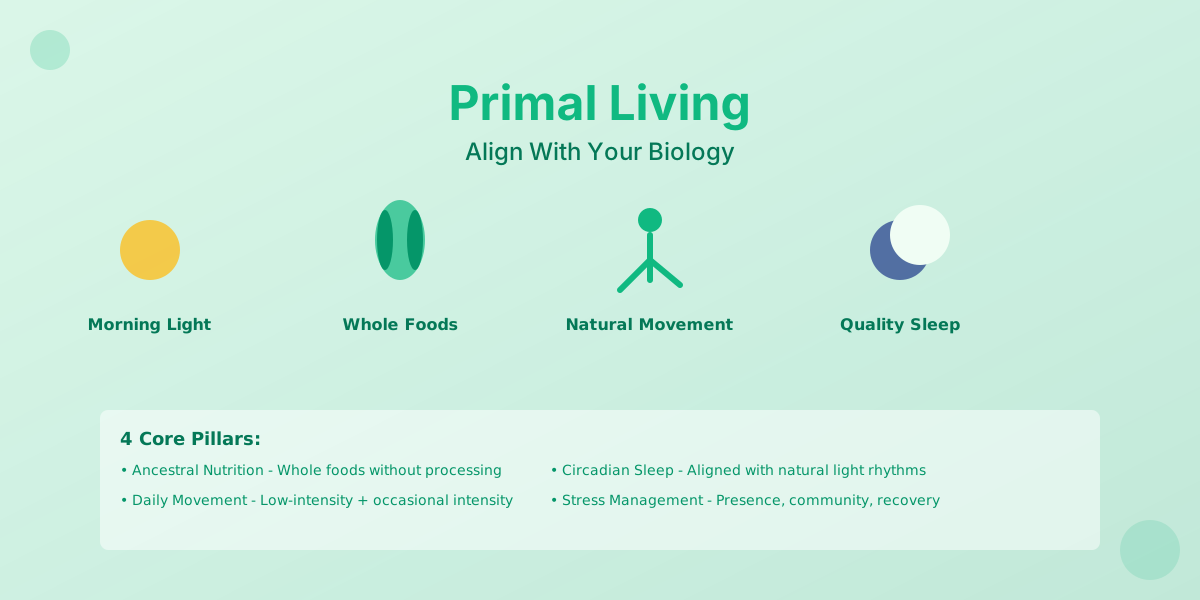
What makes primal living different is that it starts with biology, not trends. Instead of counting calories or following the latest diet fad, you ask: What did human bodies thrive on? How did humans move before gyms? When did we actually rest? The answers are surprisingly simple—and they often contradict modern advice.
In 2026, as metabolic disease rises (obesity, diabetes, inflammation), primal living offers a time-tested reset. It's not extreme. It's a return to clarity.
What Is Primal Living?
Primal living is a lifestyle philosophy that prioritizes alignment with human evolutionary biology. It emphasizes whole, unprocessed foods (meat, fish, eggs, vegetables, nuts, seeds); natural movement patterns rather than structured exercise; sleep aligned with circadian rhythms; and stress reduction through presence, community, and play. The primal framework challenges processed foods, synthetic light, sedentary work, and chronic stress—the core drivers of modern disease.
Not medical advice.
Primal living builds on evolutionary biology: your digestive system, your hormones, your nervous system—these were shaped by millions of years of human existence. For 99% of human history, people ate whole foods, moved constantly at low intensity, sprinted occasionally, slept when dark, and lived in tight social groups. The last 150 years of industrialization created the mismatch: refined oils, sugar, flour, sedentary work, artificial light, isolation. Primal living closes that gap.
Surprising Insight: Surprising Insight: Your genes haven't changed in 10,000 years—but your environment has changed in 150. That mismatch drives inflammation, weight gain, and exhaustion.
The Ancestral vs. Modern Mismatch
Shows how modern habits (processed food, sitting, artificial light, stress) conflict with ancestral biology. Primal living bridges this gap.
🔍 Click to enlarge
Why Primal Living Matters in 2026
In 2026, metabolic disease is epidemic. Roughly 88% of American adults have metabolic dysfunction (elevated blood sugar, insulin resistance, inflammation). Primal living directly addresses the root causes: refined carbohydrates, seed oils, lack of movement, sleep deprivation, and chronic stress. It's not a diet trend—it's a disease prevention framework backed by evolutionary biology and increasingly by modern research.
Second, primal living improves quality of life now. Better sleep, stable energy, clearer thinking, improved digestion, and reduced inflammation often appear within weeks. People report sleeping deeper, thinking clearer, moving easier, and feeling more present. These aren't promises; they're observable outcomes of aligning behavior with biology.
Third, as healthcare costs rise and medication side effects accumulate, primal living offers a preventive alternative. It costs less than managing diabetes, heart disease, or autoimmune conditions. It's a long-term investment in resilience.
The Science Behind Primal Living
The science rests on several pillars. First, insulin metabolism: refined carbohydrates and sugar spike insulin, driving obesity, inflammation, and metabolic dysfunction. Whole foods with lower glycemic load (meat, fish, vegetables, nuts) keep insulin stable. Second, the gut microbiome: processed foods destroy beneficial bacteria; whole foods (especially fermented foods and fiber from vegetables) feed the microbiome. A healthy gut improves digestion, immunity, and even mental health. Third, the nervous system: artificial light suppresses melatonin, disrupting sleep. Natural light exposure and darkness-aligned sleep restore circadian rhythm, improving recovery and cognitive function.
Fourth, movement patterns: ancestral humans moved constantly at low intensity (walking, gathering) with occasional high-intensity sprints (escape, hunt). Modern fitness culture often focuses on one or the other. Primal living combines both: daily low-intensity movement (walking, gentle stretching) with occasional intense exercise (sprinting, lifting). This pattern optimizes fat burning, mitochondrial health, and injury prevention. Fifth, stress: ancestral stress was acute (encounter a predator, then recovery). Modern stress is chronic (emails, deadlines, news). Primal living emphasizes practices that activate the parasympathetic nervous system: presence, play, community, and rest.
Four Pillars of Primal Biology
Nutrition, Movement, Sleep, and Stress are interconnected. Fix one, improve others. Ignore one, others suffer.
🔍 Click to enlarge
Key Components of Primal Living
Primal Nutrition: Whole Foods
Primal eating focuses on foods that humans ate before agriculture: meat, fish, eggs, vegetables, fruits, nuts, seeds, and healthy fats (olive oil, coconut oil, avocado). It avoids processed foods, refined oils (seed oils like soybean and canola), refined carbohydrates, and excess sugar. The logic is simple: your digestive system evolved to handle these foods. Your liver detoxifies whole foods efficiently. Your blood sugar stays stable. Your gut bacteria thrive. In practice, primal eating often looks similar to paleo or low-carb approaches, but the focus is on quality and nutrient density, not strict rules. Some people thrive on higher carbs (from fruits and tubers); others do better lower-carb. The principle is experimentation within whole-food bounds.
Natural Movement: Walking, Sprinting, Lifting
Ancestral movement had three parts: (1) constant low-intensity movement (walking 10+ miles per day while hunting, gathering, traveling); (2) occasional high-intensity bursts (sprinting from danger, chasing prey); (3) functional strength (lifting, climbing, carrying). Modern fitness often ignores part (1). Primal living restores it. This means daily walking (even 30-60 minutes), periodic sprinting or high-intensity interval training, and basic strength work (bodyweight exercises, lifting, or resistance). The goal isn't aesthetics; it's functional capacity, metabolic health, and longevity.
Sleep Alignment: Following Circadian Rhythm
For 200,000 years, humans slept when the sun set and woke when it rose. Modern artificial light, screens, and shift work broke this rhythm. Primal sleep practices restore it: morning sunlight exposure (resets circadian clock), afternoon sunshine (maintains rhythm), dimming lights at dusk, avoiding screens 1-2 hours before bed, and sleeping in a cool, dark room. The result: deeper sleep, better hormonal balance, and improved memory consolidation. This often requires lifestyle changes (earlier bedtime, no-screens evening), but the return on investment is enormous.
Stress Reduction: Presence and Community
Primal living addresses stress through practices that activate the parasympathetic nervous system: meditation or mindfulness (present awareness), spending time in nature, play, social connection, and meaningful work. These practices shift the nervous system from fight-or-flight (sympathetic) to rest-and-digest (parasympathetic). The distinction matters: acute stress with recovery is healthy; chronic unrelenting stress drives disease. Primal living emphasizes managing chronic stress through intentional practice.
| Life Area | Ancestral Pattern | Modern Pattern (Problems) | Primal Living (Solution) |
|---|---|---|---|
| Food | Whole, unprocessed, seasonal | Refined carbs, seed oils, processed | Return to whole foods, eliminate seed oils |
| Movement | Constant walking, occasional sprints | Sedentary + occasional gym | Daily walking, periodic high-intensity, strength |
| Light & Sleep | Sleep with sun, wake with sun | Artificial light, screens, irregular sleep | Morning light, no screens pre-bed, consistent timing |
| Stress | Acute with community recovery | Chronic, isolated, unresolved | Meditation, nature, connection, presence |
How to Apply Primal Living: Step by Step
- Step 1: Start with sleep: Get morning sunlight (5-15 minutes after waking). Dim lights at 8 PM. Remove screens from bedroom. Sleep in cool darkness (65-68°F).
- Step 2: Assess your food: For one week, write down everything you eat. Count how many are whole foods vs. processed. Notice energy and digestion patterns.
- Step 3: Eliminate seed oils: Stop using soybean, canola, and corn oil. Switch to olive oil, coconut oil, ghee, or avocado oil for cooking.
- Step 4: Increase vegetables: Aim for 3-4 cups daily. Include leafy greens, cruciferous, and colorful varieties. Add fermented foods (sauerkraut, kimchi, yogurt) for gut health.
- Step 5: Reduce refined carbs: Cut processed snacks, bread, and added sugar. Notice energy changes.
- Step 6: Move daily: Commit to 30-60 minutes of walking. Add stairs, hills, or varied terrain to make it functional.
- Step 7: Add strength: 2-3 times weekly, do basic exercises (push-ups, squats, pull-ups) or lift weights. Even 15-20 minutes counts.
- Step 8: Try one sprint: Once weekly, do 6-8 x 20-30 second sprints (running, cycling, rowing) with 2-3 minute rest between. Rest fully afterward.
- Step 9: Create a wind-down ritual: At 9 PM, turn off screens. Read, stretch, journal, or talk with family. Aim for bed by 10 PM.
- Step 10: Assess in 30 days: Review energy, sleep quality, digestion, and mood. Primal living usually shows results within 4 weeks.
Primal Living Across Life Stages
Young Adulthood (18-35)
In young adulthood, primal living prevents the metabolic damage that often starts in the 20s and 30s. This is the best time to establish sleep patterns, movement habits, and real food practices. Young adults often have energy and flexibility to experiment—to try higher-intensity training, to fast occasionally, or to test different food sensitivities. The focus here is resilience building: develop habits now that prevent disease in the 40s and 50s. Peer influence is strong; finding a community that supports primal living (friends who cook whole foods, move regularly, prioritize sleep) makes the transition easier.
Middle Adulthood (35-55)
Middle age is when metabolic damage often shows up: weight gain, energy crashes, sleep problems, inflammation. Primal living becomes therapeutic. The gains appear quickly—weight loss, better sleep, clearer thinking. But this stage often has competing demands: career pressure, family responsibilities, caregiving. Primal living here means pragmatism. You might not have time for daily sprinting, but you can walk and add basic strength training. You might prioritize sleep above extra work hours. The key is consistency over perfection. Even partial primal shifts (better food choices, more sleep, less sitting) yield benefits.
Later Adulthood (55+)
In later adulthood, primal living focuses on longevity and independence. Strength training becomes crucial (prevents muscle loss, maintains bone density, supports mobility). Movement patterns emphasize mobility and functional strength over intensity. Nutrition emphasizes nutrient density (micronutrient needs increase with age). Sleep and stress management become even more central. Many older adults find that primal living (real food, good sleep, regular movement, strong community) reverses age-related decline and enables active, engaged living into the 80s and 90s.
Profiles: Your Primal Living Approach
The Optimized Professional
- Meal prep systems for busy schedules (2 hours Sunday = 5 weekday dinners)
- Short, effective workouts (30-45 minutes, 3-4x weekly)
- Sleep prioritization despite deadline pressure
Common pitfall: Using work stress as an excuse to skip sleep and eat processed food. This backfires: worse sleep worsens decision-making and increases stress.
Best move: Treat sleep and morning movement as non-negotiable calendar items. Batch cook on Sunday. Walk at lunch. These practices improve work performance and reduce stress.
The Athlete Seeking Recovery
- Nutrient-dense food that supports training adaptation
- Sleep that enables full recovery (7-9 hours)
- Periodization that avoids constant high-intensity (building in low-intensity weeks)
Common pitfall: Training hard but not recovering hard. Pushing daily intensity without adequate sleep, nutrition, or rest days leads to injury and burnout.
Best move: View recovery (sleep, food quality, low-intensity movement) as training itself. One hard sprint day, then 3-4 low-intensity days. Sleep 8-9 hours after hard effort.
The Health-Conscious Parent
- Family meals that are whole-food, quick to prepare, and kid-friendly
- Movement that includes family time (walks, hikes, yard play) rather than gym time away from kids
- Boundaries on artificial light and screens for the whole family
Common pitfall: Perfectionism—trying to eat completely clean, exercise intensely, and maintain perfection. This leads to burnout and resentment.
Best move: Lower the bar. A family walk counts. Grilled chicken and roasted vegetables count. 8 PM screen shutdown for everyone counts. Progress over perfection.
The Metabolic Recovery Seeker
- Elimination of refined carbs and seed oils (often needed for 4-12 weeks to see reversal of insulin resistance)
- Community support (primal living communities, accountability partners, or coaching)
- Frequent check-ins on progress (weight, energy, digestion, mood)
Common pitfall: Expecting overnight results or giving up after 2 weeks. Metabolic recovery takes time; reversal of insulin resistance requires 4-12 weeks minimum.
Best move: Commit to 12 weeks. Track metrics (not just weight: energy, sleep quality, digestion, blood work if available). Expect non-linear progress. Many report breakthroughs weeks 6-12.
Common Primal Living Mistakes
Mistake 1: Overcomplicating the start. People read books, buy supplements, start a new exercise program, and eliminate all sugar simultaneously. This is too much change at once. Better: Pick one change (e.g., morning sunlight), do it for 2 weeks, then add another. Incremental change sticks; revolutionary change often fails.
Mistake 2: Confusing primal eating with extreme restriction. Primal eating is about whole foods, not zero carbs or zero everything fun. Most people thrive on moderate carbs from fruits, potatoes, and rice alongside meat and vegetables. The goal is nutrient-dense eating, not macro perfection.
Mistake 3: Neglecting community. Primal living works better with support. If everyone around you eats processed food, exercises rarely, and treats sleep as a waste of time, your habits face constant friction. Find or build a community (online, friend group, gym, or coaching) that supports these choices.
Primal Mistakes and Antidotes
Common pitfalls and the practical fixes for each. Primal living succeeds with simplicity, moderation, and community.
🔍 Click to enlarge
Science and Studies
Research on primal and paleo approaches shows consistent benefits. Studies show improved blood glucose control, weight loss, and reduced cardiovascular risk factors. Whole-food diets outperform processed-food diets for metabolic health. Natural movement (walking, functional strength) improves bone density and metabolic markers. Sleep aligned with circadian rhythm improves cognitive function, immune health, and longevity. Below are key research areas supporting primal principles.
- Paleo diet metabolic study (2015, Nutrition Review): Paleo-style eating improved insulin sensitivity, reduced inflammation markers, and supported weight loss better than conventional low-fat diets.
- Circadian rhythm and health (2017, Nature Reviews): Circadian misalignment (from artificial light and irregular sleep) drives metabolic dysfunction, immune suppression, and cancer risk. Alignment improves all markers.
- Natural movement and longevity (2019, BMJ): People with high daily-movement activity (walking, functional movement) had lower mortality regardless of structured exercise. Ancestral movement patterns are longevity-promoting.
- Seed oil inflammation (2020, Journal of Nutrition): High intake of linoleic acid from seed oils (soybean, canola) increases oxidative stress and inflammation. Olive and coconut oils are anti-inflammatory.
- Gut microbiome and whole foods (2021, Nature Medicine): Processing destroys beneficial bacteria. Whole-food diets, especially with fermented foods, restore microbiome diversity and improve digestion and immunity.
Your First Micro Habit
Start Small Today
Today's action: Tomorrow morning, step outside within 30 minutes of waking and expose your eyes to sunlight for 5-15 minutes. No sunglasses. This resets your circadian clock, improves sleep quality, and boosts mood and energy.
Sunlight triggers melanopsin in your retina, which resets your master circadian clock. This single action improves sleep that night and every night after. You're hacking your biology with free exposure to light.
Track your morning sunlight exposure and sleep quality in the Bemooore app. After 2 weeks, most people report noticeably deeper sleep.
Quick Assessment
How would you describe your current energy levels throughout the day?
Stable energy suggests good metabolic health. Crashes often signal insulin dysregulation (refined carbs). All-day fatigue suggests sleep quality or movement issues. Hyperactivity with insomnia suggests nervous system dysregulation. Primal living addresses each.
How aligned is your sleep schedule with the sun?
Sleep aligned with sun signals strong circadian health. Irregular timing can impair recovery despite adequate hours. Short sleep drives disease. Pre-bed screens suppress melatonin, worsening sleep quality. Primal living prioritizes both duration and circadian alignment.
What best describes your daily movement?
Daily walking plus periodic strength is primal ideal. Exercise without daily low-intensity movement misses half the pattern. Sedentary jobs negate gym time; constant sitting drives inflammation. Primal living requires daily movement baseline.
Take our full assessment to get personalized recommendations for your health journey.
Discover Your Style →Next Steps
Primal living is a return to clarity. You don't need complicated rules or supplements or special programs. You need alignment: real food, natural movement, good sleep, and connection. Start with one change tomorrow—morning sunlight—and build from there. The results will speak louder than any article.
The deeper principle: Your body evolved in a specific environment over 200,000 years. Modern life broke that fit. Primal living fixes it. It's not about being perfect; it's about making choices that feel more alive, more functional, more like home.
Get personalized guidance with AI coaching in the Bemooore app.
Start Your Journey →Research Sources
This article is based on peer-reviewed research and authoritative sources. Below are the key references we consulted:
Related Glossary Articles
Frequently Asked Questions
Is primal living the same as paleo?
Similar but not identical. Paleo is food-focused (no grains, legumes, dairy). Primal is lifestyle-focused: food, sleep, movement, and stress. Most paleo eaters follow primal principles; most primal practitioners eat paleo-style, but with some flexibility (some include quality dairy or small amounts of legumes if they tolerate them).
Can I do primal living on a budget?
Yes. The cheapest proteins are often eggs, canned fish, and ground meat. Seasonal vegetables are cheap. Bulk nuts and seeds are affordable. Avoid specialty primal products (expensive snack bars, supplements). Focus on whole foods: eggs, chicken, rice, potatoes, beans, lentils, seasonal vegetables. You can eat primal for less than processed food.
How long before I see results?
Sleep improvement often appears in 3-7 days. Energy stabilization, digestion improvement, and mood changes usually appear in 2-4 weeks. Weight loss and significant metabolic shift typically take 6-12 weeks. Blood sugar normalization and reversed insulin resistance require 8-12 weeks minimum. The key is consistency; intermittent adherence delays results.
Do I need supplements on a primal diet?
Not necessarily. A well-designed primal diet (meat, fish, vegetables, fruits, nuts) covers most micronutrients. Some people benefit from vitamin D (especially in winter), omega-3 (if fish intake is low), or magnesium (especially for sleep). Supplementation should address specific gaps, not replace food variety. Test before taking.
Can athletes do primal living?
Yes. Many high-performing athletes thrive on whole-food diets combined with strategic carb timing. Carbs are fine (especially post-workout); the issue is refined carbs and processed food. Focus on nutrient-dense carbs (potatoes, rice, fruits) alongside whole proteins and vegetables. Pair high-intensity training with adequate sleep and nutrition. Recovery is training.
Take the Next Step
Ready to improve your wellbeing? Take our free assessment to get personalized recommendations based on your unique situation.
- Discover your strengths and gaps
- Get personalized quick wins
- Track your progress over time
- Evidence-based strategies