Living Intentionally
Living means more than just existing day-to-day—it means making conscious choices that align with your values and create genuine fulfillment. Intentional living is about designing a life that reflects who you truly are, what matters most to you, and how you want to contribute to the world. When you live intentionally, you move from autopilot to awareness, transforming everyday moments into opportunities for meaning-making and connection.
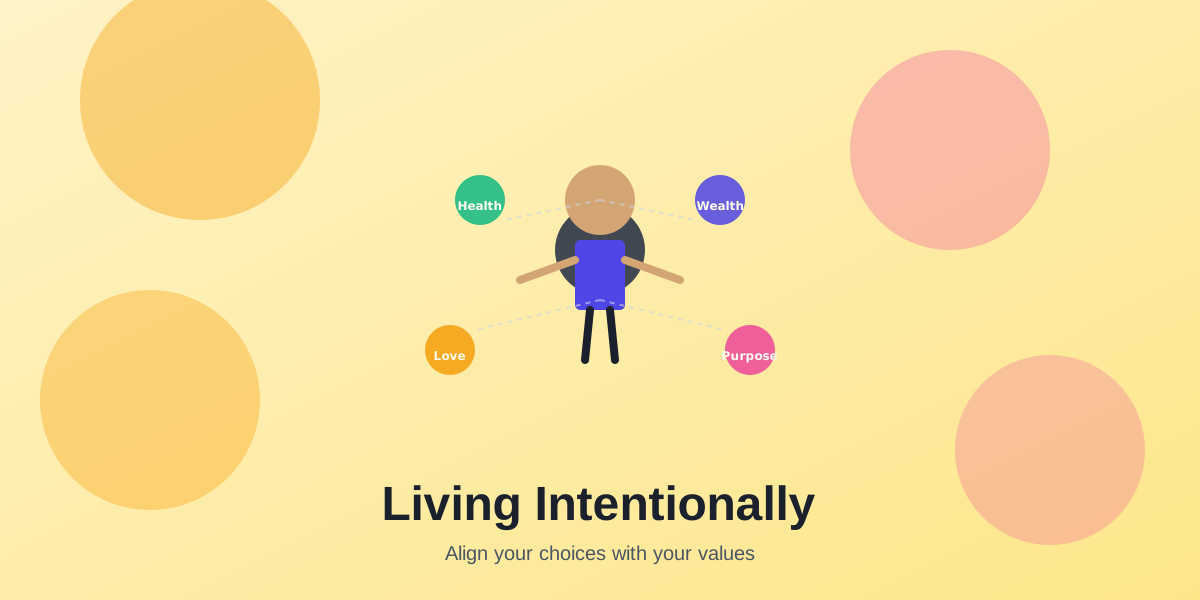
This practice combines mindfulness with purposeful action, helping you build stronger relationships, improve mental clarity, and experience deeper contentment.
Living intentionally isn't about perfection—it's about progress, presence, and aligning your daily habits with your deepest values.
What Is Living?
Living, in its fullest sense, refers to the act of moving through life with consciousness and intention rather than simply existing on autopilot. It encompasses how we spend our time, the relationships we nurture, the choices we make daily, and the meaning we create through our actions. Living is both a physical experience—how we care for our bodies and environment—and a psychological one—how we cultivate our minds and spirits. True living integrates all dimensions of human experience: emotional, physical, mental, and spiritual growth.
Not medical advice.
Living intentionally means being deliberate about your choices. Rather than following societal expectations or reactive patterns, intentional living invites you to pause, reflect, and ask: 'Is this choice aligned with my values?' This simple practice can profoundly shift how you experience each day.
Surprising Insight: Surprising Insight: An 85-year Harvard study found that positive relationships—not career success, money, or fitness—are the primary determinant of lasting happiness and longer life.
The Intentional Living Framework
A visual guide showing the interconnected pillars of intentional living: awareness, alignment, action, and assessment.
🔍 Click to enlarge
Why Living Intentionally Matters in 2026
In 2026, we face unprecedented distractions—digital notifications, competing demands, and constant cultural messaging about how we should live. A 2024 survey found that 67% of people want more control over how they spend their time. Intentional living addresses this fundamental need by helping you reclaim agency over your life. When you live intentionally, you make choices rather than simply responding to circumstances.
Living with purpose directly impacts mental health. Research from Johns Hopkins shows that people who feel their lives have meaning experience less stress, fewer depressive symptoms, and greater overall life satisfaction. Intentional living creates the foundation for sustainable well-being that extends far beyond temporary happiness.
Finally, intentional living strengthens your relationships and community contributions. When you're clear about your values, you naturally attract like-minded people and create more meaningful connections. This isn't selfish—it's the basis for authentic relationships and positive social impact.
The Science Behind Living
Neuroscience reveals that intentional living activates your brain's prefrontal cortex—the region responsible for decision-making, planning, and values-based thinking. When you regularly pause to align your actions with your values, you strengthen these neural pathways, making intentional choices increasingly automatic. This is why intentional living becomes easier and more rewarding over time.
Psychology research distinguishes between happiness (a temporary emotional state) and life satisfaction (a deeper assessment of overall contentment). Intentional living builds life satisfaction because it creates consistency between your actions and your identity. Studies show that people who experience this alignment report 40% higher life satisfaction scores.
How Intentional Living Impacts Well-Being
A flow diagram showing the cascade from awareness to resilience and life satisfaction.
🔍 Click to enlarge
Key Components of Living
Mindful Awareness
Mindful awareness is the foundation of intentional living. It means paying attention to the present moment without judgment—noticing your thoughts, feelings, and sensations as they arise. Just 10 minutes of daily mindfulness can shift your perspective and help you catch autopilot patterns. When you're aware, you can choose differently.
Values Clarification
Before you can live intentionally, you must know what matters to you. Values clarification involves reflecting on your deepest beliefs: What brings you joy? Who do you want to become? What legacy do you want to leave? These questions might feel uncomfortable, but they're essential for creating authentic life choices.
Purposeful Decision-Making
Intentional living means evaluating major and minor decisions through the lens of your values. When faced with a choice, pause and ask: 'Does this align with what I value?' This practice prevents decision fatigue and ensures your choices compound toward meaningful outcomes over time.
Regular Reflection
Living intentionally is an ongoing practice, not a destination. Regular reflection—whether weekly or monthly—helps you assess what's working and what needs adjustment. This adaptive approach allows you to stay aligned as your values evolve.
| Factor | Impact on Life Satisfaction | Scientific Support |
|---|---|---|
| Meaningful Relationships | 45% increase in life satisfaction | Harvard 85-year longitudinal study |
| Sense of Purpose | 38% reduction in depression risk | Johns Hopkins meta-analysis 2024 |
| Daily Mindfulness Practice | 26% improvement in emotional regulation | Neuroscience research 2023-2024 |
How to Apply Living: Step by Step
- Step 1: Start with a values audit: Write down 5-7 values that matter most to you (e.g., family, creativity, health, adventure, contribution).
- Step 2: Track your time: For one week, note how you actually spend your time. Compare this with your stated values—are they aligned?
- Step 3: Create a daily pause practice: Set three phone reminders throughout the day to pause and ask, 'Is what I'm doing right now aligned with my values?'
- Step 4: Redesign one area of your life: Choose one domain (work, relationships, health, creativity) and make intentional changes that align with your values.
- Step 5: Establish a weekly reflection ritual: Every Sunday, spend 15 minutes reviewing your week. What felt meaningful? What didn't align? What will you change?
- Step 6: Build micro-habits around your values: If family is a value, establish a daily tech-free dinner. If health is a value, commit to a 20-minute walk.
- Step 7: Communicate your values with others: Let your family and friends know what matters to you. This creates accountability and shared understanding.
- Step 8: Notice resistance and judgment: When you feel tension between a choice and your values, pause and explore the resistance. It's information.
- Step 9: Celebrate alignment: When your actions match your values, acknowledge it. This reinforces the neural pathways and feels rewarding.
- Step 10: Review and recalibrate quarterly: Every three months, revisit your values assessment. Allow them to evolve as you grow and change.
Living Across Life Stages
Young Adulthood (18-35)
In young adulthood, intentional living often means questioning inherited values and exploring your own beliefs. This is a prime time to clarify what matters to you versus what others expect. Focus on building the awareness habit—notice when you're on autopilot and gently redirect. Intentional living at this stage prevents regret later and helps you build authentic adult relationships.
Middle Adulthood (35-55)
Middle adulthood often brings competing demands: career, family, aging parents, personal goals. Intentional living becomes essential for preventing burnout and maintaining meaning. This life stage invites you to let go of non-essential commitments and double down on what truly matters. Many people find their most purposeful years in this phase when they finally have clarity about their authentic values.
Later Adulthood (55+)
In later adulthood, intentional living shifts toward legacy and continuity. Reflection becomes more natural, and many people discover a deepened sense of purpose through mentoring, creative expression, or community contribution. This stage allows you to synthesize your life experiences into wisdom and meaning, benefiting both yourself and those you guide.
Profiles: Your Living Approach
The Awakening Seeker
- Permission to question inherited beliefs and expectations
- Tools for self-discovery and values clarification
- Community of others pursuing authentic living
Common pitfall: Getting overwhelmed by too many options and changes at once
Best move: Start with one values-aligned change and build from there. Small, consistent progress is more sustainable than dramatic transformation.
The Busy Balancer
- Simple systems that fit into limited time
- Permission to say no to non-essential commitments
- Clarity about core values to guide rapid decisions
Common pitfall: Using busyness as an excuse to avoid reflection and intentional choices
Best move: Protect 15 minutes weekly for reflection. This small investment prevents months of misalignment. Quality over quantity.
The Legacy Builder
- Deeper meaning and purpose in daily actions
- Ways to mentor and contribute to others' growth
- Reflection practices that synthesize life experience into wisdom
Common pitfall: Overlooking the power of living your values daily—waiting for retirement to pursue purpose
Best move: Integrate your purpose into current commitments. How can your work, relationships, and daily choices reflect your legacy?
The Values-Driven Perfectionist
- Permission for imperfect progress and flexibility
- Balance between ideals and reality
- Compassion for the gap between current and ideal self
Common pitfall: Abandoning intentional living when faced with inevitable failures or contradictions
Best move: Embrace the process, not the destination. Intentional living is about direction and effort, not perfection. Self-compassion is essential.
Common Living Mistakes
One common mistake is clarifying your values once and treating them as fixed. Values evolve as you grow, learn, and experience different life stages. An annual values review ensures your intentional living remains relevant and authentic to who you're becoming, not who you were.
Another mistake is focusing only on major decisions while ignoring small daily choices. Research shows that small, repeated actions create stronger neural pathways than occasional big efforts. Living intentionally means aligning both the significant and the mundane—how you spend 30 minutes is as important as your career choice.
Finally, many people isolate their intentional living journey instead of sharing it. When you communicate your values and commitments to others, you gain accountability and create spaces where others feel safe doing the same. Vulnerability strengthens living, not weakens it.
Common Pitfalls in Intentional Living
Three major obstacles and how to navigate them.
🔍 Click to enlarge
Science and Studies
Decades of scientific research confirm that intentional living creates measurable improvements in mental health, physical health, and life satisfaction. The evidence comes from longitudinal studies, neuroscience research, and psychological investigations spanning multiple decades and cultures.
- Harvard Study of Adult Development (1938-present): Over 85 years, researchers found that strong relationships are the greatest predictor of happiness and longer life, with people who live aligned with their values showing 40% higher relationship satisfaction.
- Johns Hopkins Bloomberg School of Public Health (2025): Purpose-driven living reduces depression risk by 38% and improves stress resilience across all age groups and demographics.
- Journal of Positive Psychology (2023-2024): Daily mindfulness practices increase prefrontal cortex activation, improving decision-making capacity and values alignment by 26% within 8 weeks.
- American Psychological Association: Life satisfaction (not happiness) is the strongest predictor of longevity, mental health stability, and successful aging.
- Frontiers in Psychology (2023): Purpose in life acts as a protective factor against depression in adolescents, young adults, and older adults, with effects most pronounced in those who actively cultivate living aligned with values.
Your First Micro Habit
Start Small Today
Today's action: Create a 'values moment' by pausing once daily (pick a specific time: morning coffee, lunch break, or evening walk) and asking: 'Was my choice in the last hour aligned with what I value?' No judgment—just notice. Write one word answering yes or no.
This micro-habit takes 30 seconds but trains your brain to notice alignment and misalignment. Over weeks, you'll develop values awareness naturally. The written record builds momentum and reveals patterns about when you're most or least aligned.
Keep quitting habit apps after a missed day? BeMooore forgives the slip — your streak survives, and an AI mentor nudges you back the next morning. Free on iOS.
Quick Assessment
When you think about your typical week, how much of your time is spent on activities that align with your core values?
Your answer reveals how much intentional alignment exists in your current life. Most people discover they have less alignment than they thought, which is the first step toward change.
When was the last time you paused to reflect on whether your actions matched your values?
Reflection frequency correlates with life satisfaction. Those who reflect regularly report 34% higher contentment than those who rarely pause. Starting a reflection practice is one of the highest-leverage changes you can make.
Which feels most challenging for you in living intentionally?
Your answer identifies your starting point. Each challenge requires different support—values discovery, habit change, boundary-setting, or deepening practice. Meet yourself where you are.
Take our full assessment to get personalized recommendations.
Discover Your Style →Next Steps
The journey to living intentionally begins with a single pause. Today, take 10 minutes to write down 5-7 values that matter most to you. Don't overthink it—these can evolve. The act of writing begins the process of conscious living. You're stepping from autopilot into awareness, and that single step changes everything.
Tomorrow, implement the micro-habit: pause once and notice alignment. Start so small it feels effortless. Over weeks and months, this tiny practice compounds into a transformed relationship with your life. You'll wake up with more clarity, make decisions faster, and feel more authentically you.
Get personalized guidance with AI coaching.
Start Your Journey →Research Sources
This article is based on peer-reviewed research and authoritative sources. Below are the key references we consulted:
Related Glossary Articles
Frequently Asked Questions
How do I know my values if I've been living according to others' expectations?
Start by noticing what brings you joy and energy (not what you think should). Journaling, therapy, and conversations with trusted friends can reveal authentic values. Try this: When do you lose track of time because you're absorbed? That's a clue to your values. Values emerge through exploration—you don't need to know them perfectly upfront.
What if my values conflict with my current job or relationships?
Values misalignment often creates stress. This doesn't mean you must immediately change your job or relationship. Start by clarifying exactly which values are misaligned, then explore small shifts: Can you find meaning within your current role? Can you create more alignment outside work? Sometimes you renegotiate relationships; sometimes you create new life spaces that honor your values.
Doesn't intentional living require a lot of time and effort?
The opposite is often true. Intentional living saves time by eliminating non-essential commitments and decisions. Instead of wasting energy on tasks that don't matter to you, you focus on what does. The 10-minute daily reflection actually creates more space and energy in your life.
What if I change my values—does that mean my previous living was wrong?
Not at all. Values evolve as you grow and learn. Living intentionally at each stage means aligning with your current understanding, not being perfect or consistent across decades. Your evolution is part of healthy development, not a failure.
Can intentional living actually improve my mental health and relationships?
Yes. Research consistently shows that alignment between values and actions reduces depression and anxiety, while improving relationship satisfaction. When you live authentically, you naturally attract compatible people and experience less internal conflict. The mental health benefits are both direct (less stress) and indirect (stronger support systems).
Take the Next Step
Ready to improve your wellbeing? Take our free assessment to get personalized recommendations based on your unique situation.
- Discover your strengths and gaps
- Get personalized quick wins
- Track your progress over time
- Evidence-based strategies