Mental Wellness
Mental wellness is more than just the absence of mental illness. It represents a state of positive mental health where your mind functions optimally, enabling you to cope with life's stresses, realize your full potential, and contribute meaningfully to your community. In 2026, mental wellness has become central to how we define overall health. According to recent research, 65% of women and a growing percentage of men actively seek resources to improve their mental wellbeing, reflecting a fundamental shift in how society approaches emotional and psychological health. Mental wellness encompasses emotional resilience, psychological balance, and the ability to thrive despite life's challenges.
Unlike mental health treatment, which focuses on addressing illness, mental wellness is proactive. It involves building your psychological strength before crises emerge, developing healthy coping mechanisms, and cultivating a mindset that supports long-term flourishing.
This guide explores what mental wellness truly means, why it matters in 2026, the science behind it, and practical steps you can take today to enhance your psychological wellbeing.
What Is Mental Wellness?
Mental wellness is a condition of positive mental health where your mind is organized, functions effectively, and supports your best interests. It's characterized by optimism, confidence, contentment, and the ability to navigate life's demands with resilience. Mental wellness exists on a separate spectrum from mental illness—you can be mentally well while still managing certain challenges, or you can be mentally ill and still have some moments of wellness. The distinction is crucial: mental illness and mental wellness are not opposites; they are independent continuums.
Not medical advice.
Mental wellness involves emotional stability, psychological flexibility, and the capacity to experience life with authenticity. It means you have developed tools for managing stress, processing emotions, and maintaining healthy communication in your relationships. A person with strong mental wellness experiences better sleep quality, enhanced cognitive function, and improved overall life satisfaction.
Surprising Insight: Surprising Insight: Research shows that mental illness and mental wellness exist on two separate continuums—meaning you can simultaneously address mental health challenges while building lasting psychological wellness.
The Mental Wellness Spectrum
Shows how mental wellness exists independently from mental illness, with flourishing at one end and languishing at the other.
🔍 Click to enlarge
Why Mental Wellness Matters in 2026
Mental wellness has moved from the margins of health discussions to the center stage. Every year, one in five people globally experience a mental health condition, yet far fewer focus on building proactive mental wellness. This gap is closing rapidly. The global mental wellness market is projected to grow from $175.91 billion in 2025 to $283.56 billion by 2033, reflecting enormous societal investment in this area.
The 2026 landscape shows that employers, educational institutions, and healthcare systems now recognize a fundamental truth: investing in mental wellness yields measurable returns. Research demonstrates that every $1 invested in mental-health support generates approximately $4 in productivity gains and reduced absenteeism. Workers with strong mental wellness take fewer sick days, demonstrate better focus, and report higher job satisfaction.
Beyond the workplace, mental wellness directly impacts your quality of life. It influences your ability to build meaningful relationships, pursue career goals, maintain physical health, and experience happiness. People with high mental wellness report greater life satisfaction, resilience during hardship, and capacity for emotional expression.
The Science Behind Mental Wellness
Mental wellness is rooted in neuroscience, psychology, and behavioral research. Modern understanding reveals that mental health and wellbeing are shaped by a complex interplay of biological, psychological, and environmental factors. Your brain's neurotransmitters—particularly serotonin, dopamine, and oxytocin—play crucial roles in mood regulation and overall wellbeing. Simultaneously, your thoughts, beliefs, and behavioral patterns significantly influence these biological processes.
Psychological research has identified key components of mental wellness: the ability to cope effectively with stress, emotional regulation skills, meaningful relationships, a sense of purpose, personal growth opportunities, and autonomy in decision-making. When these elements are present, people experience greater psychological wellbeing.
Components of Psychological Wellbeing
Illustrates the six pillars that combine to create robust mental wellness.
🔍 Click to enlarge
Key Components of Mental Wellness
Emotional Regulation
This is your ability to recognize, understand, and manage your emotions effectively. People with strong emotional regulation don't suppress feelings; instead, they acknowledge emotions while choosing constructive responses. Emotional intelligence training strengthens this skill significantly.
Stress Resilience
Mental wellness includes developing robust stress management capabilities. This doesn't mean you avoid stress—it means you've built psychological buffers that help you recover quickly after challenging experiences. Breathing techniques and mindfulness practices strengthen resilience considerably.
Meaningful Relationships
Strong connection with others is fundamental to mental wellness. Quality relationships provide emotional support, reduce isolation, and enhance your sense of belonging. Active listening and genuine communication skills are essential for building these bonds.
Purpose and Meaning
People with mental wellness experience clarity about what matters to them. Whether through career, volunteering, creative pursuits, or family, having a sense of purpose significantly boosts wellbeing and provides direction during difficult times.
| Life Area | Low Wellness Impact | High Wellness Impact |
|---|---|---|
| Work Performance | Increased absenteeism, lower productivity | 40-60% reduction in missed work, higher engagement |
| Physical Health | Weakened immunity, chronic stress symptoms | Better sleep, stronger immune system, longevity |
| Relationships | Conflict, emotional distance, isolation | Stronger bonds, effective communication, support |
| Life Satisfaction | Depression, anxiety, low happiness | Contentment, resilience, optimism, joy |
| Cognitive Function | Memory issues, reduced focus, brain fog | Enhanced concentration, better learning, clarity |
How to Apply Mental Wellness: Step by Step
- Step 1: Assess your current mental wellness baseline by honestly evaluating your stress levels, emotional patterns, and relationship quality over the past month.
- Step 2: Establish a daily mindfulness practice, even if just 5-10 minutes of conscious breathing or meditation to build emotional awareness.
- Step 3: Schedule regular movement through exercise, walks, or yoga—research confirms exercise significantly improves mood and mental clarity.
- Step 4: Build or strengthen one key relationship by dedicating quality time to meaningful connection each week.
- Step 5: Identify your personal values and align at least one daily activity with something that feels purposeful to you.
- Step 6: Develop a stress management toolkit including your favorite coping strategies, whether journaling, art, music, or nature time.
- Step 7: Practice gratitude by noting three things you appreciate daily—this rewires your brain toward positive patterns.
- Step 8: Set boundaries in work and social life to protect your energy and prevent burnout.
- Step 9: Seek professional support—therapy, coaching, or counseling—not only during crisis but as ongoing wellness investment.
- Step 10: Track your wellness progress monthly, noticing improvements in sleep, mood, focus, and relationship quality.
Mental Wellness Across Life Stages
Young Adulthood (18-35)
This stage often involves establishing independence, career foundations, and identity. Mental wellness challenges frequently include perfectionism, anxiety about future direction, and navigating new relationships. Building healthy daily routines and learning emotional regulation early creates lasting benefits. Peer connection and mentorship become especially valuable.
Middle Adulthood (35-55)
This period brings increased responsibilities with career, family, and financial management. Mental wellness often requires boundary-setting to prevent burnout, work-life balance strategies, and renewed focus on self-care. Reassessing life purpose and adjusting goals based on evolving values becomes crucial for continued wellbeing.
Later Adulthood (55+)
Life transitions like retirement, health changes, and loss require emotional resilience. Mental wellness in this stage focuses on finding new purpose, maintaining social connection, adapting to life changes, and building legacy meaning. Continued learning, mentoring others, and spiritual practices often enhance wellbeing significantly.
Profiles: Your Mental Wellness Approach
The Analytical Processor
- Understanding the science and research behind mental wellness practices
- Clear metrics to track progress and measure improvement
- Logical frameworks for managing emotions and stress
Common pitfall: Over-intellectualizing emotions instead of fully experiencing and processing them
Best move: Balance your analytical nature with experiential practices like breathwork and body-awareness exercises
The Connection-Seeker
- Strong relationships and community involvement
- Group activities and shared experiences
- Feeling supported and emotionally connected
Common pitfall: Neglecting self-care while focused on others' needs, leading to depletion
Best move: Schedule regular alone time and practice self-compassion as part of your wellness routine
The Action-Taker
- Concrete, measurable wellness goals and plans
- Practical tools and strategies they can implement immediately
- Progress milestones and visible results
Common pitfall: Pushing too hard and burning out when results don't come fast enough
Best move: Build in recovery time and celebrate small wins—self-care requires patience and rest
The Reflective Observer
- Space for introspection and meaning-making
- Practices like journaling, meditation, and quiet contemplation
- Understanding the deeper 'why' behind wellness practices
Common pitfall: Overthinking to the point of inaction or getting stuck in analysis
Best move: Combine reflection with small, simple actions—even five minutes of mindfulness daily creates change
Common Mental Wellness Mistakes
One widespread mistake is treating mental wellness as a destination rather than an ongoing practice. People often expect to "achieve" wellness and then maintain it passively. In reality, mental wellness requires consistent attention—like physical fitness, it's a practice you maintain throughout your life. Building resilience is not a one-time accomplishment; it's continuous cultivation.
Another critical error is confusing mental wellness with the absence of stress or sadness. Mentally well people still experience difficult emotions and challenging situations. The difference is their ability to process these experiences, recover, and integrate them into personal growth. Emotional resilience, not emotional avoidance, is the goal.
Many also neglect the interconnection between mental and physical wellness. Sleep quality, nutrition, and regular exercise directly impact mental health. Pursuing mental wellness while ignoring these fundamentals significantly limits your progress. Similarly, overlooking your relationships and social connection undermines other wellness efforts.
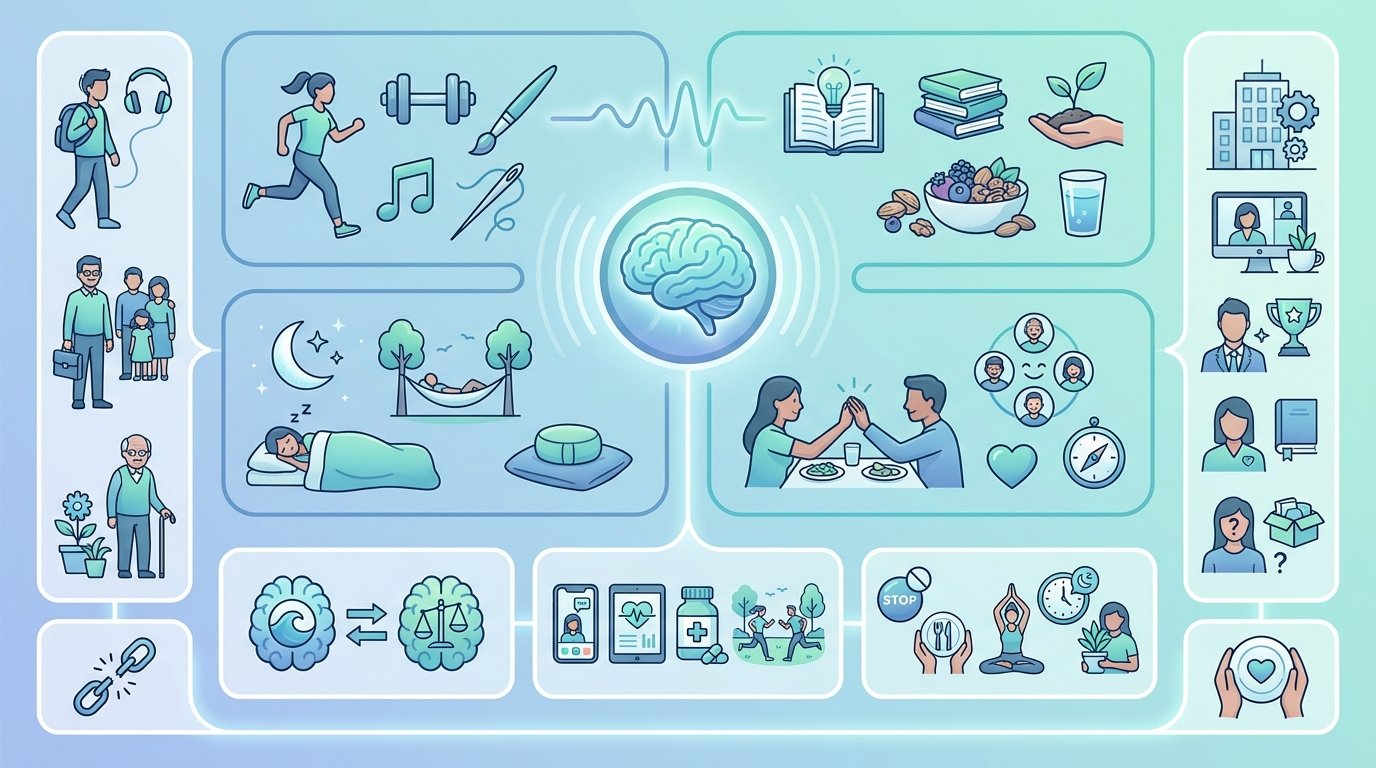
Mental Wellness Integration Model
Shows how mental wellness connects with physical health, relationships, purpose, and daily practices.
🔍 Click to enlarge
Science and Studies
The scientific foundation for mental wellness interventions is robust. Research consistently demonstrates that evidence-based approaches—from mindfulness training to cognitive behavioral strategies to social connection—yield measurable improvements in psychological wellbeing. Neuroscience shows these practices actually rewire brain pathways associated with emotional regulation and resilience.
- PMC/NIH research on mental health and wellbeing documents that integrated approaches combining biological, psychological, and social factors are most effective
- Global Wellness Institute studies show that 65% of women consumers actively seek mental wellness resources, with a 33% increase over three years
- World Health Organization research confirms mental wellness as distinct from mental illness, emphasizing proactive wellbeing development
- Stanford Online course research demonstrates positive psychology interventions reliably boost happiness and stress resilience
- Neuroscience studies show exercise produces mental wellness benefits equal to or exceeding certain medications, with effects on mood, memory, and cognitive function
Your First Micro Habit
Start Small Today
Today's action: Spend 5 minutes daily with your eyes closed, focusing on your natural breath. Notice each inhale and exhale without trying to change it. This single practice activates your parasympathetic nervous system and builds the foundation for all other mental wellness work.
This micro habit rewires your brain toward awareness and calm. Over time, this 5-minute practice reduces stress hormones, improves emotional regulation, and creates a mental "reset button" you can use anytime. Starting small ensures you actually do it daily—consistency matters far more than duration.
Keep quitting habit apps after a missed day? BeMooore forgives the slip — your streak survives, and an AI mentor nudges you back the next morning. Free on iOS.
Quick Assessment
How would you currently rate your overall mental wellbeing?
Your answer reveals your current mental wellness baseline and where targeted practices would help most.
What aspect of mental wellness matters most to you right now?
Different people benefit from different wellness approaches. Understanding your priority helps you focus your energy where it will create the most meaningful change.
What's prevented you from prioritizing mental wellness in the past?
Identifying your barrier is the first step to moving past it. Different obstacles require different solutions—and all are entirely solvable.
Take our full assessment to get personalized recommendations.
Discover Your Style →Next Steps
Your mental wellness journey begins with a single choice: to prioritize your psychological wellbeing as deliberately as you would your physical health. This doesn't require dramatic changes or expensive programs. It requires consistent, small practices that compound over time. Start with the micro habit suggested earlier—five minutes of breath awareness daily—and build from there.
Beyond this article, deepen your understanding by exploring mindfulness practices, reading about emotional intelligence, learning stress management techniques, strengthening your relationships, and reflecting on your personal purpose. Consider professional support—therapy, coaching, or counseling—as an investment in your most valuable asset: your mind.
Get personalized guidance with AI coaching.
Start Your Journey →Research Sources
This article is based on peer-reviewed research and authoritative sources. Below are the key references we consulted:
Related Glossary Articles
Frequently Asked Questions
Is mental wellness the same as mental health?
No. Mental health refers to psychological functioning and the presence or absence of mental illness. Mental wellness refers to a state of positive wellbeing, thriving, and psychological flourishing. You can have a mental health condition and still work toward wellness, or be free from mental illness yet still struggle with wellness.
How long does it take to build mental wellness?
Some benefits appear quickly—a single mindfulness session can reduce stress immediately. However, building robust, lasting mental wellness typically requires 2-3 months of consistent practice to create noticeable habit changes, and 6-12 months to experience deep transformation in how you experience life.
Can mental wellness help with diagnosed mental health conditions?
Mental wellness practices complement professional treatment beautifully. Mindfulness, exercise, strong relationships, and purpose-building support recovery and management of mental health conditions. However, they don't replace professional treatment—use both together for best results.
What's the difference between mental wellness and self-care?
Self-care refers to specific actions you take to care for yourself like sleep, exercise, rest. Mental wellness is the overall psychological state these practices help create. Self-care is an action; mental wellness is a state of being that results from consistent care.
Can introverts and extroverts both achieve mental wellness?
Absolutely. While extroverts may prioritize social connection and introverts may emphasize quiet reflection, both can build complete mental wellness. The key is understanding your authentic needs and designing practices that honor your personality while still including elements like connection and purpose that all humans require.
Take the Next Step
Ready to improve your wellbeing? Take our free assessment to get personalized recommendations based on your unique situation.
- Discover your strengths and gaps
- Get personalized quick wins
- Track your progress over time
- Evidence-based strategies