Social-Belonging Guide
Most people never fully develop social-belonging, which is why they feel stuck even when other areas are working. You might be achieving externally while struggling internally because social-belonging is missing. The good news? Unlike talent or IQ, social-belonging is completely developable through deliberate practice. In this guide, we'll show you exactly how to build social-belonging step-by-step, why it matters, and how it transforms other areas of your life.
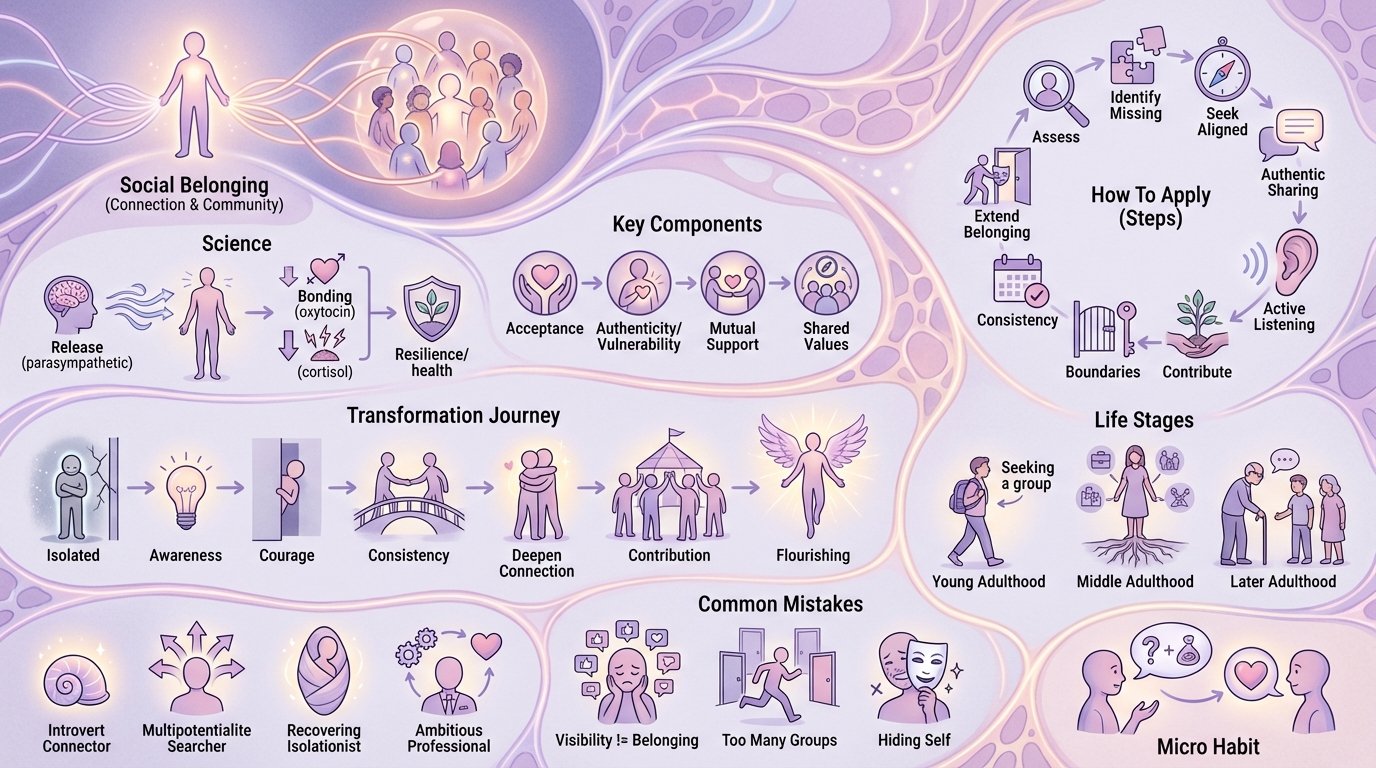
Did you know? The #1 predictor of sustainable success isn't intelligence or talent—it's social-belonging.
In this guide: 10 proven steps to develop social-belonging, plus profiles showing what works for different people.
What Is social-belonging?
Social belonging is the experience of feeling connected to a community, group, or people—of being included, understood, and valued. It's a fundamental human need.
Not medical advice.
In 2026, social-belonging is more important than ever as people seek lasting wellbeing beyond surface-level solutions.
Surprising Insight: Surprising Insight: Research shows that social-belonging is often the missing piece for people who have achieved everything else.
Understanding social-belonging
The key elements that make up social-belonging
🔍 Click to enlarge
Why social-belonging Matters in 2026
Strong social belonging improves mental and physical health outcomes significantly.
Loneliness is as harmful as smoking; belonging is medicine.
People with strong belonging handle stress better and recover faster from setbacks.
The Science Behind social-belonging
Scientific research demonstrates that social-belonging has measurable impacts on health, happiness, and performance.
Studies consistently show that people who develop social-belonging report higher life satisfaction and better outcomes.
social-belonging Development Path
How people typically progress in developing this area
🔍 Click to enlarge
Key Components of social-belonging
Shared Identity
Feeling part of a group that shares values or experiences.
Mutual Support
People know they can rely on each other.
Regular Connection
Consistent interaction that maintains the relationships.
Inclusion
Feeling wanted and valued, not just tolerated.
| Level | Characteristics | Next Step |
|---|---|---|
| Beginner | Just starting to develop social-belonging | Learn the fundamentals of social-belonging |
| Intermediate | Have basic social-belonging skills and understanding | Deepen and refine your social-belonging |
| Advanced | Strong social-belonging capabilities and results | Master and teach social-belonging to others |
How to Apply social-belonging: Step by Step
- Step 1: Identify communities aligned with your values and interests
- Step 2: Start attending regularly—belonging builds through repeated contact
- Step 3: Be genuinely interested in others, not just what they can do for you
- Step 4: Show up for others consistently, not just when you need something
- Step 5: Be vulnerable enough that others know the real you
- Step 6: Participate actively rather than just showing up
- Step 7: Create traditions and rituals with your people
- Step 8: Address conflicts directly rather than letting them fester
- Step 9: Include new people in your group
- Step 10: Celebrate milestones and successes together
social-belonging Across Life Stages
Young Adulthood (18-35)
In young adulthood, social-belonging is about building foundational understanding and initial practice.
Middle Adulthood (35-55)
In middle adulthood, social-belonging becomes more refined and integrated into who you are.
Later Adulthood (55+)
In later adulthood, social-belonging focuses on wisdom, mastery, and helping others develop it.
Profiles: Your social-belonging Approach
The Beginner
- Clear explanation of what social-belonging actually means
- Simple, achievable first steps for social-belonging
- Encouragement that social-belonging is learnable
Common pitfall: Trying to do too much too fast and getting discouraged
Best move: Start with one small practice and build from there
The Skeptic
- Evidence that this actually matters
- Practical results, not just theory
- Permission to do this their own way
Common pitfall: Dismissing social-belonging as unimportant or impossible
Best move: Try a small experiment and observe the results
The Eager Learner
- Deep understanding of how this works
- Advanced strategies and nuance
- Ways to deepen and master social-belonging
Common pitfall: Getting lost in information instead of taking action
Best move: Choose one approach and master it fully
The Burnt Out
- This shouldn't add more pressure or tasks
- Gentle, accessible entry points
- Help simplifying their life first
Common pitfall: Adding this as another obligation that drains energy
Best move: First stabilize and reduce demands, then slowly add
Common social-belonging Mistakes
Thinking you don't need social-belonging because you're already successful in other areas
Expecting social-belonging to happen overnight instead of building gradually
Doing social-belonging the way works for others instead of finding your own path
Common social-belonging Mistakes to Avoid
How these mistakes develop and how to prevent them
🔍 Click to enlarge
Science and Studies
Research on social-belonging comes from psychology, neuroscience, and wellbeing studies.
Your First Micro Habit
Start Small Today
Today's action: Today: Spend 5 minutes considering one small way you could develop social-belonging.
Small actions compound. This micro-habit establishes the mindset that social-belonging is important to you.
Keep quitting habit apps after a missed day? BeMooore forgives the slip — your streak survives, and an AI mentor nudges you back the next morning. Free on iOS.
Quick Assessment
How would you rate your current level of social-belonging?
Your answer reveals where you are in your social-belonging journey.
What's your main goal regarding social-belonging?
Your goal shows the depth you're ready for in social-belonging.
How do you prefer to learn about social-belonging?
Your learning preference helps tailor your social-belonging development approach.
Take our full assessment to get personalized recommendations.
Discover Your Style →Next Steps
Reflect on where you stand with social-belonging and choose your first small step.
Share your social-belonging journey with someone who can support you. Download our app for daily guidance.
Get personalized guidance with AI coaching.
Start Your Journey →Research Sources
This article is based on peer-reviewed research and authoritative sources. Below are the key references we consulted:
Related Glossary Articles
Frequently Asked Questions
How long does it take to develop social-belonging?
Basic social-belonging takes weeks to months; true mastery of social-belonging takes years. The key is consistency, not intensity.
Is social-belonging something you're born with or can develop?
Most of social-belonging can be developed through practice and experience. Even people who start with disadvantages can build strong social-belonging.
Can you have too much social-belonging?
Like most things, social-belonging is best in balance. Taken to extremes, even social-belonging can become problematic.
What if I try social-belonging and it doesn't work?
Different approaches to social-belonging work for different people. If your first approach doesn't work, try a different strategy.
How do I know if I'm making progress in social-belonging?
Track specific indicators relevant to your social-belonging goals. Progress might be internal (feeling better) or external (achieving milestones).
Take the Next Step
Ready to improve your wellbeing? Take our free assessment to get personalized recommendations based on your unique situation.
- Discover your strengths and gaps
- Get personalized quick wins
- Track your progress over time
- Evidence-based strategies