Skin Care
Your skin is your body's largest organ, constantly exposed to environmental stressors, UV rays, and pollutants. Yet many people neglect their skincare routine, not realizing that consistent, evidence-based skin care can dramatically improve skin texture, reduce signs of aging, and prevent common skin conditions. Whether you're dealing with acne, dryness, sensitivity, or simply want to maintain a healthy glow, understanding the fundamentals of skin care is transformational. The good news? You don't need expensive products or complicated routines—just the right approach and consistency.
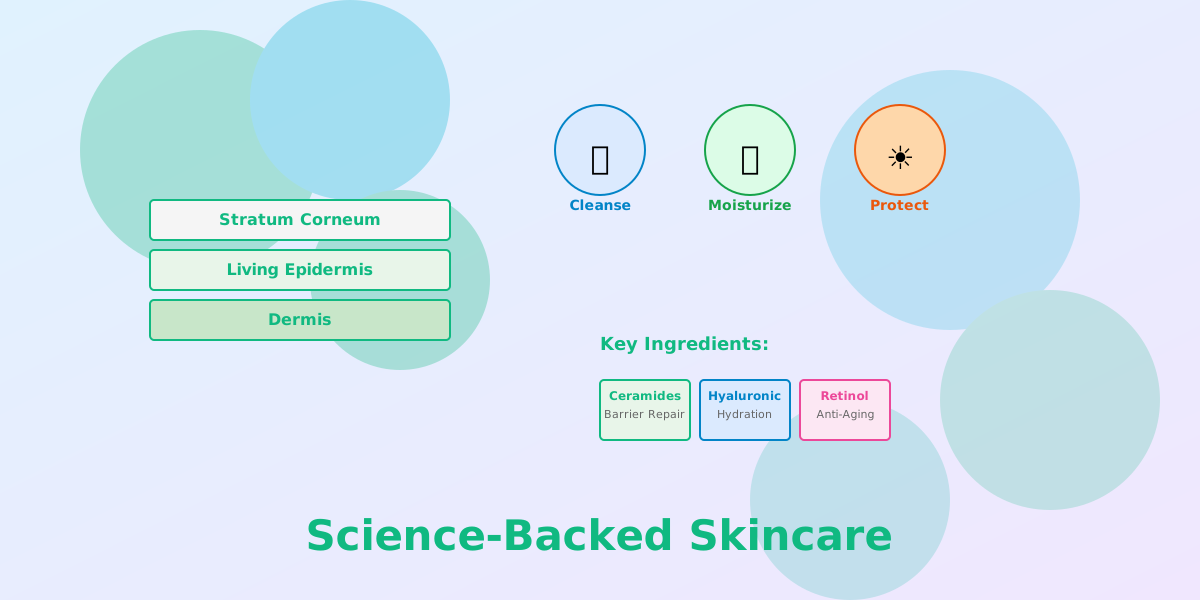
Recent dermatological research from 2024-2025 reveals that the key to healthy skin lies in understanding your unique skin type, protecting your skin barrier, and using proven ingredients like ceramides and SPF. Studies published in peer-reviewed journals show that a simple three-step routine—cleanse, moisturize, protect—outperforms complex 10-step regimens when done correctly.
In this comprehensive guide, you'll discover the science-backed practices that dermatologists recommend, the ingredients that actually work, and how to build a skincare routine that fits your lifestyle and skin type.
What Is Skin Care?
Skin care is the practice of maintaining skin health through cleansing, treatment, and protection using topical products and lifestyle habits. It encompasses removing dirt, oil, and makeup; nourishing the skin with hydrating and active ingredients; and shielding the skin from environmental damage, particularly from ultraviolet (UV) radiation. Effective skincare is not vanity—it's preventive medicine that protects your skin barrier, supports cellular turnover, and addresses specific skin concerns.
Not medical advice.
Skincare exists at the intersection of dermatology, cosmetic chemistry, and personal wellness. Your skin naturally sheds dead cells, produces oil (sebum), and maintains a protective acid mantle. However, internal factors (genetics, hormones, stress, diet) and external factors (UV exposure, pollution, climate) can disrupt this balance. That's where intentional skincare comes in—to support your skin's natural processes and correct imbalances before they become visible problems.
Surprising Insight: Surprising Insight: Your skin completely renews itself approximately every 28 days, which means your skincare choices today will visibly impact your complexion within just four weeks. Consistency, not perfection, is what drives results.
The Skin Barrier and Its Function
A diagram showing the layers of skin (epidermis, dermis, hypodermis) and how the stratum corneum acts as a protective barrier with lipids, proteins, and natural moisturizing factors.
🔍 Click to enlarge
Why Skin Care Matters in 2026
In 2026, skincare matters more than ever because we're exposed to unprecedented environmental stressors. Air pollution, blue light from screens, microplastics, and climate change create conditions that damage skin faster than previous generations. Simultaneously, social media has created unrealistic expectations about appearance, increasing anxiety and lowering self-esteem. A consistent skincare routine is not about achieving Instagram perfection—it's about feeling comfortable in your own skin and preventing long-term damage.
Dermatological advances in 2024-2025 have democratized professional-grade skincare. Innovations like ceramide formulations, AI-powered skin diagnostics, and evidence-based ingredient combinations mean you can now achieve dermatologist-level results at home. The FDA approved seven new dermatologic therapies in 2024 alone, including treatments for atopic dermatitis, conditions that previously required prescription interventions. This acceleration of research empowers individuals to take control of their skin health proactively.
Additionally, treating skin conditions early prevents them from worsening and becoming harder to manage. Acne, eczema, psoriasis, and rosacea often escalate without proper care, leading to permanent scarring, hyperpigmentation, and psychological distress. A well-designed skincare routine catches problems early and maintains skin barrier function, the foundation of all skin health.
The Science Behind Skin Care
Modern skincare is grounded in understanding skin physiology. Your skin's outermost layer, the stratum corneum, is composed of dead skin cells (corneocytes) held together by lipid mortar—a mixture of ceramides (30%), cholesterol (25%), and fatty acids (45%). This lipid barrier is your skin's primary defense against water loss (transepidermal water loss, or TEWL) and pathogen penetration. When this barrier is compromised, your skin becomes dry, sensitive, and prone to inflammation and infection.
2024 research published in the International Journal of Cosmetic Science demonstrates that ceramide formulations—when properly dissolved and integrated into products—significantly strengthen skin barrier function and restore hydration. Clinical trials show that topical ceramide application reduces dryness, improves barrier integrity within two weeks, and alleviates symptoms in individuals predisposed to atopic dermatitis. This scientific backing explains why dermatologists universally recommend ceramide-containing moisturizers as the foundation of any skincare routine.
Skin Cell Renewal Cycle
Timeline showing the 28-day skin renewal process: skin cells are born in the basal layer, migrate upward, lose moisture, flatten, and shed as dead skin (stratum corneum). A visual representation of how skincare products interact with living cells and dead cell removal.
🔍 Click to enlarge
Key Components of Skin Care
Cleansing
Cleansing removes dirt, oil, makeup, and environmental pollutants without stripping the skin barrier. The optimal cleanser is pH-balanced (around 4.5-5.5) and gentle enough for twice-daily use. Harsh scrubbing or hot water can disrupt the acid mantle and damage the lipid barrier. Dermatologists recommend using lukewarm water and a cleanser that doesn't produce tightness or flaking. Common cleansing methods include micellar water, cream cleansers, gentle foaming cleansers, and oil-based cleansers for makeup removal. The goal is to clean without compromising your skin's protective functions.
Moisturizing
Moisturizers serve two critical functions: humectants (like hyaluronic acid and glycerin) that draw water into the skin, and emollients/occlusives (like ceramides, cholesterol, and oils) that seal in that moisture. A good moisturizer restores the lipid barrier, reduces transepidermal water loss, and provides immediate hydration. Application should follow the principle of 'lightest to heaviest'—serums first, then lightweight lotions, then heavier creams. Your moisturizer should feel nourishing, not greasy. For dry or sensitive skin, ceramide-rich formulations are non-negotiable based on current scientific evidence.
Sun Protection
Sunscreen is the single most anti-aging product you can use, as 80% of visible skin aging is caused by UV radiation, not genetics or age. A broad-spectrum SPF 30+ sunscreen (or SPF 50+ for extended outdoor exposure) should be applied daily, even on cloudy days and indoors near windows. UV rays cause DNA damage in skin cells, leading to wrinkles, age spots, loss of elasticity, and increased skin cancer risk. A palm-sized amount (about 1/4 teaspoon) is the standard application for face and neck. Reapplication every two hours is ideal, though daily application is the bare minimum.
Targeted Treatments
Active ingredients address specific concerns: retinoids (vitamin A derivatives) stimulate collagen and cell turnover for anti-aging; niacinamide reduces sebum production and pore size for acne-prone skin; vitamin C brightens and provides antioxidant protection; salicylic acid (BHA) exfoliates oily, acne-prone skin; lactic acid (AHA) gently exfoliates for texture and brightness; and azelaic acid reduces redness and hyperpigmentation. These ingredients are optional but powerful when your basic routine (cleanse, moisturize, protect) is established. Always introduce one active ingredient at a time, allowing 4-6 weeks to assess results before adding another.
| Ingredient | Primary Function | Skin Types It Suits |
|---|---|---|
| Ceramides | Restores lipid barrier, locks in moisture | All types, especially dry and sensitive |
| Hyaluronic Acid | Humectant, draws water into skin | All types, especially dry and dehydrated |
| Retinol/Retinoids | Promotes cell turnover, reduces wrinkles | Normal to oily, mature skin (introduce slowly) |
| Niacinamide | Reduces sebum, minimizes pores, anti-inflammatory | Oily, acne-prone, sensitive |
| Vitamin C | Antioxidant, brightening, collagen support | All types seeking radiance and protection |
| Salicylic Acid (BHA) | Oil-soluble exfoliant, unclogs pores | Oily, acne-prone, textured |
| Lactic Acid (AHA) | Water-soluble exfoliant, gentle surface renewal | Dry, sensitive, dull, uneven texture |
| Peptides | Supports collagen and skin firmness | Mature, aging skin |
| Azelaic Acid | Anti-inflammatory, reduces redness and hyperpigmentation | Sensitive, rosacea-prone, post-inflammatory hyperpigmentation |
How to Apply Skin Care: Step by Step
- Step 1: Identify your skin type (oily, dry, combination, sensitive, or normal) by observing how your skin feels and looks after cleansing, without products. This foundation determines all product choices.
- Step 2: Choose a gentle cleanser suited to your skin type. Wet your face with lukewarm water and massage the cleanser in for 20-30 seconds, focusing on the T-zone and areas prone to congestion.
- Step 3: Pat your face dry with a clean towel (don't rub). Damp skin allows products to penetrate more effectively, so avoid over-drying.
- Step 4: Apply a hydrating toner or essence if desired (optional but helpful for dehydrated skin). These prep your skin to absorb subsequent products.
- Step 5: Apply serums or targeted treatments to clean, damp skin, starting with the lightest, most watery formula first. Common examples include vitamin C, hyaluronic acid, or niacinamide serums.
- Step 6: Apply your moisturizer while skin is still slightly damp. Use an appropriate weight for your skin type: gel-based for oily skin, cream for dry skin, lotion for combination skin.
- Step 7: Apply sunscreen every morning as the final step of your routine, waiting 1-2 minutes for it to set. Use a palm-sized amount (about 1/4 teaspoon) for face and neck.
- Step 8: At night, repeat the cleanse and moisturize steps. If using active ingredients like retinol, apply them after cleansing and before moisturizing, 2-3 times per week initially.
- Step 9: Introduce one new product or ingredient at a time, spacing them 4-6 weeks apart. This allows you to assess results and identify any irritation sources.
- Step 10: Consistency matters more than complexity. A simple routine done daily outperforms a complex routine done inconsistently. Commit to your routine for at least 8 weeks to see meaningful skin changes.
Skin Care Across Life Stages
Young Adulthood (18-35)
During young adulthood, skin is typically resilient but may struggle with acne, hyperpigmentation from breakouts, and uneven texture. The priority is establishing a consistent foundation routine (cleanse, moisturize, SPF) and using targeted ingredients like salicylic acid or azelaic acid if acne-prone. Sun protection is critical now because UV damage accumulates and manifests as aging and skin cancer risk later. This is also an ideal time to introduce retinol if desired, as younger skin adapts quickly to it. Many people neglect sunscreen in their 20s, only to regret it in their 40s. Start now.
Middle Adulthood (35-55)
Middle adulthood brings visible signs of aging: fine lines, loss of elasticity, hyperpigmentation, and texture changes. Your skincare goals shift toward prevention, correction, and maintenance. Retinol becomes a cornerstone ingredient for stimulating collagen and improving skin texture. Ceramide moisturizers become essential to combat dryness and strengthen a potentially compromised barrier. Antioxidants like vitamin C support collagen and protect against environmental damage. Eye creams address crow's feet. SPF remains non-negotiable. Hormonal changes (perimenopause) may trigger sensitivity or rosacea, requiring gentler ingredients and barrier support.
Later Adulthood (55+)
In later adulthood, skin becomes thinner, drier, and more delicate due to decreased collagen production, estrogen decline (in post-menopausal individuals), and reduced natural oil production. The focus shifts to intensive hydration, barrier strengthening, and addressing age-related concerns like deep wrinkles, age spots, and loss of firmness. Richer formulations with peptides, ceramides, and hydrating serums become essential. Professional treatments (like microdermabrasion or chemical peels) may complement at-home routines. Gentleness is paramount—avoid over-exfoliation and harsh actives. Consistency with SPF is crucial to prevent further age spots and skin cancer. Consider consulting a dermatologist about prescription-strength retinoids or other advanced options.
Profiles: Your Skin Care Approach
The Minimalist
- Simple, streamlined routine
- Multi-purpose, efficient products
- Low maintenance but effective
Common pitfall: Skipping SPF because it adds a step; assuming one product can do everything
Best move: Commit to a non-negotiable three-step routine: cleanser, moisturizer with SPF (or moisturizer + separate SPF). Consistency beats complexity every time.
The Results-Seeker
- Active ingredients (retinol, acids, vitamin C)
- Evidence-based formulations
- Clear before-and-after progress
Common pitfall: Introducing too many actives at once, causing irritation and compromised barrier function
Best move: Establish your foundation routine first, then add one active ingredient every 4-6 weeks. Patience and consistency drive visible results, not a complex arsenal of products.
The Sensitive Skin Protector
- Fragrance-free, hypoallergenic products
- Barrier-strengthening ceramides
- Gentle cleansers and minimal actives
Common pitfall: Assuming all products are triggers; avoiding necessary sun protection due to sensitivity concerns
Best move: Focus on barrier repair with ceramide moisturizers, hydrating toners, and gentle physical sunscreens. Once barrier is healthy, selectively introduce one mild active (like azelaic acid) under professional guidance.
The Acne Fighter
- Acne-fighting ingredients (salicylic acid, niacinamide, azelaic acid)
- Oil control without over-drying
- Non-comedogenic formulations
Common pitfall: Over-stripping skin with too many exfoliants and actives, worsening inflammation and sensitivity
Best move: Use a gentle cleanser, a lightweight non-comedogenic moisturizer (even acne-prone skin needs hydration), and one acne-fighting active. Add SPF to prevent post-inflammatory hyperpigmentation. Treat acne as a barrier issue, not just a surface problem.
Common Skin Care Mistakes
Mistake one: using scalding hot water and scrubbing vigorously. Hot water strips the skin of its natural oils, disrupts the acid mantle, and damages the lipid barrier, leading to increased sensitivity and dryness. Similarly, physical exfoliation (like rough scrubs) can cause micro-tears in the skin. The fix is simple: use lukewarm water and gentle, circular motions. Your skin shouldn't feel tight or squeaky after cleansing.
Mistake two: inconsistent sunscreen use or using SPF below 30. Many people view sunscreen as optional or only for beach days. However, UV damage accumulates every single day and is responsible for 80% of visible skin aging. Sun damage is irreversible once it occurs. The fix is non-negotiable: apply broad-spectrum SPF 30+ daily, even on cloudy days. If you do nothing else for skincare, use sunscreen consistently.
Mistake three: not moisturizing or using the wrong moisturizer for your skin type. Many people, especially those with oily or acne-prone skin, avoid moisturizer thinking it will worsen their condition. This is backwards. A compromised barrier actually triggers increased oil production as the skin tries to compensate. All skin types need hydration and barrier support, just with different product weights. Oily skin needs lightweight, oil-free formulations; dry skin needs richer creams. Using the right moisturizer actually improves acne and sensitivity.
The Skin Care Mistake Cascade
A visual showing how common skincare mistakes trigger a cascade of problems: hot water → damaged barrier → increased sensitivity, dryness, and oil production → worsening skin conditions.
🔍 Click to enlarge
Science and Studies
Recent dermatological research from 2024-2025 has produced significant evidence supporting the importance of skincare consistency, barrier function, and ingredient efficacy. Multiple peer-reviewed studies validate the approaches recommended by dermatologists worldwide and discussed in this article.
- Schild et al. (2024) in the International Journal of Cosmetic Science demonstrated that correctly formulated ceramides significantly improve skin barrier function and hydration compared to products with poorly dissolved ceramides. Published in Wiley Online Library and available on PubMed (PMID: 39113291).
- Frontiers in Medicine (2024) published a comprehensive review of dermatology innovations, highlighting AI integration for skin diagnostics, ceramide research advances, and FDA approval of seven new dermatologic therapies in 2024 alone for conditions like atopic dermatitis and alopecia areata.
- Mayo Clinic and Cleveland Clinic published 2024 consensus on skincare best practices emphasizing that a simple three-step routine (cleanse, moisturize, protect) outperforms complex multi-step regimens when executed consistently.
- British Journal of Dermatology (2024) published research showing that topical ceramide supplementation rebalances the stratum corneum lipid profile and strengthens barrier function in adults predisposed to atopic dermatitis.
- American Academy of Dermatology (AAD) publicly states that sun protection (SPF 30+) is the single most important anti-aging intervention, as UV damage causes 80% of visible aging and significantly increases skin cancer risk.
Your First Micro Habit
Start Small Today
Today's action: Tonight, apply sunscreen to your face and neck as the final step of your skincare routine, even though it's evening. Tomorrow morning, make SPF application non-negotiable—treat it like brushing your teeth. Do this for 7 days consecutively.
Sunscreen is the single most impactful skincare product, preventing 80% of visible aging and skin cancer risk. Starting with this one habit builds the foundation for a successful skincare routine. Once sunscreen becomes automatic, you'll be motivated to optimize the rest of your routine.
Keep quitting habit apps after a missed day? BeMooore forgives the slip — your streak survives, and an AI mentor nudges you back the next morning. Free on iOS.
Quick Assessment
How would you describe your current skin condition?
Your baseline skin condition determines your skincare priorities. Those with clear skin should focus on maintenance and prevention (consistent SPF, gentle cleansing). Those with occasional issues need targeted treatments added to a foundation routine. Those with frequent problems benefit most from professional dermatology consultation alongside at-home skincare.
What's your current skincare routine commitment level?
Consistency matters more than complexity. A simple routine done daily beats a complex routine done inconsistently. If you're committed, you can optimize with targeted ingredients. If you struggle with consistency, simplify to three non-negotiable steps: cleanse, moisturize, protect.
What's your biggest skincare frustration right now?
Each concern requires a different approach. Aging skin benefits from retinol, peptides, and SPF. Acne-prone skin needs targeted actives like salicylic acid and niacinamide within a gentle routine. Dry, reactive skin needs ceramide moisturizers and barrier support. If you're unsure, start with a dermatology consultation to identify your skin type and concerns before investing in products.
Take our full assessment to get personalized recommendations.
Discover Your Style →Next Steps
Now that you understand the science and fundamentals of skincare, your next step is identifying your skin type (oily, dry, combination, sensitive, or normal) and assessing any specific concerns (acne, sensitivity, aging). Take time to observe how your skin behaves after cleansing without products. Does it feel tight and uncomfortable (likely dry)? Does it shine and feel slick (likely oily)? Does it have different zones (combination)? This foundation determines all product selections and treatment priorities.
Build your foundation routine first: a gentle cleanser suited to your skin type, a moisturizer with ceramides and hyaluronic acid, and a broad-spectrum SPF 30+ sunscreen. Use these products consistently for 4-6 weeks before introducing active ingredients or targeted treatments. Remember, simplicity and consistency beat complexity. A three-step routine done daily will deliver better results than a ten-step routine done sporadically. Once your foundation is solid and you've seen improvements in overall skin health, you can selectively add actives to address specific concerns.
Get personalized guidance with AI coaching.
Start Your Journey →Research Sources
This article is based on peer-reviewed research and authoritative sources. Below are the key references we consulted:
Related Glossary Articles
Frequently Asked Questions
How long does it take to see results from a skincare routine?
Your skin completely renews every 28 days, so you should notice subtle improvements in texture and hydration within 2-3 weeks of consistent use. However, visible changes in acne, wrinkles, or hyperpigmentation typically take 6-12 weeks because they involve deeper structural changes. Patience and consistency are essential. If you don't see improvement after 8 weeks, adjust your routine or consult a dermatologist.
Should I use the same skincare routine morning and night?
Your morning and night routines have different goals, so some variation is appropriate. Both should include cleansing, moisturizing, and protection (morning) or barrier repair (night). Morning routines typically include SPF. Night routines can include active ingredients like retinol that make skin sun-sensitive. If you want simplicity, using the same basic routine morning and night is fine—just add SPF in the morning and optional actives at night.
Can I use the same moisturizer if I have oily skin?
Yes, but use a lightweight, oil-free, non-comedogenic formulation. All skin types need hydration and barrier support, including oily skin. Many people with oily skin avoid moisturizer, causing their skin to overproduce oil to compensate. A gel-based moisturizer or lightweight lotion with ceramides and hyaluronic acid can hydrate without feeling greasy. Look for 'non-comedogenic' and 'oil-free' on the label.
Is it safe to use multiple active ingredients (retinol, vitamin C, acids) at the same time?
No. Introduce one active ingredient at a time, spacing them 4-6 weeks apart. Combining multiple actives can overwhelm and irritate your skin, damaging the barrier. Once your skin has adapted to one active, you can layer them strategically (e.g., vitamin C in the morning, retinol at night, acids 2-3x per week). Always prioritize barrier health over aggressive treatment.
Do I really need sunscreen every single day?
Yes. UV damage is cumulative and irreversible, causing 80% of visible aging and significantly increasing skin cancer risk. UV rays penetrate clouds and are reflected by water and snow. Even if you spend one day inside, windows (except windshields) don't block all UV rays. Consistency with SPF 30+ is the single most important skincare investment you can make, regardless of your age, skin type, or climate.
Take the Next Step
Ready to improve your wellbeing? Take our free assessment to get personalized recommendations based on your unique situation.
- Discover your strengths and gaps
- Get personalized quick wins
- Track your progress over time
- Evidence-based strategies