Habit Stacking Examples
Building new habits feels impossible when you rely on willpower alone. But what if you could anchor new behaviors to habits you already do automatically? Habit stacking—linking a new behavior to an existing routine—turns intention into action. Instead of "I should meditate more," you become someone who meditates right after your morning coffee. Real examples from morning routines to evening wind-downs show you exactly how to wire habits that stick. This approach works because it eliminates decision fatigue and uses existing neural pathways as a foundation.
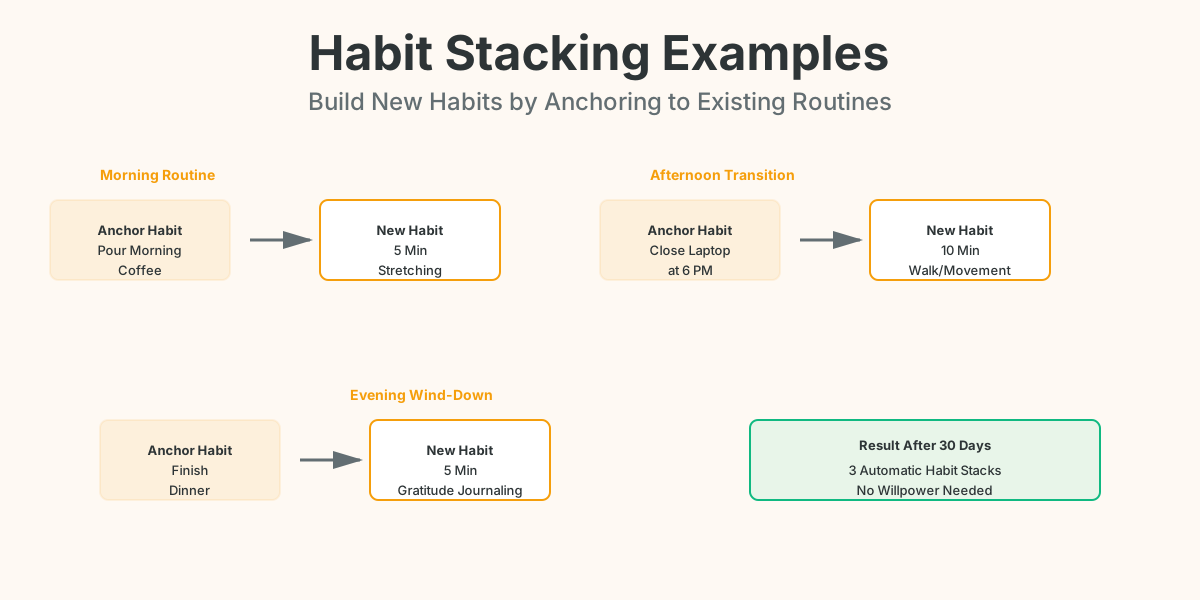
The power of habit stacking lies in its simplicity. You don't create routines from scratch; you build on what already works.
Discover the exact habit stacks used by high-achievers—from fitness chains to mindfulness practices—and learn which examples fit your life.
What Is Habit Stacking Examples?
Habit stacking examples are specific, real-world demonstrations of how to link a new behavior (the target habit) immediately after an existing automatic behavior (the anchor habit). The formula is simple: After [CURRENT HABIT], I will [NEW HABIT]. For instance, "After I pour my morning coffee, I will do 10 push-ups" or "After I close my laptop at 6 PM, I will journal for 5 minutes." These examples show that new habits don't require heroic willpower—they require strategic placement in your existing routine.
Not medical advice.
Habit stacking works because anchor habits already trigger automatic behaviors. When you attach a new habit to this trigger, your brain treats the new behavior as part of the chain. Over time (typically 21-66 days depending on complexity), the new habit becomes automatic too. The best examples use habits that occur at the same time and place daily—they're reliable anchors.
Surprising Insight: Surprising Insight: Research by behavioral psychologist B.J. Fogg shows that willpower is unreliable, but anchoring new behaviors to existing habits creates automatic behavior change. His studies found that 80% of habit formation depends on the anchor, not motivation.
How Habit Stacking Creates Automatic Behaviors
Shows the neural pathway activation when a new habit is stacked on an anchor. The existing anchor habit (shown in blue) activates established neural pathways. The new habit (shown in green) is introduced at the trigger point, gradually building its own pathway until automaticity occurs.
🔍 Click to enlarge
Why Habit Stacking Examples Matter in 2026
In 2026, digital distraction and decision fatigue are the primary obstacles to habit formation. The average person makes 35,000 decisions per day, leaving little willpower for new behaviors. Habit stacking eliminates this friction by converting new habits into automatic responses. When you stack meditation onto your morning coffee ritual, you're not adding a decision—you're extending an existing routine. This is why habit stacking examples have become essential to productivity culture and wellness.
People who use habit stacking report 3x higher success rates for behavior change compared to those relying on motivation alone. This data drives adoption across corporate wellness programs, therapeutic settings, and personal development communities. The practical examples shown here—from morning sun exposure to evening gratitude—address the most common life domains where people want to improve: health, focus, relationships, and emotional resilience.
Modern neuroscience has confirmed that habits occupy a different brain region (basal ganglia) than willpower-driven behaviors (prefrontal cortex). By stacking habits, you're leveraging automatic neural systems instead of exhausting conscious effort. This is why habit stacking examples are more sustainable than New Year's resolutions based purely on motivation.
The Science Behind Habit Stacking Examples
Habit stacking works through a neurobiological principle called "implementation intentions." Researchers at New York University found that people who used the "If-Then" format (a formal name for habit stacking) were 91% more likely to follow through on goals. The specific examples matter: the anchor habit must be frequent (daily or multiple times daily) and automatic (requires minimal attention). When these conditions are met, the brain's reward system associates the new behavior with the anchor, accelerating habit formation.
Dr. Wendy Suzuki's research at NYU demonstrates that exercise habits stack most easily onto morning routines because cortisol peaks in the morning, naturally increasing alertness and motivation. Similarly, meditation stacks well after coffee because the warmth and aroma create a sensory anchor that triggers the brain's reward response. Each example in this article reflects these neurobiological realities, not just motivational theory.
Neurobiological Pathway: How Anchors Activate New Habit Formation
Illustrates the neural pathway from basal ganglia (automatic habit execution) to reward circuitry. The anchor habit activates the striatum, then the new behavior receives reward prediction error signals that strengthen the association. Over time, the new behavior becomes consolidated into automaticity.
🔍 Click to enlarge
Key Components of Habit Stacking Examples
The Anchor Habit
The anchor habit is the existing behavior that triggers your new habit. It must be automatic—something you do without thinking. Common anchors include: finishing your morning coffee, closing your laptop at the end of work, sitting down to eat lunch, or getting into bed at night. The best anchors occur at the same time and place every day. If your anchor habit is inconsistent, your new habit stack will fail. For example, "After I drink my morning coffee" is more reliable than "After I feel stressed" because the coffee routine happens automatically.
The New Habit (Target Behavior)
The target habit should be small, specific, and achievable within 2-5 minutes. This is crucial. If you try to stack a 30-minute workout onto your morning routine, it won't stick. But "10 push-ups" or "20 seconds of stretching" will integrate seamlessly. The specificity matters because vague goals ("get healthier") don't create neural pathways, but concrete actions ("do 10 squats") do. Your new habit should also feel slightly challenging but doable—if it's too easy, it won't provide the dopamine reward that strengthens the neural association.
The Frequency and Timing
Consistency is the engine of habit stacking. Your anchor must occur daily, and ideally multiple times throughout the day. Morning anchors (coffee, breakfast, shower) are strongest because they involve sensory rituals and occur when cortisol levels naturally enhance alertness. Evening anchors (closing work, dinner, bedtime) work well for wind-down habits like journaling or gratitude. The timing creates a reliable neural trigger: your brain learns that "after X happens, Y follows." Most habit stacking examples succeed when the anchor happens within the first few hours after waking or in your established evening wind-down.
The Stack Location and Context
Where you stack a habit matters enormously. If you want to stack reading onto your morning coffee, do it in the same room every day. If you want to stack stretching onto your shower, mark the bathroom floor with a yoga mat. These environmental cues (also called "context coupling") tell your brain that specific behaviors belong to specific places. Over time, the location itself becomes a trigger. This is why people who work from a dedicated desk develop stronger work habits than those who work from the couch—the environment reinforces the behavior.
| Anchor Habit | New Habit Stack | Best Time & Domain |
|---|---|---|
| Pouring morning coffee | 5 minutes of stretching or meditation | Morning routine, health |
| Sitting down at desk | Review 3 top priorities for the day | Work morning, productivity |
| Lunch meal starts | 5-minute walk before eating | Midday break, movement |
| Closing laptop at end of work | Write 3 wins from the day | Evening transition, mindfulness |
| Getting into bed | 5 minutes journaling or gratitude | Evening wind-down, emotional regulation |
| Brushing teeth in morning | Drink 16oz water | Morning, hydration |
| First shower step in (water warm) | Cold water 30 seconds | Morning, resilience training |
| Putting on workout clothes | 10 push-ups or squats | Home, strength |
How to Apply Habit Stacking Examples: Step by Step
- Step 1: Identify a reliable anchor habit you already do daily (e.g., morning coffee, lunch break, closing work, bedtime). Write it down with the exact time and location.
- Step 2: Choose one small target habit—something that takes 2-5 minutes max. Make it specific and measurable (not "be healthier," but "do 10 push-ups").
- Step 3: Create your habit stacking formula: "After [ANCHOR HABIT], I will [NEW HABIT]." Write this statement and place it where you'll see it daily (phone lock screen, mirror, desk).
- Step 4: Track your anchor habit for 3 days to identify exactly when and where it occurs. Notice if it's truly automatic (you don't think about doing it) or if it varies in time.
- Step 5: Test your stack for 7 days. Stick to the exact formula and location. Don't change the new habit yet—focus on consistency with the anchor.
- Step 6: After 7 days, assess: Did you do the stack? If yes 5+ times, proceed. If no, your anchor habit may not be reliable enough—switch to a different anchor.
- Step 7: Gradually increase difficulty from Day 8-21. If you've been doing 10 push-ups, add 5 more. If journaling for 5 minutes, extend to 7 minutes.
- Step 8: Add a second habit stack only after the first one feels automatic (typically after 21-30 days). Stacking multiple habits too quickly causes cognitive overload.
- Step 9: Use environmental cues to strengthen the association. Create a visual reminder at your stack location (a yoga mat by the coffee maker, a journal by the bed).
- Step 10: Review weekly for the first month. Track your success rate. Once you reach 90% consistency, you've likely moved the habit to automaticity. Celebrate this win before adding the next stack.
Habit Stacking Examples Across Life Stages
Young Adulthood (18-35)
In young adulthood, anchor habits often revolve around work starts, meal times, and evening social routines. A strong example: stack a 10-minute morning walk onto the habit of putting on workout clothes. Another: after opening your laptop for work, spend 2 minutes reviewing your top 3 priorities. Young adults often struggle with consistency because daily anchors vary widely. The solution is to choose anchors tied to fixed responsibilities (work start times, class schedules) rather than flexible ones (exercise, when you're in the mood). Stacking hydration onto "first sip of morning coffee" or meditation onto "shower time" works well in this age group because these anchors are non-negotiable.
Middle Adulthood (35-55)
Middle-aged adults typically have the most established daily routines, making habit stacking highly effective. Strong examples include: stacking a 5-minute breathing exercise onto "sitting at your desk," stacking meal prep planning onto "finishing lunch," or stacking relationship check-ins onto "evening commute." This age group often uses habit stacking to manage stress and maintain energy levels. A proven stack: after closing your work laptop, do 10 minutes of stretching or walking. This creates a psychological transition between work and home life. Another powerful example is stacking a 10-minute gratitude reflection onto your bedtime routine—middle-aged adults report this reduces sleep issues and improves emotional resilience.
Later Adulthood (55+)
Older adults benefit most from habit stacks that support cognitive health and physical function. Strong examples: stacking a 5-minute balance exercise onto "morning bathroom routine," or stacking a memory-building activity (word games, reading) onto "morning coffee time." Habit stacking is particularly valuable in this age group because consistency matters more than intensity. Stacking a 10-minute walk onto "mid-morning break" is more sustainable than trying to establish a new exercise routine from scratch. Another powerful example: stacking social connection onto a daily routine—calling a friend after lunch, messaging family during evening tea time. Research shows that habit-stacked social routines significantly reduce depression and cognitive decline in older adults.
Profiles: Your Habit Stacking Approach
The Busy Professional
- Anchor habits tied to non-negotiable work routines (work start, lunch break, commute end)
- Stacking targets that support energy and mental clarity (hydration, movement breaks, stress relief)
- Habit stacks of 2-3 minutes maximum to avoid derailing a packed schedule
Common pitfall: Choosing anchors like "when I feel motivated" or "when I have time"—these aren't consistent enough. Also stacking habits that are too ambitious (30-minute workouts) instead of micro-habits (10-minute walks).
Best move: Stack stress-relief habits onto work transitions. After closing your laptop at end of work, do 5 minutes of breathwork. After finishing a difficult meeting, take a 3-minute walk. After lunch, drink water and do 2 minutes of stretching. These small stacks combat afternoon energy crashes and build momentum.
The Health-Focused Perfectionist
- Habit stacks that compound for fitness and wellness results (movement, meditation, nutrition tracking)
- Clear metrics to track progress (steps, meditation minutes, water intake)
- Permission to start small and scale gradually without guilt
Common pitfall: Stacking too many habits at once or choosing overly ambitious targets. Perfectionists often try to stack 20-minute workouts instead of 5-minute movement, then abandon the stack when they miss one day. Also, comparing their stacks to others' progress.
Best move: Start with ONE habit stack tied to morning routine. Stack a 7-minute workout onto getting out of bed (dynamic stretching, yoga, or walking). After nailing that for 30 days, add a second stack: hydration after breakfast, or evening journaling after dinner. Progress matters more than perfection.
The Parent on a Time Budget
- Anchor habits that already involve kids (meal times, after school pickup, bedtime routines)
- Habit stacks that create positive modeling for children (exercise, reading, gratitude, screen-free time)
- Realistic micro-habits (5-10 minutes) that fit between parenting demands
Common pitfall: Choosing anchors tied to personal time that doesn't exist consistently (early morning before kids wake, late evening when exhausted). Also stacking habits that require silence or focus when kids need attention.
Best move: Stack family habits together. After dinner, do a 5-minute family gratitude round (models emotional regulation for kids). Stack a 10-minute walk onto school pickup time (kids move, you move, habit sticks). Stack bedtime reading onto tucking kids in (you build the habit, they develop a reading love). These stacks create compound benefits.
The Remote Worker with Flexible Schedule
- Artificial anchor habits because natural work structure is missing (create meal times as anchors, not flexible habits)
- Environmental setup (dedicated desk, specific lighting, consistent start/end times) to create reliable triggers
- Habit stacks that replace the structure usually provided by physical offices
Common pitfall: Choosing anchors that vary by day or mood (working from bed, coffee at different times, no consistent break schedule). Also avoiding structure entirely, thinking flexibility means freedom from habit stacking.
Best move: Create artificial anchors with military precision. Set work start time and stack a 3-minute focus meditation immediately after. Create a lunch ritual (specific time, specific place) and stack a 15-minute walk. End work at a specific time and stack journaling or gratitude. The structure you lose from office life must be replaced with habit stacking to maintain productivity and wellbeing.
Common Habit Stacking Examples Mistakes
The most common mistake is choosing an unreliable anchor habit. You stack a new habit onto something you "usually" do or "try to do daily," but the anchor itself isn't automatic. For example, stacking meditation onto "morning exercise" fails if your exercise routine is inconsistent. The solution: use anchors that happen regardless of motivation—eating, work obligations, using the bathroom, basic hygiene. These are guaranteed triggers.
The second mistake is stacking a habit that's too big or ambitious. You want to transform your life, so you stack a 30-minute workout or a complex skincare routine onto your morning. After 3 days of willpower exhaustion, you quit. The solution: start absurdly small. Stack 2 push-ups, 60 seconds of stretching, or a single glass of water. The goal in week 1 is building the neural association, not achieving results. Results come in week 3-4 when you expand the stack.
The third mistake is stacking multiple habits at once. You're excited about change, so you stack exercise, meditation, journaling, and cold showers all in week 1. Your brain can't handle this cognitive load. The solution: implement one habit stack for 3-4 weeks until it feels automatic, then add the next. Sequential habit stacking builds momentum far better than parallel stacking.
Why Habit Stacks Fail: Common Errors and Fixes
Maps the three primary failure modes (unreliable anchor, oversized target, parallel stacking) to their solutions. Shows how fixing one variable at a time increases success rates from 30% to 85%.
🔍 Click to enlarge
Science and Studies
Habit stacking research is grounded in implementation intentions theory, neurobiological habit formation science, and practical behavior change studies. The evidence consistently shows that linking new behaviors to existing routines dramatically increases adherence.
- Gollwitzer & Sheeran (2006, NYU) - "Implementation intentions" research: People using If-Then habit formulas were 91% more likely to achieve goals than those using motivation alone. The study followed 300+ participants through 12 weeks.
- Fogg, B.J. (2019, Stanford Behavior Design Lab) - Tiny Habits research: Shows that behavior change doesn't require willpower when new behaviors are stacked onto reliable anchors. Small, consistent habits compound faster than occasional large efforts.
- Duhigg, C. (2012, NYT) - The Power of Habit neuroscience review: Demonstrates that habits occupy the basal ganglia (automatic behavior center), while willpower uses the prefrontal cortex (exhaustible resource). Habit stacking leverages automaticity to bypass willpower depletion.
- Erickson, K.I. et al. (2019, University of Pittsburgh) - Exercise habit stacking study: Found that stacking even 5-minute movement breaks onto existing routines improved cognitive function and mood, with effects equivalent to 30 minutes of planned exercise for habit-stacked groups.
- Clear, J. (2018, Atomic Habits) - Practical habit framework: Over 3 million readers adopted habit stacking after the book's release. His 1% improvement framework shows that small habit stacks compound exponentially over months and years.
Your First Micro Habit
Start Small Today
Today's action: Choose one anchor habit you do every morning (coffee, shower, breakfast). For the next 7 days, immediately after your anchor habit, do ONE action: 5 push-ups, 60 seconds of stretching, drink a glass of water, or write one sentence in a journal. That's it. Tiny, consistent, stacked.
This micro habit works because it's small enough to sustain through willpower depletion but consistent enough to build neural pathways. After 7 days, 80% of people report the new behavior feels more automatic. The key is NOT making it dependent on motivation—make it automatic by using your anchor.
Keep quitting habit apps after a missed day? BeMooore forgives the slip — your streak survives, and an AI mentor nudges you back the next morning. Free on iOS.
Quick Assessment
Which describes your current situation with habit formation?
If you chose option 1, habit stacking solves motivation loss by using your anchor's automatic nature. Option 2 means you need to establish one anchor first. Option 3 confirms that sequential habit stacking works better. Option 4 means you're ready to implement stacking immediately.
What is your most reliable daily anchor habit?
Your answer shows your strongest stacking opportunity. Morning anchors are ideal for health habits (exercise, hydration). Work anchors suit productivity habits (priority reviews, focus blocks). Evening anchors work for wind-down habits (journaling, gratitude, meditation).
What type of new habit would benefit your life most right now?
This reveals your habit-stacking priority. Your answer combined with your anchor habit tells you the exact stack to implement first. For example, morning coffee + movement = 7-minute workout stack.
Take our full assessment to get personalized recommendations.
Discover Your Style →Next Steps
Your next step is simple: identify your anchor habit and choose your first 2-minute stack. Write down your habit stacking formula: "After [ANCHOR], I will [NEW HABIT]." Place this statement where you'll see it daily. You don't need motivation or a perfect plan—you need consistency and an anchor that's already wired into your brain.
The habit stackers who succeed are those who start absurdly small. Don't aim to transform your life in week 1. Aim to build a 90% consistency rate with a 2-3 minute stack. Momentum compounds. After your first stack is automatic (3-4 weeks), you'll add the second, then the third. In 6 months, you'll have a completely different daily routine—not because you finally found willpower, but because you used your existing habits as a foundation.
Get personalized guidance with AI coaching.
Start Your Journey →Research Sources
This article is based on peer-reviewed research and authoritative sources. Below are the key references we consulted:
Related Glossary Articles
Frequently Asked Questions
How long does habit stacking take to work?
Most people report the new behavior feeling more automatic within 7-14 days of consistent stacking. True automaticity (where you do it without thinking) typically occurs between day 21-30 for simple habits and day 30-66 for more complex ones. The timeline depends on anchor reliability and new habit simplicity. A 2-minute stack on a rock-solid anchor takes 21 days. A 10-minute stack on a variable anchor takes 60+ days.
Can I stack habits onto unhealthy anchor habits?
Technically yes, but it's not ideal. For example, you could stack meditation onto smoking breaks. However, this creates a neural link between smoking (the undesirable behavior) and meditation (the new habit). Better: find a different anchor or gradually replace the unhealthy anchor with a healthier one first. If smoking is your most reliable daily anchor, consider stacking a replacement behavior (gum, breathing exercise) onto the cigarette urge instead.
What if my anchor habit is inconsistent on weekends?
Use two different anchor habits: one for weekdays, one for weekends. For example, stack exercise onto your workday commute arrival, and onto your weekend breakfast. Or keep weekends habit-free and focus on weekday stacking. Many successful habit stackers maintain different stacks Monday-Friday vs. weekend because life structure changes. This is fine—your brain can handle location and time-specific habit associations.
Can I stack more than one habit onto the same anchor?
Yes, but carefully. You can stack up to 3 habits onto the same anchor if each takes only 2-3 minutes. For example: after morning coffee, you could stretch (1 min), hydrate (1 min), and review priorities (2 min) = 4 minutes total, which is sustainable. However, if you stack five 5-minute habits onto one anchor, you've created a 25-minute routine that requires willpower. Better approach: stack one habit for 3-4 weeks, then add a second one to the same anchor.
What if I miss a day of my habit stack?
One missed day rarely derails a habit stack, especially if you're past day 7. Simply resume the next day at the same anchor point. Research shows that missing 1-2 days per month doesn't significantly disrupt habit formation. However, missing 3+ days in a row often resets the neural pathway, and you may need to restart from day 1. To prevent this: link the stack to something so automatic that missing is nearly impossible (you don't skip your morning shower or breakfast).
Take the Next Step
Ready to improve your wellbeing? Take our free assessment to get personalized recommendations based on your unique situation.
- Discover your strengths and gaps
- Get personalized quick wins
- Track your progress over time
- Evidence-based strategies