Body Restoration
Body restoration is your body's natural ability to repair, regenerate, and renew itself at the cellular level. Every night during deep sleep, your body activates complex biological processes that rebuild muscles, restore energy stores, strengthen immune function, and consolidate memories. This fundamental process happens whether you're an athlete recovering from intense training, a professional managing stress, or anyone seeking optimal health. Understanding body restoration transforms how you approach recovery and reveals why quality sleep, nutrition, and intentional rest are non-negotiable foundations of wellness.
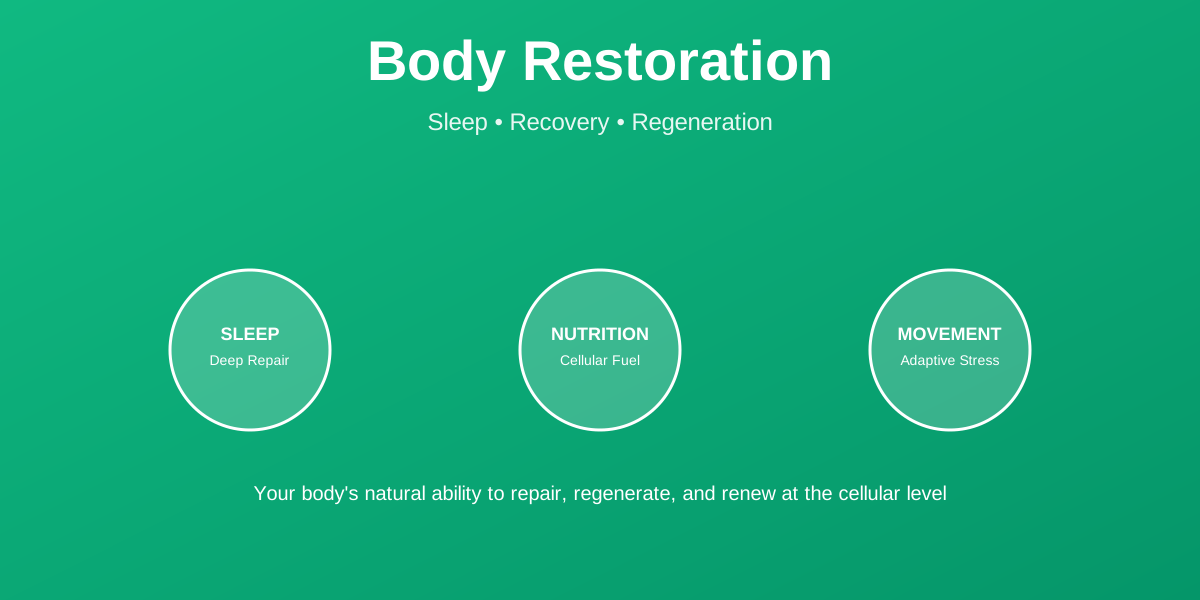
Your body doesn't need expensive interventions to restore itself—it needs what your body naturally craves: quality sleep, nourishing food, and recovery protocols aligned with your lifestyle.
From professional athletes to busy parents, from aging adults to young adults navigating their peak performance years, everyone benefits from understanding and optimizing body restoration.
What Is Body Restoration?
Body restoration encompasses all the biological processes through which your body repairs tissue damage, replenishes energy reserves, removes metabolic waste, and regenerates cells. It's the restorative theory of sleep in action—your brain initiating cascades of hormonal and neurological changes that enable muscle repair, protein synthesis, immune enhancement, and cognitive consolidation. These processes occur most powerfully during sleep, especially deep sleep (NREM stages 3-4) when growth hormone peaks and cellular maintenance accelerates.
Not medical advice.
Body restoration operates 24/7 at the cellular level, but intensifies dramatically during sleep and recovery periods. When you prioritize restoration, you're not resting passively—you're actively fueling one of your body's most sophisticated biological systems. This is why athletes treat recovery as seriously as training, why weekend rest can reset weekly stress, and why consistent sleep quality predicts longevity better than almost any other lifestyle factor.
Surprising Insight: Surprising Insight: Your body rebuilds approximately 330 billion cells every single day, primarily during sleep. Disrupting sleep by even 2-3 hours nightly can reduce cellular repair efficiency by up to 30%, accumulating into measurable health decline within weeks.
The Sleep Restoration Cycle
How sleep stages enable body restoration through hormonal cascade and cellular repair
🔍 Click to enlarge
Why Body Restoration Matters in 2026
In 2026, our culture remains obsessed with optimization, productivity, and pushing harder. Yet research consistently shows that body restoration—not hustle—drives sustainable performance. The CDC reports that 37% of men and 39% of women in the US experience chronic sleep deprivation, directly impairing cellular repair and accelerating aging. Meanwhile, emerging regenerative medicine approaches (PRP, stem cell therapy) cost thousands, when optimizing natural restoration costs nothing.
Body restoration matters because it's the difference between aging 70 in chronological years but 85 biologically versus maintaining youthful cellular function. Athletes know this: winning at championship level happens during recovery, not training. Busy professionals are learning this: breakthrough thinking emerges after restorative sleep, not all-nighters. And emerging research on Long COVID, post-viral recovery, and chronic fatigue shows that strategic restoration can literally reverse seemingly permanent damage.
Moreover, in an era of biohacking and cellular optimization, body restoration represents the most evidence-supported foundation. Every supplement, workout, or recovery tool works only if your body has the capacity to respond—and that capacity is built primarily through sleep, nutrition, and intentional rest, not expensive interventions.
The Science Behind Body Restoration
During deep sleep, your pituitary gland releases growth hormone in concentrated pulses, triggering protein synthesis in muscles and stimulating collagen production in skin. Simultaneously, your lymphatic system (which doesn't have a pump like blood circulation) flushes metabolic waste—including toxic beta-amyloid proteins linked to cognitive decline. Your immune system upregulates, producing cytokines that fight infection and inflammation. Heart rate drops by 20-30%, reducing cardiovascular stress. Your core body temperature falls, optimizing enzyme function for cellular repair.
REM sleep contributes differently: it consolidates memories, strengthens neural connections, and supports emotional regulation. A single night of poor sleep impairs all these processes. One study showed that 4 hours of sleep reduced antibody response to vaccination by 50%. Chronic sleep restriction accelerates aging at the cellular level—telomere shortening (the protective caps on chromosomes) progresses 10x faster in chronically sleep-deprived individuals.
Cellular Restoration Mechanisms
Key biological processes enabling body restoration at the molecular level
🔍 Click to enlarge
Key Components of Body Restoration
Sleep Quality & Duration
Competitive athletes require 9-10 hours of nighttime sleep for adequate recuperation, while 7-9 hours is standard for most adults. However, quality matters more than quantity alone. Deep sleep percentage (ideally 10-20% of total sleep), REM percentage (20-25%), and sleep continuity (minimal awakenings) predict restoration more accurately than total hours. Sleep tracking via wearables can reveal your personal restoration pattern.
Nutrition for Cellular Repair
Protein supplies amino acids essential for muscle and tissue repair. Omega-3 fatty acids strengthen cell membranes and reduce inflammation. Vitamins C, D, E, B-complex, and K facilitate cellular repair processes. Minerals like zinc, magnesium, and iron support protein synthesis and immune function. Antioxidant-rich foods (berries, leafy greens, dark chocolate) protect against oxidative stress during repair. Nutrient timing matters: consuming protein and carbohydrates within 2 hours post-exercise accelerates muscle restoration.
Movement & Physical Stress
Paradoxically, body restoration requires physical stress. Exercise creates micro-tears in muscle fibers; restoration rebuilds them stronger. High-intensity interval training particularly stimulates mitochondrial production. However, excessive training without adequate recovery reverses benefits—rest days aren't optional, they're essential. The stress-recovery cycle (intense effort plus adequate recovery) drives adaptation. Young athletes often push too hard; aging athletes often don't push hard enough. The sweet spot: challenging activity followed by priority recovery.
Stress Management & Nervous System Balance
Chronic stress elevates cortisol, which suppresses immune function and slows cellular repair. Parasympathetic activation (rest-and-digest nervous system) enables restoration. Practices like meditation, breathwork, massage, and time in nature activate parasympathetic tone. A 30-minute walk in daylight can shift your nervous system state profoundly. During stressful seasons, prioritizing parasympathetic practices becomes even more critical—your body's restoration capacity literally depends on it.
| Life Stage | Priority Focus | Sleep Target | Recovery Protocol |
|---|---|---|---|
| Young Adulthood (18-35) | Performance maximization, injury prevention | 8-9 hours | 1-2 rest days weekly, basic sleep hygiene |
| Middle Adulthood (35-55) | Sustained performance, prevention of decline | 7-9 hours | 2-3 recovery days weekly, stress management critical |
| Later Adulthood (55+) | Function preservation, longevity optimization | 7-8 hours (higher quality critical) | Active recovery 3-4x weekly, sleep and nutrition prioritized |
How to Apply Body Restoration: Step by Step
- Step 1: Establish a consistent sleep schedule: Set the same bedtime and wake time daily (even weekends), regulating your circadian rhythm and optimizing deep sleep percentage.
- Step 2: Optimize your sleep environment: Temperature (65-68°F ideal), darkness (blackout curtains), quiet (earplugs if needed), and a comfortable mattress are non-negotiable investments in restoration.
- Step 3: Eliminate screens 60 minutes before bed: Blue light suppresses melatonin production. Reading physical books or journaling instead preps your brain for sleep.
- Step 4: Consume protein across meals: Aim for 20-30g per meal to provide amino acids for ongoing cellular repair throughout the day.
- Step 5: Include omega-3 sources: Fatty fish, walnuts, flax, or algae supplements support cell membrane integrity and reduce inflammation.
- Step 6: Time your exercise strategically: Intense workouts 4-6 hours before bed allow recovery without sleep disruption. Morning or early afternoon training optimizes sleep quality.
- Step 7: Practice parasympathetic activation daily: 10-20 minutes of meditation, breathwork, or nature time reduces cortisol and enables restoration.
- Step 8: Manage caffeine and alcohol: Eliminate caffeine after 2 PM and alcohol within 3 hours of sleep—both fragment deep sleep.
- Step 9: Consider strategic napping: 20-30 minute naps boost cognitive performance and support afternoon restoration without disrupting night sleep.
- Step 10: Track and adjust: Monitor sleep duration, quality, and recovery metrics weekly, adjusting based on your individual patterns and needs.
Body Restoration Across Life Stages
Young Adulthood (18-35)
Young adults often underestimate restoration because recovery feels effortless. Your body bounces back quickly from inadequate sleep, intense training, or poor nutrition. However, this is exactly when optimal restoration habits compound into lasting benefits. Athletes who prioritize recovery early build superior physical capacity. Students who sleep adequately outperform all-nighters despite studying less total time. The habits you establish now—bedtime discipline, recovery prioritization, stress management—determine whether you maintain youthful function into later decades.
Middle Adulthood (35-55)
Middle adulthood demands increased restoration because biological efficiency declines. Hormones shift, recovery capacity diminishes, and accumulated stress compounds. Sleep quality often deteriorates due to life demands, yet the need for deep sleep intensifies. This is the critical phase to elevate recovery practices—not because restoration suddenly becomes important, but because maintaining performance requires more intentional effort. Those who prioritize restoration in midlife experience sustained energy, resilience, and function. Those who don't face accelerating decline.
Later Adulthood (55+)
Later adulthood requires sophisticated restoration optimization. Circadian rhythms shift, making sleep onset harder but early waking common. Deep sleep percentage naturally declines. Yet cellular restoration remains critical—perhaps more so, as maintaining function and preventing age-related decline depends on maximizing every restoration cycle. Strategic physical activity, consistent sleep, optimized nutrition, and stress management become longevity multipliers. Many aging adults who maintain exceptional function share one trait: they prioritize restoration as seriously as younger athletes do.
Profiles: Your Body Restoration Approach
The Performance Athlete
- 8-10 hours sleep with high deep sleep percentage
- Precise nutrition timing around workouts
- Structured recovery days (active recovery, massage, ice baths if beneficial)
Common pitfall: Prioritizing training volume over recovery quality, assuming rest is weakness
Best move: Track sleep quality metrics; schedule recovery days non-negotiably; post-workout refuel within 2 hours
The Busy Professional
- 7-9 hours consistent sleep (schedule it like important meetings)
- Stress management practices (meditation, walks, breathwork)
- Simple nutrition strategies (prepped proteins, omega-3 sources)
Common pitfall: Sacrificing sleep to add more work, expecting willpower to compensate for fatigue
Best move: Block sleep time on calendar; use lunch breaks for parasympathetic activation; meal prep Sunday for workday protein access
The Aging Wellness Seeker
- 7-8 hours quality sleep (quantity matters less than efficiency)
- Gentle consistent movement (walking, yoga, swimming)
- Anti-inflammatory nutrition emphasizing protein and micronutrients
Common pitfall: Accepting sleep quality decline as inevitable, reducing activity to compensate for fatigue
Best move: Optimize sleep environment aggressively; add morning sunlight exposure; engage in strength training 2-3x weekly
The Recovery Enthusiast
- Foundation of sleep and nutrition (not expensive gadgets or protocols)
- Consistency over novelty (basic practices done daily beat trendy interventions)
- Evidence-based strategies (sleep, stress management, protein) before supplements
Common pitfall: Chasing expensive recovery tools while neglecting sleep, or trying every supplement without sleep foundation
Best move: Nail sleep first; then add nutrition optimization; then consider tools like massage or temperature therapy
Common Body Restoration Mistakes
Mistake 1: Expecting supplements to compensate for poor sleep. NAD boosters, amino acid complexes, and collagen peptides can support restoration—but they work within the context of adequate sleep, not instead of it. You can't supplement your way out of sleep deprivation. Prioritize sleep first; supplements amplify, not replace.
Mistake 2: Treating rest as laziness or wasted time. Cultural narratives celebrate hustle but ignore that restoration is where adaptation happens. Your body doesn't improve during training—it improves during recovery. Elite performers in every domain (sports, music, academics, business) are restoration experts, not perpetually-busy people. Rest is productive; burnout is wasteful.
Mistake 3: Inconsistency with sleep timing and duration. Sleeping 10 hours on Saturday can't compensate for 5-hour nights Monday-Friday. Your body's restoration system needs consistency. Even a 1-2 hour shift in sleep time (due to travel or schedule changes) temporarily impairs deep sleep. Prioritize consistency; occasional adjustments are normal, but chronic inconsistency perpetually undermines restoration.
Restoration vs. Depletion Cycle
How consistent restoration practices compound, versus how neglect accelerates decline
🔍 Click to enlarge
Science and Studies
Body restoration science is robust, spanning NIH, CDC, and peer-reviewed research from leading universities and medical institutions. The following sources provide evidence-based foundation for restoration strategies:
- NIH/NCBI (2024): Sleep stages and restoration physiology—demonstrates deep sleep's essential role in muscle repair, hormonal restoration, and immune enhancement. https://www.ncbi.nlm.nih.gov/books/NBK482512/
- CDC Sleep Epidemiology (2024): Reports 37% of US men and 39% of women experience sleep deprivation; documents health impacts of inadequate restoration. https://stacks.cdc.gov/view/cdc/158066
- PMC Research (2024): Sleep and athletic performance shows 9-10 hours sleep required for competitive athletes; 2-4 hours less than recommended impairs performance significantly. https://pmc.ncbi.nlm.nih.gov/articles/PMC9960533/
- Stanford Medicine Regenerative Rehabilitation (2024): Demonstrates regenerative medicine approaches synergize biology and rehabilitation for accelerated tissue repair. https://med.stanford.edu/ortho/clinics/orthobiologics.html
- Physiology Research (2024): NREM and REM sleep complementary roles—NREM enables cellular maintenance; REM consolidates memory and supports brain plasticity. https://www.ncbi.nlm.nih.gov/books/NBK526132/
Your First Micro Habit
Start Small Today
Today's action: Tonight, set a consistent bedtime 30 minutes earlier than usual. Keep this new time for 7 consecutive days, tracking how you feel. That's it—one simple shift in sleep timing to activate your restoration system.
Consistency with sleep timing synchronizes circadian rhythm, improving deep sleep percentage within 3-5 days. You'll notice clearer thinking, better mood, and easier waking. This single micro habit establishes the foundation for all other restoration practices.
Keep quitting habit apps after a missed day? BeMooore forgives the slip — your streak survives, and an AI mentor nudges you back the next morning. Free on iOS.
Quick Assessment
How would you describe your current sleep quality and restoration?
Your current baseline determines your entry point. Those with excellent sleep can focus on optimizing recovery through nutrition and activity. Those struggling with sleep need to prioritize sleep architecture before adding complexity.
What feels most challenging about optimizing body restoration for you?
Your biggest barrier reveals your high-leverage intervention. Time-challenged? Block sleep like important meetings. Inconsistent? Automate sleep timing. Stressed? Prioritize parasympathetic practices. Uncertain? Start with sleep, then add nutrition, then movement.
Which restoration practice resonates most with you right now?
Your intuitive answer points to what you're ready to prioritize. Start there, establish consistency, then expand. Trying to overhaul everything simultaneously fails; sequential mastery succeeds.
Take our full assessment to get personalized recommendations.
Discover Your Style →Next Steps
Your body's restoration system is ready right now. You don't need a complicated protocol or external intervention to begin. You need consistency with fundamentals: sleep, nutrition, movement, and stress management. Choose one area where you feel most readiness, establish consistency for 7 days, then expand to others.
Whether you're an athlete optimizing performance, a professional managing stress-induced fatigue, or someone seeking sustainable health, body restoration is your foundation. The research is clear, the benefits are proven, and the practices are accessible. Start tonight with one micro habit—earlier bedtime, better sleep environment, or evening stress management—and let your body's natural restoration system do what it evolved to do.
Get personalized guidance with AI coaching.
Start Your Journey →Research Sources
This article is based on peer-reviewed research and authoritative sources. Below are the key references we consulted:
Related Glossary Articles
Frequently Asked Questions
How much sleep do I actually need for optimal body restoration?
Most adults need 7-9 hours; athletes require 9-10 hours. However, quality (deep sleep percentage, sleep continuity) matters as much as quantity. A consistent 8 hours of high-quality sleep restores better than inconsistent 9 hours fragmented by awakenings. Track both duration and quality to find your personal sweet spot.
Can I make up lost sleep on weekends?
Partially. Sleeping 10 hours Saturday can partially recover from a poor week, but it doesn't fully restore what chronic sleep deprivation removes. Consistency matters more than occasional catch-up. One weekend sleep surge can't reverse five nights of 5-hour sleep. Prioritize nightly consistency.
Which restoration strategies work fastest?
Sleep and stress management improvements typically show results within 3-7 days. Nutrition optimization shows benefits within 2-3 weeks. Fitness-based recovery benefits appear within 4 weeks. All compound over months. There's no shortcut—consistency beats intensity.
Do I need expensive recovery tools (massage devices, ice baths, supplements) to restore optimally?
No. Sleep, nutrition, stress management, and basic movement form the foundation. These cost nothing and drive 80% of restoration benefits. Tools like massage or supplements enhance a solid foundation but can't replace it. Establish basics first.
How does age change body restoration needs?
Aging adults often need higher-quality sleep because deep sleep percentage naturally declines. They also benefit from slightly higher protein intake and consistent strength training. Young adults often need to build restoration habits early. The core practice (prioritizing sleep, nutrition, recovery) remains constant across ages.
Take the Next Step
Ready to improve your wellbeing? Take our free assessment to get personalized recommendations based on your unique situation.
- Discover your strengths and gaps
- Get personalized quick wins
- Track your progress over time
- Evidence-based strategies