AI Powered Services for Wellness & Personal Growth
AI powered services represent a transformative shift in how we approach wellness, health coaching, and personal development. These intelligent systems deliver personalized recommendations, 24/7 emotional support, and adaptive guidance that evolves with your needs. From mental health chatbots serving millions to machine learning algorithms analyzing your health data in real time, AI-powered wellness services are becoming the new standard for accessible, responsive care that meets you where you are, when you need it most.
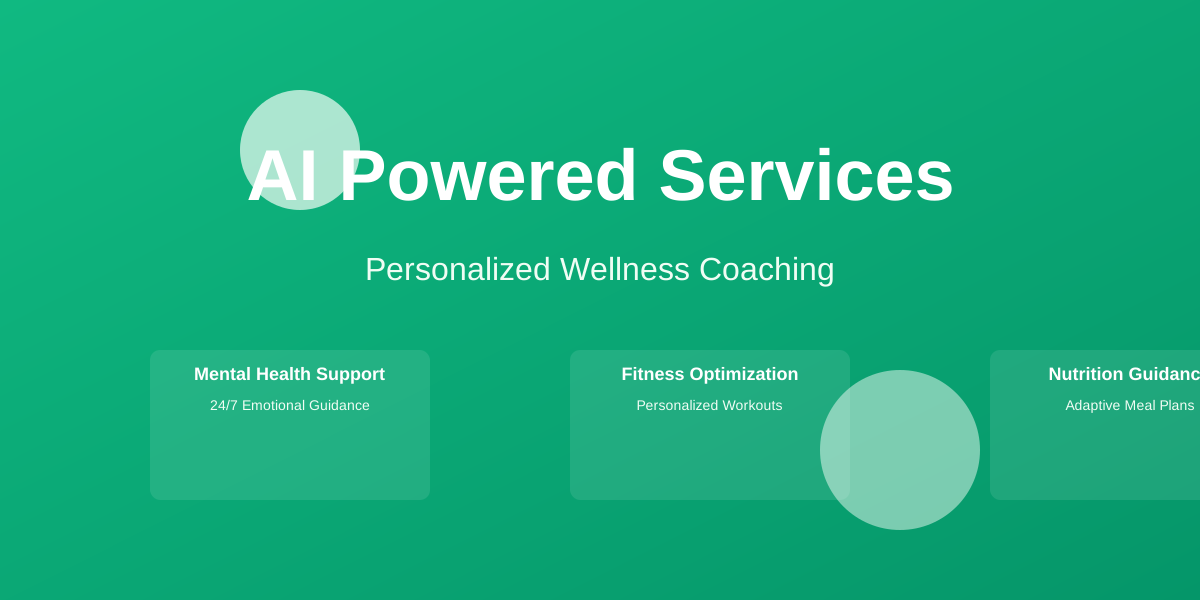
The global market has noticed. The health and wellness AI services sector grew from $1.71 billion in 2025 to an estimated trajectory toward $9.12 billion by 2033, with 1 in 3 adults already using an AI chatbot for mental health support.
Whether you're seeking personalized fitness coaching, mental health support, nutrition guidance, or holistic wellness optimization, AI powered services combine scientific precision with human-centered design to create solutions that work with your life, not against it.
What Is AI Powered Services?
AI powered services are digital tools and platforms that use artificial intelligence, machine learning, and natural language processing to deliver personalized guidance, coaching, monitoring, and support for health and wellbeing. These services analyze individual data points—your health history, lifestyle patterns, preferences, goals, and real-time responses—to generate customized recommendations that adapt and evolve as you progress.
Not medical advice.
AI powered services span multiple domains: mental health chatbots providing judgment-free emotional support, fitness AI coaches generating personalized workout plans, nutrition AI systems adapting meal suggestions based on your eating patterns, sleep optimization algorithms analyzing rest data, and integrated wellness platforms orchestrating multiple dimensions of your health simultaneously. The key characteristic is responsiveness—these systems don't deliver static advice; they learn, adapt, and improve recommendations based on how you respond over time.
Surprising Insight: Surprising Insight: A 2025 RAND study found that 92.7% of young users found AI mental health advice helpful, and a Harvard University study documented that students using AI wellness apps reported significantly greater positive emotions, lower loneliness, and higher resilience compared to control groups.
The AI Wellness Ecosystem
How AI powered services connect data, analysis, and personalized recommendations
🔍 Click to enlarge
Why AI Powered Services Matter in 2026
The convergence of AI sophistication, smartphone ubiquity, and wellness awareness has created an unprecedented opportunity for accessible, personalized health support. In 2026, successful health systems are moving AI from pilot programs into core operational workflows, meaning AI-powered services are becoming standard infrastructure, not experimental novelties.
Accessibility stands as perhaps the most compelling reason AI services matter now. Traditional health coaching requires scheduling appointments, managing costs, and navigating availability—all barriers that prevent millions from accessing support. AI powered services eliminate the wait. A student experiencing anxiety at 2 AM can access a supportive conversation immediately. Someone curious about personalized nutrition doesn't need to wait weeks for a nutritionist appointment. The democratization of expert-level guidance creates pathways to wellness previously unavailable to most people.
Personalization at scale represents another critical advantage. Machine learning algorithms analyze patterns across millions of users while remaining intensely focused on your individual data, creating recommendations that are simultaneously data-informed and uniquely tailored. Your fitness AI learns that you prefer morning workouts and respond better to motivational messaging than guilt-based pressure. Your nutrition AI discovers that you consistently follow plant-based recommendations but struggle with hydration. Your wellness platform identifies that your anxiety peaks on Monday mornings and proactively offers grounding techniques on Sunday evenings.
The Science Behind AI Powered Services
AI-powered wellness services are grounded in established scientific principles applied through advanced computational methods. The foundation rests on behavioral science, neurobiology, precision medicine, and human-computer interaction research. These systems work because they implement evidence-based strategies—cognitive behavioral therapy principles, habit formation science, personalized exercise physiology, precision nutrition frameworks—within adaptive technological systems.
The effectiveness stems from continuous feedback loops. Traditional coaching delivers episodic advice—you see a coach once weekly or monthly. AI systems observe continuous patterns, make real-time adjustments, and create cumulative learning that improves recommendations over weeks and months. A machine learning fitness system doesn't just prescribe exercise; it monitors which workout styles you sustain, which intensity levels you repeat, and which progressions you find motivating. The algorithm learns your exercise physiology as directly as a human trainer would through months of training.
How Machine Learning Improves Wellness Recommendations
The continuous cycle of data collection, analysis, and adaptation in AI wellness services
🔍 Click to enlarge
Key Components of AI Powered Services
Conversational AI and Chatbots
Conversational AI systems powered by large language models create judgment-free dialogues that function as supportive companions. These aren't simplified chatbots that retrieve pre-written responses; they're sophisticated systems capable of understanding context, emotional nuance, and complex health questions. A wellness chatbot might recognize when someone is expressing both physical fatigue and emotional depletion, and tailor responses addressing the emotional dimension rather than just prescribing more sleep. Platforms like Wysa, Ginger, and emerging AI therapy systems serve tens of millions of users, with studies showing high satisfaction and reported helpfulness for mental health support.
Personalized Health Analytics
Machine learning systems analyzing health data represent another critical component. These platforms integrate information from wearable devices (heart rate variability, sleep duration, movement patterns), user surveys (mood, stress levels, energy), health records (lab results, medical history), and behavioral tracking (food choices, exercise patterns, social engagement) to create comprehensive health profiles. Google's Personal Health Coach research, OpenAI's ChatGPT Health, and Apple's rumored Quartz system exemplify this integration—they're designed to provide recommendations grounded in your complete health picture rather than isolated data points.
Adaptive Coaching Systems
AI-powered coaching platforms like Rocky, AIMY, and Coach Marlee deliver structured guidance that adjusts based on your engagement and progress. These systems track which coaching approaches resonate with you personally, which goal-setting frameworks prove sustainable, and which feedback styles motivate sustained behavior change. An adaptive coaching system recognizes that you're a 'visual learner' who responds to progress charts and celebrates milestone achievements, and tailors its communication style accordingly. The result is coaching that feels increasingly personalized over time.
Integration and Interoperability
Modern AI powered services increasingly integrate across platforms—your fitness recommendations account for your sleep data, nutrition guidance considers your energy patterns, mental health support acknowledges your work stress. Integration eliminates silos where one part of your health system ignores insights from another. Platforms like WHOOP Coach integrate with your health ecosystem to provide holistic recommendations rather than narrow fitness optimization.
| Service Type | Primary Function | Key Technologies |
|---|---|---|
| Mental Health Chatbots | Emotional support, crisis management, CBT coaching | NLP, conversational AI, therapeutic frameworks |
| Fitness AI Coaches | Personalized workouts, technique feedback, progression | Computer vision, biomechanics modeling, adaptive algorithms |
| Nutrition Systems | Personalized meal plans, dietary recommendations, tracking | Image recognition, nutritional databases, preference learning |
| Sleep Optimization | Sleep quality improvement, rest recommendations, scheduling | Wearable data analysis, chronobiology, behavioral patterns |
How to Apply AI Powered Services: Step by Step
- Step 1: Identify your primary wellness goal—mental health support, fitness optimization, nutrition guidance, sleep improvement, or integrated wellness. Different AI systems specialize in different domains.
- Step 2: Research available platforms in your chosen domain, reading user reviews and checking whether they use evidence-based approaches rather than unproven claims.
- Step 3: Start with a clear data baseline about your current state—take a mood inventory, record your typical exercise week, document your sleep patterns, or assess your nutrition habits.
- Step 4: Select an AI service and complete its initial onboarding process, providing detailed information about your health history, preferences, goals, and lifestyle factors. This data quality directly impacts recommendation quality.
- Step 5: Engage consistently with the platform for at least 2-4 weeks before assessing impact. AI systems need time to learn your patterns and optimize recommendations.
- Step 6: Provide honest feedback when prompted—whether you completed recommendations, how you felt about them, what resonated and what didn't. Your feedback trains the algorithm.
- Step 7: Track specific metrics relevant to your goal, whether that's mood improvements, fitness progression, nutritional consistency, or sleep quality gains.
- Step 8: Adjust your engagement based on what's working. If the system recommends exercises that don't suit you, feedback that clearly. If a mental health chatbot's tone feels wrong, explore alternatives.
- Step 9: Consider combining AI services—using a mental health chatbot for emotional support while simultaneously using a fitness AI and nutrition platform for comprehensive wellness optimization.
- Step 10: Recognize that AI powered services excel as enhancement tools. For serious mental health conditions, persistent physical symptoms, or complex medical situations, combine AI support with professional healthcare providers.
AI Powered Services Across Life Stages
Young Adulthood (18-35)
Young adults often face unique wellness challenges—managing stress from education and early careers, establishing foundational fitness and nutrition habits, navigating the transition to independent health management. AI powered services shine here because they remove friction from accessing support. A college student exploring mental health support doesn't need to navigate university counseling waitlists; they can access a supportive AI conversation immediately. Young professionals building fitness habits benefit from AI coaches that celebrate small wins and provide judgment-free feedback on missed workouts. This demographic shows the highest adoption of AI wellness tools and often prefers the convenience and privacy of AI support to traditional services.
Middle Adulthood (35-55)
Middle-aged adults often juggle family responsibilities, career demands, and accumulating health concerns. They're increasingly interested in preventive health optimization and sustainable lifestyle changes rather than dramatic transformations. AI powered services address these needs through personalized recommendations accounting for complex life contexts—nutrition guidance that works within family meal planning, fitness recommendations that fit realistic schedules, stress management tools addressing specific workplace challenges. This demographic increasingly uses wearable data and health analytics; AI systems that integrate this data into coherent wellness strategies particularly appeal to data-conscious middle-aged adults.
Later Adulthood (55+)
Older adults often benefit from AI-powered services that address age-specific concerns—chronic disease management, fall prevention, cognitive health optimization, social connection (AI companions can reduce loneliness), and medication management support. As mobility decreases, having 24/7 access to health guidance without traveling to appointments becomes increasingly valuable. AI systems that integrate complex medication regimens and multiple health conditions, and provide clear health tracking relative to established benchmarks, serve older adults particularly well.
Profiles: Your AI Powered Services Approach
The Optimization Seeker
- Data-driven, precise recommendations grounded in personal metrics
- Integration of multiple health data sources for holistic analysis
- Transparent explanations of why specific recommendations are personalized
Common pitfall: Becoming overwhelmed by data availability and losing sight of simple actions that matter most
Best move: Use AI systems that prioritize clarity and actionability over raw data volume; focus on one or two key metrics rather than tracking everything
The Busy Professional
- Minimal-friction health support fitting realistic schedules
- Quick, efficient coaching sessions and recommendations
- Automated tracking that requires minimal manual input
Common pitfall: Using AI as an excuse to further postpone self-care rather than actually implementing recommendations
Best move: Set specific time blocks for engaging with AI systems (e.g., 10 minutes each morning for fitness coaching) and treat them as non-negotiable appointments
The Support Seeker
- Judgment-free emotional support available during vulnerable moments
- Validation of feelings and experiences
- Connection to professional help when AI support reaches its limits
Common pitfall: Using AI emotional support as a complete replacement for human connection and professional mental health care
Best move: View AI chatbots as valuable companions between therapy sessions or for real-time support, while maintaining relationships and professional care relationships
The Habit Builder
- Progressive, sustainable habit scaffolding that builds momentum
- Positive reinforcement celebrating adherence and effort
- Flexibility when life disruptions occur without judgment
Common pitfall: Starting with ambitious goals that AI systems recommend and abandoning them when real-world complexity intervenes
Best move: Work with AI systems to start extremely small—habits so trivial they feel unmissable—then gradually build complexity as consistency strengthens
Common AI Powered Services Mistakes
The most common mistake with AI powered services is expecting them to be automated solutions requiring no behavioral change from you. AI generates excellent recommendations, but implementation depends entirely on your actions. Systems fail not because recommendations are poor but because people don't follow them consistently.
Another critical mistake is treating AI powered services as a replacement for professional healthcare. AI excels at providing support, coaching, and guidance across wellness dimensions. It struggles with complex medical diagnoses, severe mental health crises, and situations requiring professional judgment. The most effective approach combines AI support with human healthcare, not substitutes one for the other.
Choosing the wrong AI service for your specific needs represents another substantial mistake. A fitness AI optimized for competitive athletes may frustrate someone seeking gentle movement. A mental health chatbot excelling at anxiety management might not address depression effectively. Investment time in matching the right system to your actual needs rather than assuming all AI wellness services deliver identical value.
Common AI Powered Services Mistakes and Corrections
Identifying and correcting counterproductive patterns when using AI wellness systems
🔍 Click to enlarge
Science and Studies
Research on AI-powered wellness services has grown substantially, with findings generally supporting their efficacy as support tools while cautioning against unrealistic expectations about their scope.
- A 2025 RAND study published in JAMA Network Open found that 92.7% of young users found AI mental health advice helpful, with higher satisfaction among those with previous mental health concerns
- Harvard University's 2025 randomized controlled trial of Flourish AI app found students using the system reported significantly greater positive emotions, lower loneliness, and higher resilience compared to control groups
- A Nature Scientific Reports 2025 study demonstrated that personalized fitness recommendations using machine learning outperformed generic exercise guidelines in adherence and results across diverse population groups
- PMC research on AI-driven digital interventions found effectiveness across mental health screening, support provision, monitoring, prevention, and clinical education applications
- Global Wellness Institute 2025 research identified AI-powered personalization as the leading wellness trend, with 1 in 3 adults already using AI chatbots for health support
Your First Micro Habit
Start Small Today
Today's action: Identify one specific wellness challenge (sleep, stress, fitness, nutrition) and research one AI-powered service designed for it. Spend just 5 minutes reviewing its approach, reading authentic user reviews, and noting whether it aligns with your values. Take no action today beyond selection and review.
This micro habit eliminates decision friction without overwhelming commitment. You're not starting an intense new program; you're simply gathering information. Most people avoid AI wellness services due to decision paralysis about which to try. This habit breaks that paralysis by making the choice visible and simple.
Track your wellness goals and micro habits with our personalized AI coaching app that learns your patterns and celebrates progress.
Quick Assessment
Which dimension of your health would benefit most from personalized AI support right now?
Your answer reveals which AI-powered service would deliver maximum value immediately. The service matching your highest-need area will likely see fastest adoption and results.
What concerns you most about using AI-powered wellness services?
Your primary concern highlights which aspect needs addressing before you'll comfortably adopt AI services. Address privacy through research into data policies, test effectiveness through free trials, deliberately maintain human connections while using AI support, and commit to the micro-habit approach to reduce overwhelm.
How do you prefer to receive health guidance and coaching?
Your preferred communication style should guide which AI platform you select. Some systems excel at warm, conversational support; others prioritize analytical precision. Matching your communication preference to the system's approach dramatically improves engagement and results.
Take our full assessment to get personalized recommendations aligned with your wellness needs.
Discover Your Style →Next Steps
AI powered services represent a genuine shift in how wellness support becomes accessible, personalized, and responsive. Whether you're seeking mental health support, fitness coaching, nutrition guidance, or integrated wellness optimization, matching the right platform to your specific needs and preferences creates a foundation for sustained engagement and real results.
Begin with clarity about your primary wellness goal and honest assessment of what type of support would resonate with you. Then research platforms addressing that specific goal, respecting their actual capabilities and limitations. The future of AI-powered wellness isn't about AI replacing human expertise—it's about AI democratizing expert-level guidance and support to everyone seeking to optimize their health and wellbeing.
Get personalized guidance with AI coaching and discover your unique wellness path.
Start Your Journey →Research Sources
This article is based on peer-reviewed research and authoritative sources. Below are the key references we consulted:
Related Glossary Articles
Frequently Asked Questions
Are AI-powered wellness services actually effective, or just hype?
Research increasingly supports their effectiveness as support tools. A 2025 RAND study found 92.7% of users found AI mental health advice helpful; Harvard research showed AI wellness app users reported greater resilience and lower loneliness. They're effective for support, coaching, and guidance but work best combined with professional healthcare for serious conditions, not as replacements.
Is my health data safe with AI wellness platforms?
Safety varies by platform. Research specific privacy policies before adopting any service. Strong providers encrypt data, limit access, comply with healthcare regulations (HIPAA in US, GDPR in EU), and provide transparent data handling policies. Ask directly about data storage, access controls, and whether information is sold to third parties.
Can AI really personalize recommendations better than generic advice?
Yes, when working with sufficient individual data. Machine learning systems analyzing your health history, preferences, patterns, and responses deliver increasingly personalized recommendations over time. They excel at pattern recognition and adaptation that exceeds generic guidelines—but only when you provide quality data and consistent feedback.
Will using AI wellness services replace my need for human healthcare providers?
No. AI services excel at providing support, coaching, guidance, monitoring, and encouragement. They struggle with complex diagnosis, serious mental health crises, and situations requiring professional judgment. The most effective approach combines both—AI for daily support and coaching, human providers for diagnosis and treatment of significant health concerns.
How quickly will I see results from AI-powered wellness services?
Initial insights may appear within days, but meaningful changes typically require 4-12 weeks of consistent engagement. Fitness gains, nutrition habit changes, sleep improvements, and emotional wellbeing shifts develop gradually. AI systems that promise instant transformation are overselling. Expect progress over months, not days.
Take the Next Step
Ready to improve your wellbeing? Take our free assessment to get personalized recommendations based on your unique situation.
- Discover your strengths and gaps
- Get personalized quick wins
- Track your progress over time
- Evidence-based strategies