Minimalism Life Philosophy
Minimalism is more than decluttering your closet—it's a revolutionary life philosophy that challenges our relationship with possessions and helps us focus on what truly matters. In an age of endless consumption, minimalism offers clarity: by intentionally reducing material excess, you free yourself from stress, anxiety, and the constant pressure to acquire more. Research shows that people who adopt minimalism report higher levels of happiness, mental clarity, and life satisfaction. This philosophy cuts through the noise of modern consumer culture to reveal a simple truth: living well isn't about having everything; it's about appreciating what you have and pursuing experiences that align with your deepest values.
The minimalist lifestyle has gained tremendous momentum over the past decade, supported by research from psychology, neuroscience, and behavioral economics showing that simplified living directly reduces stress hormones like cortisol while improving emotional regulation and overall wellbeing.
Whether you're overwhelmed by clutter, struggling with finances, or simply seeking a more intentional way to live, minimalism provides a practical framework for creating the life you actually want rather than the life consumer culture tells you to want.
What Is Minimalism Life Philosophy?
Minimalism as a life philosophy is the intentional practice of acquiring and keeping only those possessions and commitments that add genuine value to your life, while deliberately removing excess material goods, wasteful habits, and inauthentic relationships. Rather than a rigid lifestyle of extreme deprivation, minimalism is fundamentally about alignment—using your finite time, energy, and money to support what you truly care about. The minimalist philosophy rejects the consumer narrative that happiness comes from owning more and replaces it with evidence-based principles: autonomy, intentionality, mental clarity, and authentic connection with others and oneself.
Not medical advice.
The philosophy has roots in Stoicism, Buddhism, and voluntary simplicity movements, but modern minimalism has evolved into a scientific approach to wellbeing. Studies from universities and mental health organizations show that minimalism isn't about self-deprivation—it's about strategic allocation of resources to maximize life satisfaction and psychological flourishing.
Surprising Insight: Surprising Insight: 80% of studies examining the relationship between minimalism and wellbeing find a positive correlation, with participants reporting reduced anxiety, improved focus, and greater life satisfaction within weeks of adopting minimalist practices.
The Minimalism Mindset Shift
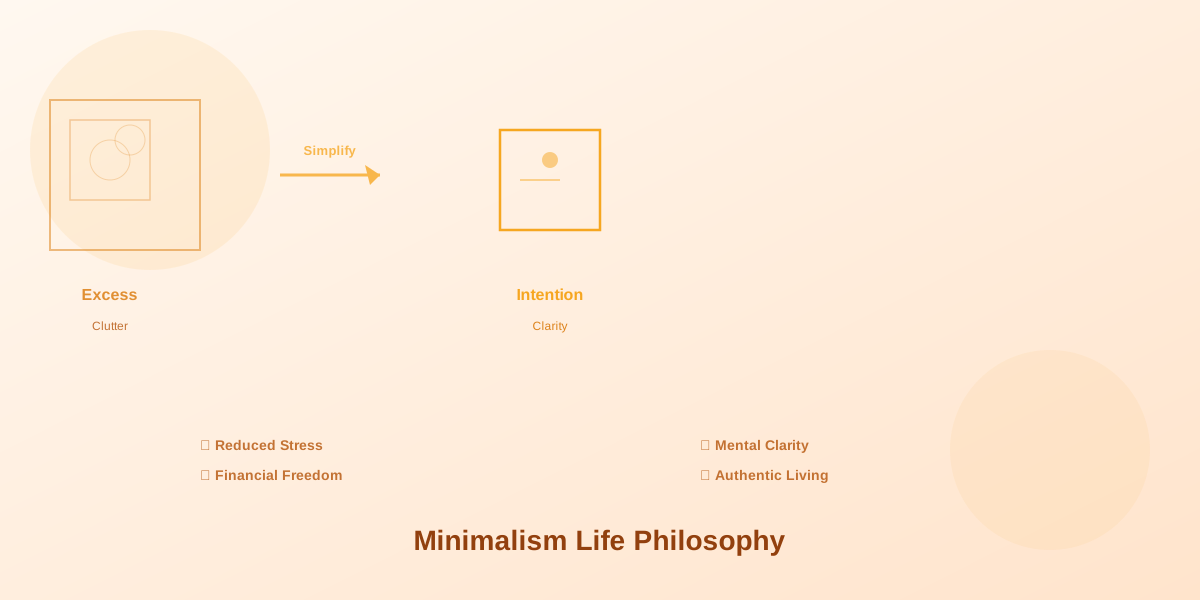
Visual representation of how minimalism transforms thinking from accumulation to intention
🔍 Click to enlarge
Why Minimalism Life Philosophy Matters in 2026
In 2026, minimalism addresses one of the most pressing mental health crises: decision fatigue and information overload. The average person is exposed to 10,000+ advertising messages daily, each designed to create artificial needs and drive consumption. Minimalism provides immunity to this constant pressure by clarifying your values and establishing boundaries around what you allow into your physical and mental space.
Economic pressures make minimalism increasingly relevant—by reducing consumption, people can save 20-40% of their income, accelerate financial independence, and build security for themselves and their families. Adopting a minimalist approach to spending directly strengthens resilience during economic uncertainty.
Environmentally, minimalism is no longer optional. The minimalist philosophy of conscious consumption directly reduces carbon footprint and waste, making it an ethical choice that aligns personal wellbeing with planetary wellbeing. When you buy less, you reduce harm to ecosystems and future generations while improving your own mental health—a rare win-win.
The Science Behind Minimalism Life Philosophy
Neuroscience reveals that visual clutter directly stimulates the amygdala—the brain's threat-detection center—triggering a low-level stress response. In cluttered environments, cortisol (the stress hormone) remains elevated, impairing memory formation, decision-making ability, and emotional regulation. When you reduce visual clutter through minimalism, your brain experiences measurable relief: lower cortisol, improved cognitive function, and enhanced capacity for focus and creativity. This isn't psychology; it's neurobiology. Functional MRI studies show that minimalist, organized spaces activate different neural pathways than chaotic ones.
Psychologically, minimalism works through two key mechanisms: First, the autonomy principle—when you deliberately choose what stays in your life rather than accepting defaults, you experience greater agency and control. Second, the psychological concept of "mental space"—by reducing physical and decision-making demands, you create literal cognitive bandwidth for reflection, creativity, and authentic connection. Research from multiple universities confirms that minimalist practitioners report higher life satisfaction scores, lower anxiety markers, and improved sleep quality.
How Minimalism Affects Brain Chemistry
The neurobiological cascade triggered by reducing clutter and adopting minimalist practices
🔍 Click to enlarge
Key Components of Minimalism Life Philosophy
Intentional Consumption
Intentional consumption is the core discipline of minimalism: before acquiring anything, you pause and ask whether this item or experience will meaningfully improve your life or align with your values. This includes a 24-48 hour waiting period before non-essential purchases, regular audits of subscriptions and memberships you've forgotten about, and the practice of considering cost-per-use rather than absolute price. Intentional consumption extends beyond possessions to commitments, relationships, and digital consumption—applying the same discernment to how you spend time.
Value Alignment
Minimalism asks a foundational question: What do I actually value? Once you clarify your core values—whether they're creativity, family, learning, health, or freedom—every possession and commitment becomes easier to evaluate. If an item or activity doesn't support your stated values, it's clutter, no matter how expensive or prestigious it is. This value-alignment component transforms minimalism from a decluttering technique into a comprehensive life philosophy that ensures your daily choices reflect what matters most to you.
Psychological Freedom
Minimalism delivers psychological freedom through several pathways: reduced decision fatigue (fewer choices to make), improved focus (no distractions or guilt about unused items), financial security (lower expenses, increased savings capacity), and authentic self-expression (your environment and choices reflect your true preferences, not social expectations). People practicing minimalism report feeling 'lighter,' more in control, and more capable of pursuing meaningful goals because their physical environment and daily decisions no longer drain their psychological resources.
Environmental Stewardship
The minimalist philosophy includes environmental responsibility as a core component. By consuming less, you reduce resource extraction, manufacturing emissions, transportation waste, and landfill contribution. Minimalism advocates for quality over quantity—buying one durable item instead of five cheap ones. This stewardship element means that by improving your own life through minimalism, you're simultaneously reducing your ecological footprint and contributing to global sustainability.
| Life Domain | Consumer Approach | Minimalist Approach |
|---|---|---|
| Physical Space | Accumulate and store possessions | Keep only what adds value |
| Finances | Spend on wants and status symbols | Invest in experiences and security |
| Time & Energy | Say yes to most commitments | Protect time for priorities |
| Digital Life | Unlimited apps, subscriptions, content | Curated tools that serve specific purposes |
| Relationships | Broad shallow networks | Fewer, deeper authentic connections |
How to Apply Minimalism Life Philosophy: Step by Step
- Step 1: Define Your Core Values: Before decluttering anything, write down 5-7 core values that represent what genuinely matters to you (e.g., health, creativity, family, freedom, learning). Use these as your decision-making filter throughout the minimalism process.
- Step 2: Audit One Category: Start with one small category (drawer, shelf, closet) rather than your entire home. Take everything out and hold each item, asking: 'Does this support my values? Would I buy this again today?' This builds confidence and momentum.
- Step 3: Apply the Four-Box Method: As you audit, sort items into Keep, Donate, Sell, and Trash. Be honest: items you never use aren't 'maybe someday' purchases—they're obligations. Donate or sell items in good condition; don't hoard them.
- Step 4: Establish an Entry Barrier: Once you've decluttered, protect your space. Before bringing anything new inside, pause and ask whether it aligns with your values and if you have space for it. This prevents re-accumulation.
- Step 5: Digitize and Simplify Records: Photograph important documents, receipts, and memorabilia, then store them digitally. This preserves memories while eliminating paper clutter. Create a simple folder system for important files.
- Step 6: Create Minimal Beauty: Your minimalist space should be intentional and attractive, not cold or sparse. Choose items you love, display them thoughtfully, and create a calm environment that supports your wellbeing.
- Step 7: Apply Minimalism to Time Commitments: Review your calendar and commitments. Cancel subscriptions you don't use, say no to obligations that don't align with your values, and protect your time for activities that matter.
- Step 8: Practice Intentional Consumption: Implement a waiting period before purchases. Wait 24-48 hours for non-essentials. Ask: Where will this live? What will I give up to make room? Does this add value to my life?
- Step 9: Simplify Your Digital Life: Unsubscribe from email lists, delete unused apps, organize your phone with intention, and set time limits on social media. Digital clutter drains mental energy just as much as physical clutter.
- Step 10: Build Community Around Minimalism: Share your minimalism journey with friends or join online communities. Support from others reinforces your commitment and provides practical ideas for maintaining a minimalist lifestyle.
Minimalism Life Philosophy Across Life Stages
Young Adulthood (18-35)
In young adulthood, minimalism builds strong financial foundations by reducing consumption patterns before they become entrenched habits. Young adults practicing minimalism accumulate less debt, save more aggressively, and develop clarity about career choices aligned with their values rather than following default career paths. This phase is ideal for experimentation—trying different minimalist approaches to discover what feels sustainable for you. Digital minimalism is especially critical for young adults navigating constant social media pressure and comparison culture.
Middle Adulthood (35-55)
Middle adults often find minimalism liberating because they've accumulated significant possessions and commitments. Minimalism during this phase focuses on editing—letting go of items, relationships, and commitments that no longer serve your evolving self. Many report that middle adulthood minimalism improves family dynamics by reducing stress and modeling healthy choices for children. This is also the phase where minimalism delivers maximum financial benefit: reduced expenses accelerate wealth building and create options for flexible work or early retirement.
Later Adulthood (55+)
Later adults practicing minimalism often find profound peace in this phase. Minimalism reduces the burden of managing possessions, simplifies life for potential caregivers, and allows for legacy planning—deciding which items have real meaning to pass on versus what to release. Many report that later-life minimalism brings a sense of completion and freedom, enabling focus on relationships, wisdom sharing, and creating meaning rather than maintaining material excess.
Profiles: Your Minimalism Life Philosophy Approach
The Intentional Minimalist
- Clear frameworks for decision-making (value alignment)
- Permission to think differently than mainstream culture
- Community of like-minded practitioners for support
Common pitfall: Becoming judgmental of others' consumption or overly rigid in minimalist principles, losing sight of minimalism's core purpose: enabling a meaningful life
Best move: Remember that minimalism looks different for everyone. Focus on your own values and path rather than imposing your standards on others. True minimalism is about freedom, not restriction.
The Reluctant Minimalist
- Practical, step-by-step guidance without perfectionism
- Understanding that minimalism is about removing what doesn't serve you, not creating deprivation
- Small wins to build momentum and confidence
Common pitfall: Feeling overwhelmed and abandoning the effort. Trying to minimize everything at once rather than starting with one small category.
Best move: Start with one drawer or shelf, not your entire home. Celebrate small progress. Give yourself permission to keep items that genuinely bring you joy, even if they seem frivolous to others.
The Sustainability-Focused Minimalist
- Alignment with environmental values and impact reduction
- Systems for responsible disposal, donation, and recycling
- Understanding minimalism as part of broader sustainability goals
Common pitfall: Perfectionism about disposing of items 'the right way' can paralyze action. Analysis paralysis prevents decluttering.
Best move: Do your best to donate, sell, or recycle responsibly, but don't let perfection be the enemy of progress. Getting the item out of your life is the priority; imperfect disposal is still better than hoarding.
The Financial Minimalist
- Clear tracking of savings impact from reduced consumption
- Understanding of cost-per-use and true financial cost of ownership
- Connection between minimalism and wealth building or financial independence
Common pitfall: Focusing exclusively on cost savings while missing the psychological and emotional benefits of minimalism
Best move: Use financial motivation as your entry point, but expand to appreciate minimalism's mental health, relational, and existential benefits. You'll discover that the money is just one benefit among many.
Common Minimalism Life Philosophy Mistakes
The most common mistake is confusing minimalism with deprivation. Minimalism isn't about having nothing or living uncomfortably; it's about intentional selection. Some people over-correct from consumer culture and eliminate things they actually use and love, creating an uncomfortable, cold environment that they ultimately abandon. Remember: if something serves a purpose or brings genuine joy, it belongs in a minimalist home.
Another critical error is trying to minimize everything at once. Attempting to declutter your entire home, wardrobe, calendar, and digital life simultaneously leads to overwhelm and abandonment. The sustainable approach is sequential: start with one physical category (a drawer), then expand to another category when the first feels stable. This prevents decision fatigue and builds confidence through small wins.
Finally, many people neglect the value-clarification step and jump directly to decluttering. Without clarity about your core values, you'll remove items randomly and may later regret the decisions. Before decluttering, invest time in understanding what matters to you. This makes every subsequent decision clearer and more confident.
The Minimalism Pitfalls to Avoid
Common mistakes and how to navigate them successfully
🔍 Click to enlarge
Science and Studies
Recent research provides compelling evidence for minimalism's wellbeing benefits. A 2024 study in Psychology & Marketing examined different types of minimalist motivation and found that intentional simplification is associated with improved life satisfaction and reduced consumer anxiety. Research from multiple universities shows that 80% of studies examining minimalism find positive correlations with wellbeing, with participants reporting measurable improvements within weeks.
- Pangarkar (2025) - 'Toward a Better Understanding of Minimalistic Motives' in Psychology & Marketing documented that minimalism is positively associated with happiness and mental health outcomes, particularly through reduced financial stress and increased autonomy.
- Blackburn (2024) - 'Could a minimalist lifestyle reduce carbon emissions?' in WIREs Climate Change found that minimalism as a sustainability practice significantly reduces environmental impact while improving psychological wellbeing through alignment with personal values.
- PMC Research (2024) - Studies on minimalism and millennials' wellbeing found that antecedents of minimalism include stress reduction, desire for authenticity, and environmental consciousness, with outcomes of improved life satisfaction and mental health.
- ResearchGate Study - 'Minimalism as a Sustainable Lifestyle' found five key themes in minimalist wellbeing: autonomy, competence, mental space, awareness, and positive emotions.
- International Journal Studies (2025) - Research examining minimalism's behavioral representations documented that conscious simplification leads to emotional wellbeing, reduced anxiety, and improved focus on meaningful goals.
Your First Micro Habit
Start Small Today
Today's action: Choose one drawer in your home and spend 15 minutes today removing items that no longer serve you or bring joy. Don't worry about the entire room—just one drawer. This creates momentum and builds confidence for larger projects.
Starting with a single small space prevents overwhelm while delivering immediate psychological wins. You'll experience the relief of reducing clutter, see tangible results, and develop a sustainable practice rather than an abandoned all-or-nothing effort. Micro habits work because they're so small that resistance crumbles.
Keep quitting habit apps after a missed day? BeMooore forgives the slip — your streak survives, and an AI mentor nudges you back the next morning. Free on iOS.
Quick Assessment
How much of your living space is occupied by items you use regularly or genuinely love?
Your answer reveals your current relationship with possessions. High clutter awareness is the first step toward change. Many people find that 30-40% of their possessions are unused, unloved, or misplaced.
When you think about adopting a more minimalist approach, what appeals to you most?
Your motivation shapes your minimalism approach. Those motivated by finances accelerate wealth-building; those motivated by mental health see faster stress reduction. Knowing your 'why' sustains your commitment.
What would most help you move toward minimalism?
Your preferred learning style determines which minimalism resources will resonate with you. Some need practical frameworks; others need community. Choosing the right support system dramatically increases your success.
Take our full assessment to get personalized recommendations.
Discover Your Style →Next Steps
Your first step is clarifying your core values. Before decluttering anything, spend 20 minutes writing down what genuinely matters to you: family, health, creativity, growth, freedom, or something else. These values become your decision-making framework for every minimalism choice you make. This foundation transforms decluttering from a random removal process into a values-aligned life redesign.
Next, commit to one small category—a single drawer, shelf, or closet—and apply minimalism there. This builds momentum without overwhelming you. Notice how you feel in the simplified space. That feeling is your motivation for expanding to other areas. Most people find that once they experience the psychological relief of reduced clutter, they naturally want to expand their practice.
Get personalized guidance with AI coaching.
Start Your Journey →Research Sources
This article is based on peer-reviewed research and authoritative sources. Below are the key references we consulted:
Related Glossary Articles
Frequently Asked Questions
Is minimalism just about having fewer possessions?
No. While reducing possessions is one component, minimalism as a life philosophy encompasses intentional choices across all life domains: time, relationships, work, digital life, and consumption. It's fundamentally about alignment between your choices and your values.
Won't minimalism make my life feel cold and depressing?
Only if you mistake minimalism for deprivation. True minimalism creates beauty through intentionality—you keep and display items you love, surround yourself with colors and textures that inspire you, and create spaces that support your wellbeing. Minimalist homes are often more beautiful and peaceful than cluttered ones.
How do I prevent re-accumulating clutter after decluttering?
Establish an entry barrier: pause before bringing anything new inside and ask whether it aligns with your values and has a designated place. Implement a rule like '1 in, 2 out' (when you acquire one new item, remove two existing items). This maintains your minimalist baseline.
Can I be minimalist with a family or partner who isn't?
Absolutely. You can minimize your own spaces and belongings while respecting your family's choices. Many couples find that when one partner's stress decreases through minimalism, others gradually become interested. Lead by example rather than imposing your approach.
What if I feel guilty getting rid of gifts or expensive items?
Guilt is a common obstacle. Remember: keeping something you don't use out of guilt honors neither the gift nor your wellbeing. You can appreciate the generosity behind a gift while releasing the item itself. Take a photo if it's sentimental, then let it go.
Take the Next Step
Ready to improve your wellbeing? Take our free assessment to get personalized recommendations based on your unique situation.
- Discover your strengths and gaps
- Get personalized quick wins
- Track your progress over time
- Evidence-based strategies