Continuous Glucose Monitor
Imagine knowing exactly how your body responds to every meal, every workout, every stressful moment—in real time. A continuous glucose monitor (CGM) is a wearable device that does exactly that: it tracks your blood sugar levels every five minutes, 24 hours a day, giving you unprecedented insight into what's really happening inside your body. For people with diabetes, CGMs have transformed glucose management from guesswork into precision medicine. But increasingly, even people without diabetes are using them to optimize energy, understand food sensitivities, and make smarter health decisions.
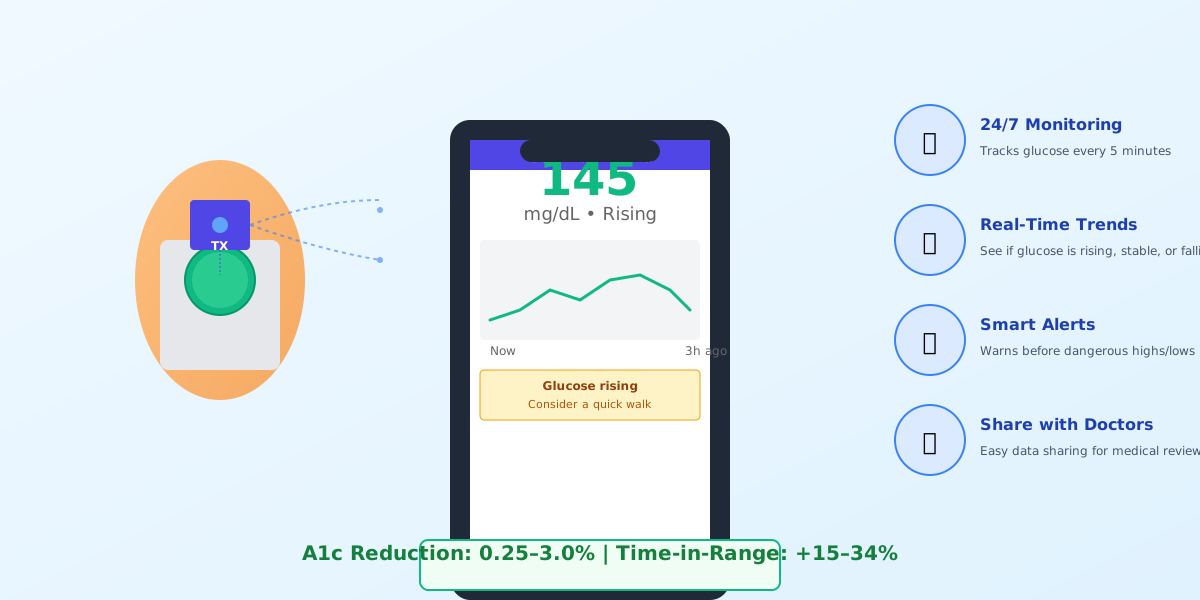
What makes CGMs remarkable isn't just the technology—it's what the data reveals. Most people discover surprising patterns: that certain foods spike their glucose far more than they realized, that stress triggers hyperglycemia, or that an evening walk can smooth out afternoon peaks. This real-time feedback loop creates powerful motivation for lifestyle change.
In 2024, the FDA approved the first over-the-counter CGM (Dexcom Stelo), making this technology accessible to anyone wanting to understand their metabolic response. By 2026, CGMs have become a cornerstone of preventive health and personalized nutrition.
What Is a Continuous Glucose Monitor?
A continuous glucose monitor is a small, wearable sensor (about the size of a postage stamp) that you apply to your skin—usually on your arm or abdomen—and it stays there for 10-14 days (or longer with newer models like Eversense 365, which lasts a full year). The sensor sits just under the skin and measures glucose levels in interstitial fluid (the fluid between your cells) every 5 minutes, transmitting readings wirelessly to your smartphone or dedicated reader device. Instead of pricking your finger multiple times daily, you get continuous, real-time data about how your glucose rises and falls throughout the day and night.
Not medical advice.
CGMs are distinct from traditional finger-stick blood glucose meters, which capture only a single snapshot at the moment of testing. With a CGM, you see trends: whether your glucose is rising, stable, or falling, and at what speed. This trend information is crucial for making real-time decisions about food, activity, and insulin dosing.
Surprising Insight: Surprising Insight: Studies show CGM users experience A1c reductions of 0.25%–3.0% and improve time-in-range by 15%–34% simply by seeing real-time glucose data—without major lifestyle overhauls. The feedback itself drives behavioral change.
How a CGM Works: The Complete Glucose Sensing Cycle
Step-by-step diagram showing sensor placement, glucose detection, data transmission, and real-time app display
🔍 Click to enlarge
Why Continuous Glucose Monitor Matters in 2026
Diabetes affects over 537 million adults globally, and prediabetes affects billions more. Traditional glucose testing—finger pricks 2-4 times daily—misses 95% of your glucose patterns. CGMs close this gap completely. For insulin users, CGMs reduce dangerous hypoglycemia (low blood sugar) episodes by up to 50%, a life-saving benefit. For non-insulin users, CGMs reveal hidden glucose patterns that drive fatigue, brain fog, mood swings, and cravings.
In 2024, the FDA approved Dexcom Stelo as the first over-the-counter CGM for non-diabetic use, acknowledging that understanding your glucose response isn't just for diabetics—it's increasingly central to preventive health. People using CGMs report better energy stability, clearer thinking, improved mood, and smarter food choices. This is personalized medicine in action.
The clinical evidence is compelling: Real-world studies show CGM users have better medication adherence, fewer emergency visits, and lower healthcare costs. Studies report A1c improvements of 0.25%–3.0% and time-in-range improvements of 15%–34%, often without major lifestyle changes—just the power of real-time feedback.
The Science Behind Continuous Glucose Monitor
CGM sensors work via electrochemistry. The sensor contains an enzyme (glucose oxidase) that reacts with glucose molecules in the interstitial fluid. This reaction generates a small electrical current proportional to glucose concentration. The sensor measures this current every 5 minutes and transmits the reading to your device. The interstitial glucose level lags about 5 minutes behind actual blood glucose, which is why CGMs show a slight delay compared to finger-stick readings—a minor trade-off for continuous, non-invasive data.
Accuracy is critical in medical devices. Modern CGM systems like Dexcom G7 and Eversense 365 have MARD (Mean Absolute Relative Difference) ratings of 8.8%-9.5%, meaning they're accurate to within 9% of laboratory blood glucose tests. The FDA requires all CGMs to meet strict accuracy standards. Newer models approved in 2024-2025 show even better performance, with some achieving single-digit MARD scores.
Glucose Response Timeline: What Happens After You Eat
Timeline showing glucose peaks, dips, and stabilization patterns over 3 hours after a meal
🔍 Click to enlarge
Key Components of Continuous Glucose Monitor
The Glucose Sensor
This is the tiny electrode array, typically 2-3mm in diameter, that sits under your skin and contains the glucose-reactive enzyme. Modern sensors are designed to last 10-14 days (Dexcom G7), 15 days (Dexcom G7 15 Day, cleared April 2025), or a full year (Eversense 365, cleared 2023). The sensor automatically stops transmitting after its rated lifespan to prevent inaccurate readings. Some sensors are fully implantable (like Eversense 365, which requires a quick insertion procedure), while others are adhesive patches you apply yourself.
The Transmitter
The transmitter is a small pod (about the size of a large coin) that sits on top of the sensor patch and wirelessly transmits glucose readings every 5 minutes to your phone or reader. It communicates via Bluetooth. Most transmitters are reusable and last for 90 days (they're replaced multiple times as you swap out sensors). The transmitter vibrates to alert you of high or low glucose readings.
The Mobile App or Reader
This is where you see your glucose data. Most modern CGMs sync with your smartphone app, showing real-time glucose, trends (rising/flat/falling), and predictive alerts. You can set custom glucose targets, review 24-hour patterns, and share data with healthcare providers. Some systems offer a dedicated handheld reader if you don't want to use your phone. The app typically stores 90 days of data for trend analysis.
Cloud Integration and Data Sharing
Most CGM systems integrate with the cloud, allowing your doctor to view your glucose patterns remotely, and enabling advanced features like predictive alerts. Abbott FreeStyle Libre and Dexcom G7 allow caregivers (parents, spouses, healthcare providers) to receive alerts if your glucose goes too high or low. Some systems integrate with insulin pumps, creating a closed-loop automated insulin delivery system (artificial pancreas).
| Device | Wear Duration | Accuracy (MARD) | Key Feature |
|---|---|---|---|
| Dexcom G7 15 Day | 15 days | 8.8% | Longest-wearing standard sensor; most accurate (cleared April 2025) |
| Dexcom Stelo (OTC) | 15 days | 9% | First OTC CGM; for non-insulin users and non-diabetics (cleared 2024) |
| Abbott FreeStyle Libre 3 | 14 days | 9.4% | Smallest sensor; no separate transmitter; good value |
| Eversense 365 | 365 days | 8.8% | First year-long implantable; requires insertion procedure; minimal sensor changes |
| Abbott Lingo (OTC) | 14 days | 9.5% | Newest OTC option; consumer-focused (cleared 2024) |
How to Apply Continuous Glucose Monitor: Step by Step
- Step 1: Get a prescription or buy OTC. If you have diabetes, your doctor can prescribe a CGM (often covered by insurance). For non-diabetics, OTC options like Dexcom Stelo and Abbott Lingo are available without a prescription.
- Step 2: Choose your sensor placement site. Most people use the back of the arm (easiest) or the abdomen. The site should be clean, dry, and have adequate subcutaneous fat for accurate readings.
- Step 3: Clean the skin with alcohol and let it dry completely. Residual moisture can reduce sensor adhesion and cause the sensor to fall off early.
- Step 4: Remove the adhesive backing and apply the sensor firmly to your skin, pressing around the edges for 10-15 seconds to ensure good contact.
- Step 5: Insert the sensor using the included applicator (some systems use an auto-injector; others press down manually). You'll feel a tiny prick as the electrode array inserts under the skin.
- Step 6: Attach the transmitter to the sensor patch (some devices like FreeStyle Libre have integrated transmitters). The transmitter sits on top of the sensor and communicates via Bluetooth.
- Step 7: Connect the transmitter to your smartphone app via Bluetooth. Enter your app's pairing code and allow location/notification permissions.
- Step 8: Wait for the warm-up period (typically 10-15 minutes). During this time, the sensor is calibrating and won't display readings yet.
- Step 9: After warm-up, your first glucose reading will display. Start logging food, activities, and insulin doses in the app to see patterns.
- Step 10: Wear the sensor continuously for its rated lifespan (10-14 days for most, 15 for Dexcom G7 15 Day, 365 for Eversense). Remove and replace with a fresh sensor when the timer ends.
Continuous Glucose Monitor Across Life Stages
Young Adulthood (18-35)
Young adults benefit from CGM to understand their metabolic baseline before any issues develop. If you have type 1 or type 2 diabetes, CGM makes blood sugar management during work, college, and social life much easier—no need to hide finger sticks or interrupt activities for testing. Even without diabetes, exploring your glucose response to different foods, caffeine, and stress levels can establish healthy patterns early. Many use CGMs to optimize sports performance or understand why certain foods cause afternoon crashes that limit productivity.
Middle Adulthood (35-55)
This is when type 2 diabetes and prediabetes typically emerge, often silently. CGM becomes especially valuable here for early detection and prevention. If you already have diabetes, CGM helps balance work stress, family responsibilities, and health management. Many report that seeing real-time glucose patterns motivates better choices around caffeine, meals, and exercise timing. CGM data is also increasingly used by cardiologists because glucose patterns predict cardiovascular risk, making it relevant for preventing heart disease.
Later Adulthood (55+)
For older adults, CGM is often combined with insulin pumps or closed-loop systems to reduce hypoglycemia risk—dangerous low blood sugar episodes that can cause falls and cognitive problems. CGM also helps manage polypharmacy (multiple medications) and age-related changes in glucose metabolism. The convenience of not finger-sticking is a major quality-of-life benefit. Seniors also benefit from alert-sharing with adult children or caregivers, adding an important safety layer.
Profiles: Your Continuous Glucose Monitor Approach
The Insulin User (Type 1 Diabetes)
- Real-time glucose and trend data for precise insulin dosing
- Integration with insulin pump for automated delivery (closed-loop system)
- Predictive alerts to prevent dangerous low blood sugar overnight
Common pitfall: Relying on CGM readings without understanding lag time—interstitial glucose lags ~5 minutes behind blood glucose, so always use a finger-stick for critical decisions like treating low blood sugar.
Best move: Pair your CGM with a compatible insulin pump (like Tandem or Medtronic) and/or closed-loop system (Control-IQ, 670G) for automated glucose management. This reduces daily burden while improving control. Share data with your endocrinologist for regular adjustment of insulin settings.
The Type 2 Diabetes Manager (Oral Meds)
- Evidence of how diet and exercise affect your glucose
- Clear visibility of medication effectiveness over time
- Motivation to build sustainable lifestyle habits
Common pitfall: Checking CGM obsessively and treating small fluctuations as emergencies. Glucose naturally varies; focus on overall patterns and time-in-range, not every data point.
Best move: Use CGM data to identify your personal glucose triggers (which foods spike you hardest, how much walking helps you recover). Share patterns with your doctor every 3 months to optimize medication dosing. Combine CGM insights with consistent sleep, stress management, and activity to prevent progression.
The Biohacker (Non-Diabetic Optimizing Performance)
- Understanding of individual food responses for energy and focus
- Data on how sleep, stress, and exercise affect glucose stability
- Patterns to guide nutrition timing for workouts or cognitive tasks
Common pitfall: Using CGM data to justify overly restrictive diets or obsessive tracking. Moderate glucose swings are normal and not inherently harmful in non-diabetics.
Best move: Use CGM for 2-4 weeks to identify your top glucose spikers and personal patterns. Then, graduate to applying those insights without continuous monitoring. Examples: knowing oatmeal spikes you but oats with nuts don't, or that a 10-minute walk after meals stabilizes you. Use this knowledge to build a personalized nutrition and activity strategy.
The Preventive Health Enthusiast
- Early warning signs of prediabetes or metabolic dysfunction
- Concrete feedback that lifestyle changes are working
- Integration with overall health tracking (sleep, activity, heart rate)
Common pitfall: Assuming normal fasting glucose means you're metabolic healthy. You can have hidden glucose dysregulation in your post-meal response despite normal fasting glucose.
Best move: Wear a CGM for 2-4 weeks to establish your baseline metabolic profile. Share the data with your doctor to identify any prediabetic patterns early. Use the insights to refine diet, exercise, and sleep habits. Repeat a CGM every 1-2 years to monitor if improvements are sticking or if new patterns emerge with age.
Common Continuous Glucose Monitor Mistakes
One major mistake is obsessing over individual glucose readings rather than looking at overall patterns and time-in-range. Glucose naturally fluctuates throughout the day by 20-40 mg/dL in healthy people; this is normal, not a problem. Focus on weekly trends and your percentage of time in your target range, not every spike.
Another common error is not calibrating your expectations. In the first week of CGM use, many people feel discouraged discovering how much their glucose varies. This is normal and valuable information—it's not a sign of failure; it's the data you needed to see. Use it to learn, not to shame yourself.
A third mistake is forgetting that CGM measures interstitial glucose, which lags behind blood glucose by ~5 minutes. If you're treating a low blood sugar episode, always use a finger-stick to confirm, because your CGM may show a lower reading than your actual blood glucose in the moment. Relying purely on the CGM trend can lead to over-treating lows.
Common CGM Mistakes and How to Avoid Them
Decision tree showing frequent errors and corrective actions
🔍 Click to enlarge
Science and Studies
The clinical evidence supporting CGM is substantial and continues to grow. Real-world studies published in 2024 show that CGM initiation is associated with significant improvements in glycemic control and reductions in healthcare resource utilization. Meta-analyses consistently demonstrate A1c reductions of 0.25%–3.0% and time-in-range improvements of 15%–34%, often achieved simply through the behavioral feedback of seeing real-time glucose data.
- Klonoff, D. C., et al. (2025). Importance of FDA-Integrated Continuous Glucose Monitors to Ensure Accuracy of Continuous Glucose Monitoring. Journal of Diabetes Science and Technology. - Emphasizes FDA accuracy standards and importance of validated CGM systems.
- Advances in Continuous Glucose Monitoring: Clinical Applications (2024). PMC11571640. - Comprehensive review of CGM use across insulin and non-insulin diabetes populations, showing expanded benefits.
- Transformative Advances in Continuous Glucose Monitoring and the Impact of FDA Over-the-Counter Approval on Diabetes Care (2024). PMC12007415. - Details the FDA approval of Dexcom Stelo and implications for diabetes prevention in non-diabetic populations.
- Use of Continuous Glucose Monitoring in Non-diabetic Individuals for Cardiovascular Prevention (2024). PMC12612783. - Systematic review showing CGM utility for identifying metabolic dysfunction and guiding lifestyle interventions in people without diabetes.
- Workshop on Noninvasive Glucose Monitoring 2024 (PMC11955980). - MIT workshop covering emerging non-invasive glucose monitoring technologies (near-infrared, photoacoustic spectroscopy) representing the future of this field.
Your First Micro Habit
Start Small Today
Today's action: Spend 10 minutes reviewing your CGM app trends from the past 3 days. Identify one food or activity that most strongly impacts your glucose. Make one small change this week based on that insight (e.g., walk 5 minutes after lunch, swap your usual snack for an alternative).
Most people get overwhelmed trying to act on CGM data all at once. Instead, focusing on one small change builds momentum and makes the insights feel actionable rather than paralyzing. After this change works, you naturally want to try another.
Keep quitting habit apps after a missed day? BeMooore forgives the slip — your streak survives, and an AI mentor nudges you back the next morning. Free on iOS.
Quick Assessment
What is your primary goal with glucose monitoring?
Your answer shapes which CGM system and approach will serve you best. Insulin users benefit most from closed-loop integration. Preventive users benefit from short 2-4 week monitoring windows. Biohackers thrive on trend analysis and meal-timing experiments.
How tech-comfortable are you with smartphone apps and wearable devices?
CGMs are increasingly smartphone-integrated. If you're less tech-comfortable, options with dedicated readers (FreeStyle Libre without app) or systems with strong support (Dexcom phone support) may serve you better. All major systems now offer caregiver support, which can ease the tech burden.
Are you using insulin or managing diabetes with lifestyle and oral medication?
Insulin users get the most clinical benefit from CGM, especially when paired with insulin pumps. Non-insulin users also show significant improvements in glucose control and motivation. Non-diabetics benefit from insight rather than medical necessity—a shorter monitoring window (2-4 weeks quarterly) often suffices.
Take our full assessment to get personalized recommendations.
Discover Your Style →Next Steps
If you have diabetes, talk to your healthcare provider about starting a CGM. They can determine which system fits your insulin regimen and insurance coverage. Many endocrinologists and diabetes educators now have starter kits and training programs to make the transition smooth. If your doctor isn't familiar with CGMs, request a referral to an endocrinologist or certified diabetes educator who is.
If you don't have diabetes but want to explore how your body responds to food and activity, consider trying an OTC system like Dexcom Stelo or Abbott Lingo for 2-4 weeks. Most people find the insights so valuable—discovering personal trigger foods, noticing patterns in energy and mood—that the cost feels justified. Even if you only wear it once a year as a check-in, the behavioral insights can shape your nutrition and activity habits for months.
Get personalized guidance with AI coaching.
Start Your Journey →Research Sources
This article is based on peer-reviewed research and authoritative sources. Below are the key references we consulted:
Related Glossary Articles
Frequently Asked Questions
How much does a continuous glucose monitor cost?
For people with diabetes, most insurance plans cover CGMs if you meet criteria (typically insulin use or Type 2 with multiple daily glucose checks). Out-of-pocket cost for insured patients is usually $35-100/month. For uninsured patients, Dexcom G7 costs ~$300/month ($100 per sensor x 3 sensors). Abbott FreeStyle Libre is similar. OTC systems like Dexcom Stelo cost ~$120-150 per sensor (14-day wear). Some states offer Medicaid coverage. FSA/HSA accounts can cover CGM costs. Patient assistance programs exist for uninsured low-income patients.
Do I need a prescription to buy a CGM?
Not anymore. As of 2024, Dexcom Stelo and Abbott Lingo are FDA-cleared over-the-counter (OTC) CGMs—you can buy them without a prescription. However, prescription CGMs (Dexcom G7, FreeStyle Libre 3, Eversense 365) still require a doctor's order, typically because insurance coverage requires a prescription. If you want to buy without involving a doctor, OTC systems are your option.
Can I wear a CGM while swimming or showering?
Yes. All FDA-approved CGMs are water-resistant to at least 1 meter depth (and most to 10+ meters). You can shower, swim, and snorkel. However, you should avoid submerging the transmitter (the pod on top of the sensor) in saltwater for extended periods, as saltwater can degrade electronics. Sweat, chlorine, and freshwater are fine. If you're doing intensive water sports, many users remove the sensor temporarily (it will still store data when reconnected after you restore power).
What if my CGM sensor falls off early?
Sensor adhesion failures are rare but happen (~1-2% of sensors). If a sensor falls off, you'll get an alert from your app. If you're still in warranty (within 30 days of wear), most manufacturers will send a replacement at no charge. Until the new sensor arrives, you'll need to use finger-stick testing or a previous CGM system if available. Tip: Make sure the insertion site is dry and oil-free before applying; avoid very hairy areas; and press the sensor edges firmly for 15+ seconds after application to ensure adhesion.
Is there a difference between interstitial glucose and blood glucose?
Yes, there's a ~5-minute lag. Interstitial glucose (what CGM measures) is glucose in the fluid between cells and lags behind blood glucose by approximately 5 minutes. This means your CGM reading may show slightly lower during a glucose spike than a simultaneous finger-stick blood glucose test. This lag is why it's important to use a finger-stick to confirm low blood sugar (hypoglycemia) before treating—your CGM might show 70 mg/dL while your actual blood glucose is 85 mg/dL due to the lag. The lag is a small trade-off for continuous, non-invasive monitoring.
Take the Next Step
Ready to improve your wellbeing? Take our free assessment to get personalized recommendations based on your unique situation.
- Discover your strengths and gaps
- Get personalized quick wins
- Track your progress over time
- Evidence-based strategies