Gratitude Practice
You have heard that gratitude is good for you. But here is what the research actually shows: a 2024 study of nearly 50,000 women found that those with the highest gratitude scores had a 9% lower risk of death over four years. Gratitude protected against every cause of death studied, including cardiovascular disease.
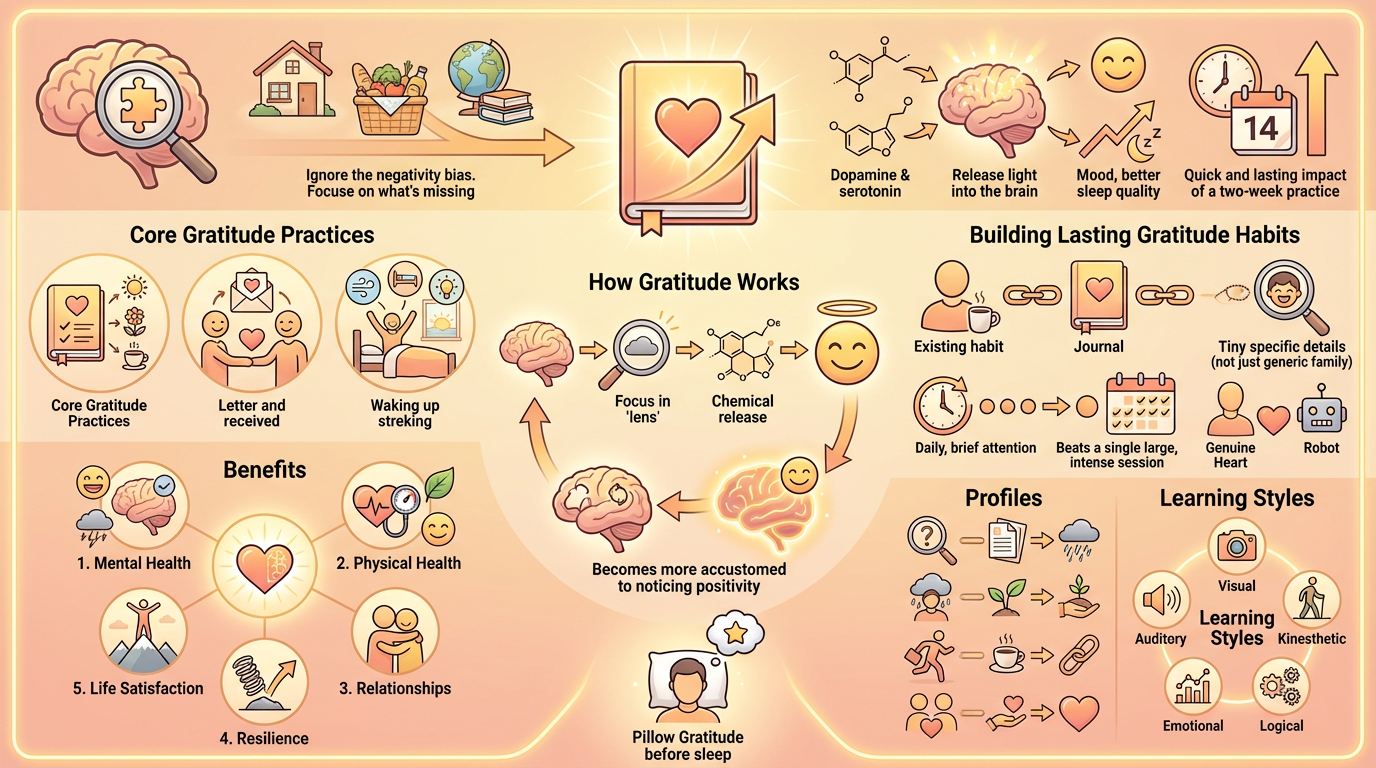
This is not about toxic positivity or ignoring problems. It is about training your brain to notice what is working alongside what is not. The science is clear: out of hundreds of interventions tested, gratitude is one of the few that consistently links to happiness.
This guide covers what gratitude practice actually is, what research reveals about its effects, and specific techniques you can start today. You will learn why some gratitude methods work better than others and how to build a sustainable practice.
What Is Gratitude Practice?
Gratitude practice is the intentional, regular cultivation of appreciation for what you have. It involves recognizing goodness in your life, understanding how others contribute to that goodness, and expressing appreciation genuinely. Gratitude shifts focus from scarcity to abundance.
Not medical advice.
Gratitude activates brain regions associated with dopamine, the reward neurotransmitter. When you practice gratitude, you literally train your brain to seek more things to appreciate. The neural pathways strengthen with repetition.
How Gratitude Works in the Brain
The neurological pathway of gratitude practice
🔍 Click to enlarge
Why Gratitude Practice Matters in 2026
A 2025 meta-analysis across 28 countries with over 24,000 participants found gratitude interventions produce small but significant increases in wellbeing. The effect size was 0.19, meaning gratitude reliably improves how people feel, though it is not a cure-all.
The JAMA Psychiatry study published in July 2024 followed nearly 50,000 women. Those scoring highest on gratitude had significantly lower mortality risk. The effect persisted after controlling for other factors. Gratitude appears to be genuinely health-protective.
A 2025 study comparing seven gratitude interventions found that methods which most effectively induce gratitude also best increase positive emotions and reduce negative ones. Not all gratitude practices work equally. Specific, detailed appreciation outperforms generic thankfulness.
The Science Behind Gratitude Practice
Specificity matters. Writing 'I am grateful for my partner who brought me coffee this morning and noticed I was stressed' works better than 'I am grateful for my partner.' Details engage the brain more deeply.
Social gratitude outperforms private gratitude. Expressing appreciation to others activates additional neural pathways and strengthens relationships.
Key Components of Gratitude Practice
You understand the science of gratitude and specific practices that work. Start with one method, practiced three times weekly. After a month, assess and adjust.
Explore related topics: positive psychology provides the broader framework, happiness shows how gratitude fits into overall wellbeing, and mindfulness strengthens the awareness that gratitude requires.
How to Apply Gratitude Practice: Step by Step
Keep quitting habit apps after a missed day? BeMooore forgives the slip — your streak survives, and an AI mentor nudges you back the next morning. Free on iOS.
Quick Assessment
Take our full assessment to get personalized recommendations.
Discover Your Style →Next Steps
Get personalized guidance with AI coaching.
Start Your Journey →How would you describe your current relationship with gratitude practice?
What's your primary goal regarding gratitude practice?
How important is gratitude practice to your life?
Research Sources
This article is based on peer-reviewed research and authoritative sources. Below are the key references we consulted:
Related Glossary Articles
Take the Next Step
Ready to improve your wellbeing? Take our free assessment to get personalized recommendations based on your unique situation.
- Discover your strengths and gaps
- Get personalized quick wins
- Track your progress over time
- Evidence-based strategies