Environmental Health
Environmental health is the science of how the world around us affects our physical and mental well-being. From the air we breathe to the water we drink, chemicals we're exposed to, and places where we live and work, our environment profoundly shapes our health outcomes. The World Health Organization estimates that nearly 25% of global disease burden results from environmental factors. This guide reveals the hidden connections between your surroundings and your health, empowering you to make protective choices.
Did you know? 7 million people die prematurely each year from air pollution-related causes—more than deaths from HIV, malaria, and tuberculosis combined.
Creating a healthier environment starts with understanding these risks and taking actionable steps in your daily life to reduce exposure to harmful substances.
What Is Environmental Health?
Environmental health refers to the branch of public health concerned with the physical, chemical, and biological factors external to a person, and how these factors affect individual and community well-being. It encompasses air quality, water safety, chemical exposure, radiation, waste management, food safety, workplace hazards, and the built environment where we live.
Not medical advice.
The field bridges public health, environmental science, and medicine to prevent disease and injury caused by environmental exposures. Unlike individual health interventions focused on personal behavior, environmental health operates at population and policy levels to remove hazards from our surroundings before they harm people.
Surprising Insight: Surprising Insight: One-third of schools worldwide still lack basic water, sanitation, and hygiene services—creating environmental health risks for 800 million children daily.
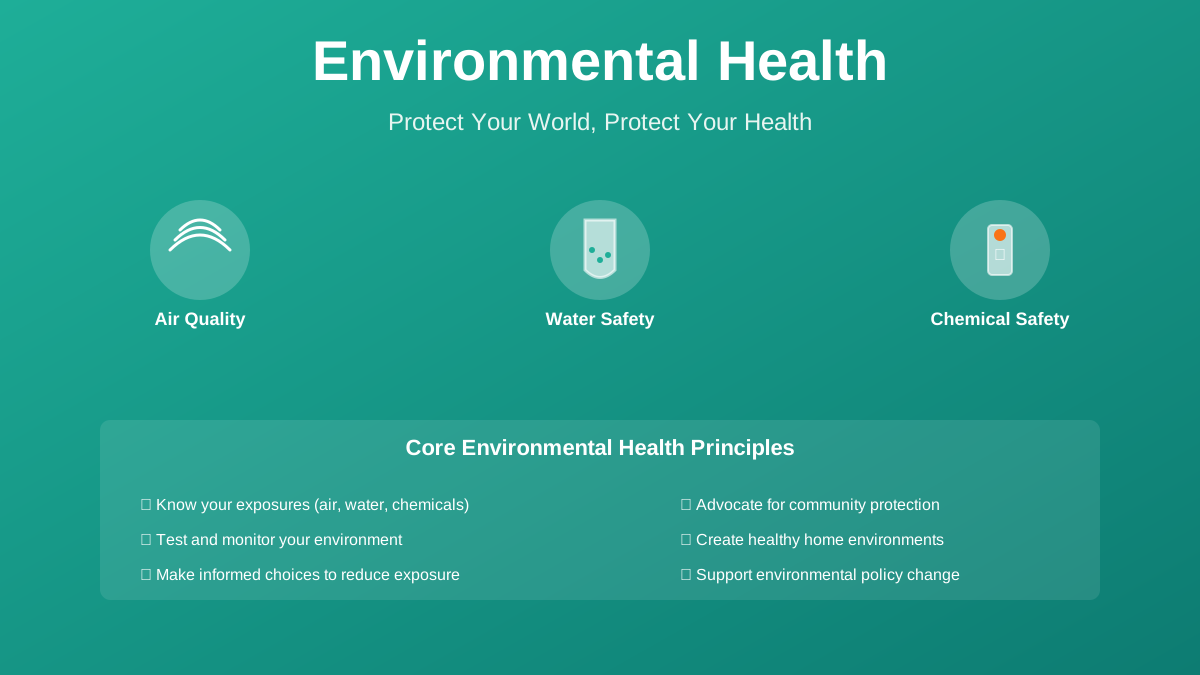
Environmental Health Impact Domains
Major environmental factors affecting human health outcomes
🔍 Click to enlarge
Why Environmental Health Matters in 2026
Climate change is amplifying environmental health threats globally. Warmer temperatures increase air pollution formation, expand disease-carrying insect ranges, intensify extreme weather events, and contaminate water supplies. The EPA's 2025 chemical risk evaluation process now explicitly considers vulnerable and overburdened communities—recognizing that environmental health impacts are not equally distributed.
Rising 'forever chemicals' (PFAS) levels in drinking water pose emerging risks. These synthetic compounds, found in non-stick cookware, food packaging, water-repellent clothing, and cleaning products, persist indefinitely in the environment and human bodies. The EPA designated five chemicals as high-priority in December 2024 for urgent risk assessment, signaling growing concern over widespread chemical exposure.
Your personal environmental health decisions create ripple effects. Choosing products with safer chemicals reduces household hazards, supports companies investing in cleaner manufacturing, and contributes to broader market shifts toward environmental protection. In 2026, environmental health is increasingly accessible through informed consumer choices and community advocacy.
The Science Behind Environmental Health
Environmental exposures trigger health effects through multiple pathways: inhalation (breathing pollutants), ingestion (consuming contaminated food and water), dermal absorption (skin contact), and bioaccumulation (compounds concentrating in body tissues over time). Individual susceptibility varies based on age, genetics, pre-existing health conditions, and socioeconomic factors determining access to cleaner environments.
Recent research (2024-2025) reveals how environmental stressors interact. Air pollution combined with heat stress increases cardiovascular mortality; water contamination with mold exposure in homes heightens respiratory disease risk; chemical exposures during pregnancy affect fetal development and long-term health. Understanding these interactions helps identify vulnerable periods and protective interventions.
How Environmental Exposures Affect Health
Pathways from exposure to health outcomes
🔍 Click to enlarge
Key Components of Environmental Health
Air Quality and Respiratory Protection
Air pollution remains the leading environmental health risk globally, with 99% of the world's population breathing air exceeding WHO guideline limits. Fine particulate matter (PM2.5) and ground-level ozone penetrate deep into lungs and bloodstream, triggering inflammation, respiratory disease, cardiovascular events, and premature death. Both outdoor air pollution from vehicles and industrial sources, and indoor air pollution from cooking, heating, and building materials require attention.
Water Safety and Contamination Prevention
Unsafe water kills children through diarrhea—accounting for 88% of diarrhea deaths in under-five populations. Contamination sources include human and animal waste, industrial discharge, agricultural runoff, and naturally occurring substances. Proper sanitation systems prevent the infection cycle by isolating waste from soil, food, water, and insect vectors. Access to clean water, sanitation, and hygiene (WASH) represents a foundational environmental health right.
Chemical Safety and PFAS Management
The EPA's Toxic Substances Control Act (TSCA) now requires companies to submit safety data on 16 chemicals being evaluated for health risks. 'Forever chemicals' like PFAS bioaccumulate in bodies, persisting for decades and linked to liver damage, thyroid disease, developmental effects, and immune suppression. Reducing exposure means choosing products labeled PFOA-free, avoiding non-stick cookware when possible, and supporting policy requiring safer chemical alternatives.
Built Environment and Health Equity
Your neighborhood's physical environment—housing quality, green space access, noise levels, walkability, and proximity to pollution sources—shapes daily health exposures. Communities with lower socioeconomic status often face disproportionate environmental burdens: living near highways, industrial facilities, or waste sites. Environmental justice requires equitable distribution of both environmental hazards and protective resources like parks and clean air.
| Environmental Hazard | Primary Health Risk | Protection Strategy |
|---|---|---|
| Fine particulate matter (PM2.5) | Respiratory disease, heart disease, stroke | Monitor air quality, use N95 masks on high-pollution days, improve ventilation |
| Lead in water and paint | Neurological damage, developmental delays, learning problems | Test water, use certified filters, encapsulate old paint, test homes built before 1978 |
| PFAS in water and food packaging | Liver damage, thyroid disease, immune suppression | Use PFOA-free cookware, limit fast food packaging, support PFAS regulation |
| Mold and moisture in homes | Asthma attacks, allergies, respiratory infections | Control humidity (30-50%), fix leaks promptly, ensure ventilation |
| Pesticide residues on food | Neurotoxic effects, hormone disruption, cancer risk | Buy organic for high-pesticide crops, wash produce thoroughly, support integrated pest management |
How to Apply Environmental Health: Step by Step
- Step 1: Assess your current environmental exposures by identifying your home location (near highways? industrial areas?), checking local air quality data, and testing water quality.
- Step 2: Monitor indoor air quality by tracking humidity levels, preventing mold, ensuring proper ventilation, and using air quality monitors for particulate matter.
- Step 3: Reduce chemical exposures at home by switching to non-toxic cleaning products, choosing organic for high-pesticide produce, and replacing old non-stick cookware.
- Step 4: Test your drinking water for common contaminants including lead, PFAS, and bacteria, and install appropriate filters if needed.
- Step 5: Create a pesticide-free zone in your home by decluttering, sealing cracks to prevent pest entry, and using integrated pest management rather than chemical pesticides.
- Step 6: Improve outdoor air quality access by identifying nearby green spaces, planning daily activities during low-pollution hours (early morning), and supporting local air quality improvements.
- Step 7: Review product labels and Material Safety Data Sheets (MSDS) for household chemicals, focusing on items used frequently.
- Step 8: Advocate for environmental health in your community by attending local planning meetings and supporting policies protecting water quality and air standards.
- Step 9: Educate family members about environmental health hazards and protection strategies, creating shared household practices.
- Step 10: Track and adjust your environmental health practices quarterly, measuring changes in air quality, water safety improvements, and personal health outcomes.
Environmental Health Across Life Stages
Young Adulthood (18-35)
Young adults often have the most flexibility to choose their living environment. Prioritize neighborhoods with good air quality, access to green space, and distance from pollution sources. Early environmental health investments—like choosing a home with good ventilation, reducing chemical exposure through product choices, and establishing WASH habits—create protective patterns lasting decades. Career choices also impact environmental exposure: some industries carry higher chemical or pollution hazards requiring additional protections.
Middle Adulthood (35-55)
Middle-aged adults often manage multiple environmental exposures simultaneously: home environment, workplace hazards, and family responsibilities. This life stage emphasizes maintaining and improving environmental health practices established earlier while managing accumulated exposures. Screening for chronic diseases linked to environmental factors (cardiovascular disease, respiratory conditions) becomes increasingly important. Managing workplace environmental health—ventilation, chemical exposure, noise—becomes crucial as career advancement often involves longer work hours.
Later Adulthood (55+)
Older adults face higher susceptibility to environmental hazards due to existing health conditions and physiological changes. Protecting air and water quality becomes especially important as cumulative lifetime exposures increase disease risk. Home modifications—reducing mold, improving accessibility, ensuring adequate heating/cooling—prevent both direct environmental hazards and secondary health complications. Advocating for environmental policies and community protections provides meaningful ways to protect both personal and collective health.
Profiles: Your Environmental Health Approach
The Careful Consumer
- Detailed ingredient lists and safety data for household products
- Evidence-based information about chemical risks and safer alternatives
- Clear labeling systems for product safety (GOTS, OEKO-TEX, B Corp certifications)
Common pitfall: Spending excessive time researching every product, creating decision paralysis instead of action
Best move: Choose 3-5 highest-priority items (cookware, cleaning products, food), switch those first, then gradually expand
The Community Advocate
- Local environmental health data and pollution maps for their area
- Opportunities to influence community policies through planning boards and civic engagement
- Collective action frameworks and community health organizations
Common pitfall: Focusing on policy change while neglecting personal/family environmental protection
Best move: Combine personal practices with community advocacy—demonstrate change at home while pushing for systemic improvements
The Practical Optimizer
- Cost-benefit analysis of environmental health improvements
- Simple, high-impact actions with measurable results
- Integration with existing routines rather than new obligations
Common pitfall: Choosing only the cheapest options without considering effectiveness or cumulative long-term costs
Best move: Prioritize by impact-per-dollar: air quality monitoring (free apps), water testing ($15-50), HEPA filters (one-time ~$100)
The Health-First Parent
- Information about protecting children from environmental hazards (lead, mold, pesticides)
- School and community resources for child-specific environmental protections
- Simple, non-toxic alternatives for child products (toys, clothing, food)
Common pitfall: Creating unsustainable perfectionism while feeling guilt over unavoidable exposures
Best move: Focus on the highest-risk exposures for child development: lead testing/abatement, mold prevention, organic for high-pesticide foods
Common Environmental Health Mistakes
Mistake 1: Assuming tap water is safe without testing. Many regions have acceptable water quality, but others face serious contamination. Lead contamination, particularly in older homes, affects 15-20 million people in the U.S. Knowing your water quality through testing lets you make informed filter choices rather than default assumptions.
Mistake 2: Focusing only on organic food while ignoring other chemical exposures. Food pesticide residues matter, but household products, furnishings off-gassing volatile organic compounds (VOCs), and outdoor air pollution often contribute greater exposure. A balanced approach addresses multiple pathways proportional to actual risk.
Mistake 3: Neglecting indoor air quality while obsessing over outdoor air. Most people spend 80-90% of time indoors, where concentrations of some pollutants exceed outdoor levels. Improving ventilation, reducing sources (cleaning products, air fresheners), and using HEPA filtration often provides more direct health benefit than worrying about external pollution beyond personal control.
Environmental Health Decision Framework
How to prioritize environmental health improvements
🔍 Click to enlarge
Science and Studies
Environmental health research increasingly documents health impacts across populations and identifies protective interventions. Key 2024-2025 research highlights emerging evidence linking environmental factors to previously underestimated disease burdens and validates cost-effective prevention strategies.
- WHO (2025) established that ambient air pollution causes 5.2 million premature deaths annually, with WHO Second Global Conference on Air Pollution and Health (March 2025) setting targets for 50% mortality reduction from anthropogenic air pollution by 2040.
- CDC National Center for Environmental Health data shows unsafe water, sanitation, and hygiene (WASH) cause 88% of diarrhea deaths in children under five—a preventable burden highlighting environmental health's foundational importance.
- EPA (2025) finalized procedures for chemical risk evaluation requiring explicit consideration of vulnerable and overburdened communities, recognizing environmental health inequities documented in epidemiological research.
- State of Global Air Report (2025) documents that achieving WHO air quality guidelines could prevent millions of premature deaths and substantial economic losses from healthcare costs.
- Johns Hopkins Bloomberg School of Public Health research (2024) on PFAS illustrates how 'forever chemicals' used in everyday products bioaccumulate in bodies with long-term developmental, immune, and endocrine effects.
Your First Micro Habit
Start Small Today
Today's action: Check your local air quality index (AirNow.gov in the US, or local equivalent) for 30 seconds each morning, and note the result. On high-pollution days (AQI >150), wear an N95 mask when outside and avoid strenuous outdoor activity.
Air quality monitoring creates awareness of invisible exposures, connects health outcomes to environmental conditions, and provides actionable daily protection. This tiny habit costs nothing and accumulates into a protective practice, embedding environmental health consciousness into your routine.
Keep quitting habit apps after a missed day? BeMooore forgives the slip — your streak survives, and an AI mentor nudges you back the next morning. Free on iOS.
Quick Assessment
How confident are you about your current environmental health exposures (air quality, water safety, chemical exposure)?
Your confidence level determines whether you benefit most from education, practical testing (water/air quality), or advancing to community advocacy and policy engagement.
Which environmental health factor most concerns you for your family's well-being?
Your top concern reveals which specific environmental health pathway to prioritize first—allowing focused, high-impact improvements rather than scattered efforts.
What support would help you most in improving environmental health?
Your preferred support type guides you toward the most effective pathways—whether through knowledge, tools, community action, or policy advocacy.
Take our full assessment to get personalized recommendations.
Discover Your Style →Next Steps
Start by identifying your specific environmental health concern—whether it's air quality, water safety, chemical exposure, or neighborhood environment. This focus prevents overwhelm and channels effort toward high-impact improvements. Then take one practical action this week: check air quality, test water, or audit household chemicals.
Connect with environmental health resources in your community: local health departments often provide free water testing and air quality information; environmental non-profits offer guidance specific to your region; and community science initiatives let you contribute to environmental monitoring while learning about your area's exposures. Building environmental health consciousness is both a personal health practice and a form of community participation.
Get personalized guidance with AI coaching.
Start Your Journey →Research Sources
This article is based on peer-reviewed research and authoritative sources. Below are the key references we consulted:
Related Glossary Articles
Frequently Asked Questions
How do I know if my tap water is safe to drink?
Request your local water quality report (required by EPA in the US), or conduct testing through a certified lab ($100-300). Common contaminants to check: lead, PFAS, bacteria, nitrates. Many areas provide free or low-cost testing through health departments. High-quality filters can address most concerns, but testing first ensures you choose the right filter type.
What's the best way to reduce air pollution exposure?
Monitor your local air quality daily (AirNow.gov in US). On high-pollution days: limit outdoor activity, wear N95 masks outside, keep windows closed, and run HEPA-filtered air purifiers indoors. Moving away from major pollution sources (highways, industrial areas) provides the greatest long-term protection.
Are 'forever chemicals' (PFAS) really dangerous?
Yes. PFAS persist indefinitely in bodies and the environment, linked to liver damage, thyroid disease, developmental effects, and immune suppression even at low exposure levels. Reduce exposure by avoiding non-stick cookware, limiting fast-food packaging contact, and supporting PFAS regulation. The EPA is currently evaluating health risks and may establish drinking water standards.
How much does it cost to improve environmental health at home?
Costs vary widely: air quality monitoring (free apps), water testing ($15-50), HEPA filters ($50-300), water filters ($50-1,500 depending on type). Highest-impact, lowest-cost actions: monitoring, testing, sealed storage for chemicals. Prioritize based on your specific risks rather than attempting all improvements simultaneously.
Can I really make a difference with individual actions when there's so much pollution?
Yes, and it works on two levels: personally (reducing your own exposures protects your health directly) and collectively (consumer choices and advocacy create market and policy pressure for environmental protection). Individual actions provide measurable health benefits while contributing to systemic change—they're complementary, not competing.
Take the Next Step
Ready to improve your wellbeing? Take our free assessment to get personalized recommendations based on your unique situation.
- Discover your strengths and gaps
- Get personalized quick wins
- Track your progress over time
- Evidence-based strategies