Cognitive Reserve
Your brain is more resilient than you think. Cognitive reserve is the brain's ability to withstand injury, disease, or age-related decline by maintaining function despite neurological damage. It's like having a mental buffer—the stronger your cognitive reserve, the better your brain can compensate when facing challenges like stress, aging, or illness. This isn't about how smart you are; it's about how well your brain adapts and recovers.
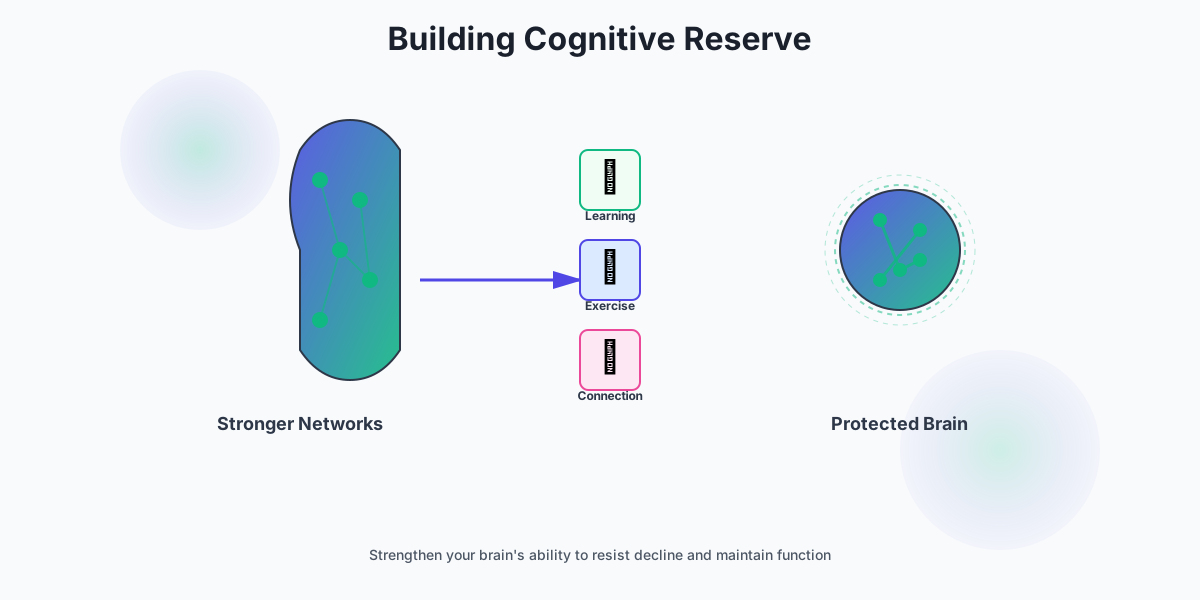
Research shows that people with strong cognitive reserve experience slower mental decline and better protection against dementia and cognitive disease. The remarkable part? You can build and strengthen your cognitive reserve at any age through education, learning, physical activity, and social engagement.
This guide explores the science of cognitive reserve, why it matters for your long-term health, and practical steps to build a stronger, more resilient brain.
What Is Cognitive Reserve?
Cognitive reserve refers to the brain's capacity to manage and overcome neurological challenges, injuries, or age-related changes without losing cognitive function. It's the difference between someone with early-stage dementia who functions well and someone with minimal brain damage who experiences noticeable decline—even when the physical brain damage is similar, their cognitive reserve differs significantly.
Not medical advice.
Think of cognitive reserve as your brain's shock absorber. When you experience stress, sleep deprivation, aging, or neurological disease, cognitive reserve helps your brain compensate by using alternative neural pathways and recruiting backup networks. The larger your reserve, the longer you maintain mental clarity and function.
Surprising Insight: Surprising Insight: Two people can have identical brain scan results showing neurological damage, yet one remains cognitively sharp while the other struggles with memory and thinking—the difference is cognitive reserve.
How Cognitive Reserve Protects Your Brain
A visual representation showing how cognitive reserve buffers brain decline through neural compensation
🔍 Click to enlarge
Why Cognitive Reserve Matters in 2026
The global population is aging rapidly, and dementia and cognitive decline represent growing health challenges. By 2026, over 57 million people worldwide live with dementia, making cognitive health a priority for individuals and healthcare systems. Cognitive reserve offers a proven, accessible strategy to reduce this risk.
Modern life also presents new cognitive challenges—constant information processing, digital distractions, and chronic stress all demand more from our brains. Building cognitive reserve helps you maintain focus, process information efficiently, and stay mentally sharp in a world that never stops.
Beyond aging and disease prevention, cognitive reserve improves daily cognitive performance. People with stronger reserves show better memory, faster processing speed, enhanced problem-solving, and greater mental flexibility—benefits that matter whether you're navigating a career, learning new skills, or simply staying engaged with life.
The Science Behind Cognitive Reserve
Neuroplasticity—your brain's ability to form new neural connections—is the foundation of cognitive reserve. Your brain doesn't remain static; it continuously reorganizes itself in response to experience and learning. When you learn new skills, engage in challenging mental activities, or build social connections, your brain strengthens existing networks and creates new pathways. This physical change increases your cognitive reserve.
The brain compensates through multiple mechanisms. When neurons are damaged, alternative pathways can assume their functions. When cognitive demands increase, recruited brain regions work together to maintain performance. This redundancy—having backup systems and alternative routes—defines cognitive reserve. People with extensive education, multilingual abilities, musical training, and occupational complexity develop stronger, more interconnected neural networks.
Neural Networks and Cognitive Reserve Development
Shows how education, learning, and activities strengthen brain networks and create redundancy
🔍 Click to enlarge
Key Components of Cognitive Reserve
Education and Formal Learning
Years of formal education form the foundation of cognitive reserve. Each year of education strengthens your brain's structural integrity and creates complex neural networks. People with higher educational attainment show greater resilience against age-related cognitive decline. Education isn't just about knowledge—it teaches your brain how to think, process information, and solve problems systematically. You can continue building this component throughout life through courses, certifications, and sustained learning.
Cognitive Engagement and Novelty
Your brain thrives on novelty and challenge. Engaging in unfamiliar mental activities—learning a new language, mastering an instrument, exploring complex hobbies—forces your brain to work harder and form new connections. Passive cognitive activities (like watching television) do little to build reserve, while active, challenging mental work creates lasting neural change. The key is sustained engagement with genuinely difficult material.
Physical Activity and Brain Health
Physical exercise is one of the most powerful interventions for building cognitive reserve. Regular aerobic activity increases blood flow to the brain, promotes the growth of new neurons (neurogenesis), and strengthens connections between existing neurons. Exercise also reduces inflammation and improves cardiovascular health—a critical foundation for brain function. People who maintain regular physical activity show significantly slower cognitive decline with aging.
Social Engagement and Relationships
Social interaction is cognitively demanding and protective. Meaningful relationships, group activities, and social engagement activate multiple brain regions and build complex neural networks. Social isolation, conversely, accelerates cognitive decline. Maintaining strong relationships, participating in community activities, and engaging in regular social contact all contribute significantly to cognitive reserve. Quality of relationships matters more than quantity.
| Reserve Builder | Brain Impact | Time Commitment |
|---|---|---|
| Learning a new language | Strengthens language networks, improves executive function | 30 min daily, 6-12 months for proficiency |
| Musical training | Enhances auditory processing, motor coordination, and memory | 20-60 min daily, ongoing |
| Social activities | Activates multiple brain regions, builds emotional resilience | 4-8 hours weekly |
| Aerobic exercise | Increases neurogenesis, improves blood flow, reduces inflammation | 150 min moderate activity weekly |
| Reading and studying | Strengthens neural networks, improves vocabulary and comprehension | 30 min daily |
| Puzzle solving and strategy games | Enhances problem-solving, executive function, and processing speed | 20-30 min daily |
How to Apply Cognitive Reserve: Step by Step
- Step 1: Assess your current cognitive lifestyle: Evaluate your education level, hobbies, physical activity, and social engagement to identify areas for growth.
- Step 2: Choose one new challenge: Select a cognitively demanding activity that genuinely interests you—language learning, music, skill development, or a new hobby.
- Step 3: Commit to regular practice: Schedule 30-60 minutes daily or 3-5 times weekly for your chosen activity. Consistency matters more than intensity.
- Step 4: Embrace the learning curve: Expect discomfort and mistakes. The struggle to master new material is what builds cognitive reserve.
- Step 5: Increase physical activity gradually: Aim for 150 minutes of moderate aerobic exercise weekly, or 75 minutes of vigorous activity.
- Step 6: Prioritize sleep quality: Sleep consolidates learning and strengthens neural connections. Target 7-9 hours nightly.
- Step 7: Strengthen your social connections: Schedule regular time with friends, family, or community groups. Aim for meaningful interaction, not just passive socializing.
- Step 8: Practice multilingual or multidomain thinking: If you speak one language, begin learning another. If experienced in one field, explore another discipline.
- Step 9: Maintain cognitive diversity: Rotate your learning activities—don't just do puzzles, also learn music, languages, and skills.
- Step 10: Track your progress and celebrate wins: Monitor improvements in memory, processing speed, or skill mastery. Recognition reinforces commitment.
Cognitive Reserve Across Life Stages
Young Adulthood (18-35)
Your 20s and 30s represent the prime window for building foundational cognitive reserve. Formal education creates structural brain changes, and learning multiple skills now pays dividends for decades. This is the ideal time to learn languages, develop expert knowledge in your field, establish exercise habits, and build social networks. The neural changes made now form the basis for resilience in later decades. Young adults benefit from deliberately pursuing educational and skill-development opportunities.
Middle Adulthood (35-55)
Middle age is critical for maintaining and expanding cognitive reserve through continued learning and engagement. Career complexity, if challenging and varied, builds reserve. This period often involves balancing work and family, but maintaining physical activity, learning new skills, and preserving social connections becomes increasingly important. People who remain engaged cognitively during middle age experience significantly better cognitive outcomes in later years. This is when preventive action yields substantial long-term benefits.
Later Adulthood (55+)
Cognitive reserve becomes increasingly protective in later years. Accumulated learning, maintained physical activity, and strong social engagement buffer against age-related changes and disease. Retirement offers new opportunities for learning and engagement. People who remain cognitively active after retirement—through volunteer work, learning, travel, social participation—maintain sharper cognitive function. It's never too late to build reserve; older adults who take up new learning show measurable cognitive improvements.
Profiles: Your Cognitive Reserve Approach
The Career-Focused Professional
- Structured learning aligned with work goals
- Time-efficient cognitive exercises (20-30 min daily)
- Integration of physical activity into busy schedule
Common pitfall: Assuming work complexity alone builds cognitive reserve; neglecting physical activity and social engagement outside work.
Best move: Pursue strategic skill development in your field, commit to morning exercise, and schedule regular social activities separate from work.
The Lifelong Learner
- Diverse learning opportunities and exposure to new domains
- Accountability and community engagement
- Balance between abstract learning and practical application
Common pitfall: Passive consumption of educational content without active engagement or practice; collection without application.
Best move: Choose learning activities requiring hands-on practice, join learning communities, teach others what you learn.
The Active, Socially Engaged Person
- Channels for cognitive challenge within social contexts
- Opportunity to teach or mentor others
- Integration of learning with physical activity
Common pitfall: High social and physical activity without sufficient cognitive challenge; activity alone doesn't build reserve.
Best move: Pursue skill-based group activities (team sports, group classes, language exchanges), volunteer in roles requiring new learning.
The Quiet Thinker
- Solo learning activities matching your preference
- Structured social engagement (not purely self-directed)
- Regular physical activity, even if preferred in solitude
Common pitfall: Overemphasis on intellectual pursuits while neglecting physical activity and social interaction, both critical for reserve.
Best move: Balance solo learning with regular group classes or clubs, maintain consistent physical activity, schedule intentional social time.
Common Cognitive Reserve Mistakes
The biggest mistake is assuming that simply being intelligent or educated means you have strong cognitive reserve. Cognitive reserve isn't about IQ; it's about active engagement and brain health. A brilliant person who becomes sedentary, socially isolated, and stops learning experiences cognitive decline. Intelligence without engagement doesn't protect you.
Another common error is passive consumption without active engagement. Watching educational videos, reading articles, or listening to podcasts builds knowledge but not necessarily cognitive reserve. Your brain needs to work hard—struggling with difficulty, making mistakes, and actively solving problems. Passive consumption has minimal impact on neural structure.
People also underestimate the importance of physical activity. Cognitive reserve depends on brain health, and nothing impacts brain health more than cardiovascular fitness, regular exercise, and quality sleep. Neglecting physical health while pursuing intellectual activities creates an imbalanced foundation. The most effective approach combines intellectual, physical, and social engagement.
Building Cognitive Reserve: Mistake Patterns to Avoid
Shows common mistakes that undermine cognitive reserve development
🔍 Click to enlarge
Science and Studies
Decades of neuroscience research confirm that cognitive reserve is measurable, buildable, and protective. Longitudinal studies following thousands of people over decades show that higher cognitive reserve—measured through education, occupational complexity, and cognitive engagement—correlates with slower age-related decline and lower dementia risk.
- Stern et al. (2024) in Nature Reviews Neuroscience found that cognitive reserve reduces dementia risk by 20-30% in people with similar levels of brain pathology.
- Yaffe et al. (2023) demonstrated that cognitive activities in midlife predict better cognitive function 20+ years later, even after accounting for education.
- Physical activity studies show aerobic exercise increases brain-derived neurotrophic factor (BDNF), a protein essential for learning and memory.
- Multilingual research reveals that bilingualism strengthens executive function networks and delays cognitive decline by 4-5 years compared to monolinguals.
- Social engagement studies show that people with strong social networks maintain cognitive function better and have 26% lower dementia risk than isolated individuals.
Your First Micro Habit
Start Small Today
Today's action: Learn one new word in a language you're curious about today, then use it three times in the next 24 hours. Choose a language linked to a place or culture you find interesting.
Language learning engages multiple brain regions simultaneously—pronunciation, meaning, cultural context, and memory. Starting with just one word removes activation energy and builds momentum. Spaced repetition (using it 3 times) strengthens the neural pathway and builds confidence for continued learning.
Keep quitting habit apps after a missed day? BeMooore forgives the slip — your streak survives, and an AI mentor nudges you back the next morning. Free on iOS.
Quick Assessment
How would you describe your current cognitive engagement level?
Your engagement level directly predicts cognitive reserve development. High engagement builds stronger neural networks. Low engagement increases vulnerability to decline.
Which factor do you currently prioritize most for your cognitive health?
Optimal cognitive reserve requires balance across all four factors. Identifying your strength helps you recognize where to add complementary activities.
What barrier most prevents you from building stronger cognitive reserve?
Naming the barrier is the first step toward addressing it. Each barrier has practical solutions available to you right now.
Take our full assessment to get personalized recommendations.
Discover Your Style →Next Steps
Building cognitive reserve isn't a destination; it's a way of living. The most powerful step you can take right now is to commit to one new learning challenge. It doesn't have to be dramatic—a new language, musical instrument, skill, or hobby that genuinely interests you. Combined with consistent physical activity and meaningful social engagement, this single commitment launches you toward stronger cognitive resilience.
Remember: cognitive reserve is entirely within your control. You're not dependent on genetics, luck, or age. Your actions today create your brain's resilience tomorrow. Each hour spent learning, each session of exercise, each meaningful conversation builds neural capacity that protects and strengthens your mind.
Get personalized guidance with AI coaching.
Start Your Journey →Research Sources
This article is based on peer-reviewed research and authoritative sources. Below are the key references we consulted:
Related Glossary Articles
Frequently Asked Questions
Can I build cognitive reserve if I'm already in my 60s or 70s?
Yes, absolutely. While building reserve is easier earlier in life, research shows that people who begin learning and engaging cognitively in later adulthood still improve their cognitive function and resilience. Neuroplasticity continues throughout life. It's never too late to strengthen your brain.
Is gaming or playing puzzles enough to build cognitive reserve?
Games and puzzles provide cognitive engagement and have modest benefits, but optimal reserve-building requires diversity. Combine different types of mental challenge—language learning, skill mastery, novel problem-solving—with physical activity and social engagement. Variation matters more than repetition of the same activity.
How much physical activity do I need for cognitive benefits?
Research suggests 150 minutes of moderate aerobic activity weekly (like brisk walking or cycling) produces significant cognitive benefits. Even 20-30 minutes daily shows measurable improvement. Consistency matters more than intensity. Include both aerobic exercise and strength training for comprehensive brain health.
Does my job provide cognitive reserve benefits if it's complex?
Occupational complexity contributes to cognitive reserve, but with an important caveat: your job must remain challenging and novel. Routine expertise, even in complex fields, provides limited benefit. The ideal is continuous learning and challenge within your work. Add outside learning, hobbies, and engagement to supplement your professional growth.
How long before I see improvements in my cognitive performance?
Small improvements in processing speed and memory can appear within 4-8 weeks of consistent learning and physical activity. More substantial changes in cognitive resilience typically appear over months and years. The most significant benefits emerge over decades, so starting now—at any age—pays dividends for the rest of your life.
Take the Next Step
Ready to improve your wellbeing? Take our free assessment to get personalized recommendations based on your unique situation.
- Discover your strengths and gaps
- Get personalized quick wins
- Track your progress over time
- Evidence-based strategies